Owner’s manual
 Error Codes


Are GE refrigerators self-defrosting?
Yes. The GE LSS25XSWASS side-by-side refrigerator uses an automatic (frost-free) defrost system that periodically melts frost off the evaporator, so you do not manually defrost the freezer. During defrost, you may hear normal sizzling or water-drip sounds.
Automatic defrost prevents heavy frost buildup by cycling into a defrost mode and then returning to normal cooling.
- The refrigerator periodically enters a defrost cycle.
- Frost on the evaporator melts and drains to a pan.
- You may hear sizzling, popping, buzzing, or dripping during defrost.
- After defrost, the compressor and fans resume normal cooling.
- If the refrigerator seems “off,” it can simply be in defrost for a short period.
| What you notice | Usually means | What to do |
|---|---|---|
| Light sizzling or dripping sounds | Defrost heater melting frost | No action needed |
| Refrigerator not operating briefly | Unit is in defrost | Wait about 30 minutes |
| Compressor runs a lot but temps are OK | Adaptive defrost responding to door openings | Keep doors closed as much as possible |
| Water on floor or bottom of freezer | Ice cubes jammed in dispenser chute | Clear jam with a wooden spoon |
A frost-free refrigerator can still frost up if airflow is blocked or a defrost component fails.
- Make sure vents and air passages are not blocked by food packages.
- Confirm doors close and seal fully; warm air leaks cause frost.
- Avoid frequent, long door openings (humidity adds frost).
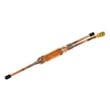
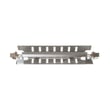
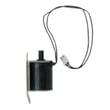
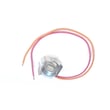
- If frost becomes heavy and cooling drops, check defrost parts such as the refrigerator defrost heater WR51X10055 and refrigerator defrost bi-metal thermostat WR50X10069.
- Use the troubleshooting section in the owner's manual for model-specific checks and normal operating sounds.
A working automatic defrost system keeps airflow open across the evaporator, which stabilizes freezer temperature, improves fresh-food cooling, and reduces energy waste caused by ice buildup.
Last updated: February 2026
What is the most common problem with a GE refrigerator?
The most common problem we see with GE refrigerators like model LSS25XSWASS is poor cooling (fresh food too warm, freezer not holding temperature). In most cases, the root cause is restricted airflow or heat removal, or a defrost-system issue that lets frost block the evaporator.
- Make sure air vents are not blocked by food packages (both compartments).
- Clean dust from the condenser area so the unit can shed heat efficiently.
- Confirm the doors close and seal fully; this model is designed to self-close from a partially open position.
- Give the refrigerator time after changes; normal operation includes long run times, especially after first plug-in.
- If the unit seems “off,” remember that turning it off at the touch panel does not shut off electrical power.
If basic airflow and cleaning checks do not help, these model-matched parts are frequent suspects:
| Symptom | Common cause | Example part for this model |
|---|---|---|
| Warm temps, fan noise missing | Evaporator fan not running | Refrigerator evaporator motor WR60X10307 |
| Frost buildup, warming over days | Defrost heater failure | Refrigerator defrost heater WR51X10055 |
| Frost buildup, defrost not ending correctly | Defrost thermostat issue | Refrigerator defrost bi-metal thermostat WR50X10069 |
| Temps swing, inconsistent cooling | Sensor reading wrong | GE profile refrigerator temperature sensor WR55X10025 |
Poor cooling is more than an inconvenience; it can lead to food spoilage and can make the compressor run longer than normal. Restoring proper airflow, defrost performance, and accurate temperature sensing keeps temperatures stable and reduces strain on major components.
Unplug the refrigerator before cleaning or making repairs. For model-specific operating details and troubleshooting charts, use the owner's manual.
Last updated: February 2026
Are GE side by side refrigerators good?
Yes. GE side-by-side refrigerators like model LSS25XSWASS are a solid, practical choice for everyday use because they are designed for easy organization, consistent door sealing, and convenient dispenser features (on dispenser models). Overall performance depends most on proper setup, airflow, and routine maintenance.
A good side-by-side refrigerator keeps stable temperatures, seals tightly, and moves air well between compartments. For LSS25XSWASS, the owner's manual highlights features that support day-to-day usability, including shelf handling guidance and a door design that helps the doors close fully and stay sealed.
Common positives customers value:
- Spacious, easy-to-sort fresh food and freezer sections
- Adjustable shelving and bins for flexible storage
- Door design that helps the doors close all the way and seal
- Ice maker and water dispenser convenience (on equipped models)
- Bright interior lighting (bulb replacement is straightforward)
Side-by-side refrigerators often make more “active” sounds than older top-freezer models. The manual notes that some noises can be normal, especially around defrost and pressure equalization.
Typical normal sounds:
- Sizzling, popping, or buzzing during defrost
- Water dripping during defrost as ice melts
- Gurgling when doors close (pressure equalization)
Sounds that usually justify troubleshooting:
- Loud, constant rattling that changes when you touch the cabinet
- Fan noise that is grinding or squealing
- Clicking with no cooling improvement
These steps help any GE side-by-side run better and reduce common complaints like weak cooling or dispenser issues:
- Keep vents and air returns unblocked by food packages
- Make sure shelves are pushed fully back before closing doors
- Confirm doors close and seal; adjust alignment if doors look uneven
- Replace the water filter on schedule if your unit uses one (see refrigerator water filter MSWF)
- Use the correct appliance bulb wattage when replacing lights (see refrigerator light bulb 40A15)
| Symptom | Common system involved | Example part for LSS25XSWASS |
|---|---|---|
| Warm fridge or freezer | Airflow/defrost | Refrigerator defrost heater WR51X10055 |
| Frost buildup, warm temps | Defrost control/thermostat | Refrigerator defrost bi-metal thermostat WR50X10069 |
| Poor temperature stability | Sensing/control | GE profile refrigerator temperature sensor WR55X10025 |
A side-by-side can be “good” for many years when the doors seal properly, airflow stays clear, and defrost components work correctly. Those basics protect food quality, reduce frost problems, and help the compressor avoid long run times.
Last updated: February 2026
How wide is a 25.6 cubic foot refrigerator?
Most 25.6 cu. ft. side-by-side refrigerators are about 35 3/4 to 36 inches wide overall. For your GE LSS25XSWASS, plan for a minimum 38-inch opening on the tightest doorway; the moving instructions specify that if an entrance is less than 38 inches wide, the doors must be removed (handles stay on). See the LSS25XSWASS owner's manual for the full moving and installation details.
Use the measurement that matches what you are trying to do:
- Overall width: doors closed, includes hinges and trim; best for fitting into the final space
- Cabinet width: the box only; best for checking between cabinets
- Minimum opening (pathway): your tightest doorway or hallway; best for delivery and moving
- Clearance space: extra room needed around the refrigerator for airflow and hookups
The GE LSS25XSWASS manual gives two key planning points:
- Doorway/moving guidance: if an entrance is less than 38 inches wide, remove the doors (do not remove handles)
- Installation clearances: allow 1/8 inch on each side, 1 inch on top, and 1 inch at the back for installation and proper air circulation
| Planning item | Number to use | What it helps prevent |
|---|---|---|
| Tightest doorway opening | 38 in. minimum (doors on) | Getting stuck during delivery/moving |
| Side clearance | 1/8 in. | Rubbing, vibration, poor airflow |
| Top clearance | 1 in. | Heat buildup, difficult leveling |
| Back clearance | 1 in. | Kinked water line, poor airflow |
Capacity (25.6 cu. ft.) does not lock in a single width. Fit problems usually come from ignoring hinges, door swing space, and required clearances, or from underestimating the tightest doorway on the move-in path.
Last updated: February 2026