Owner’s manual
 View engine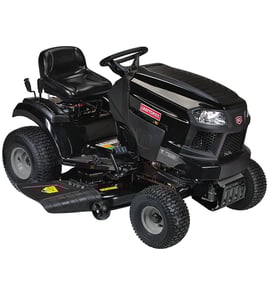


What engine does Craftsman riding mower use?
The Craftsman lawn tractor model 917272280 uses a 22.0 HP engine (low-emission design) as shown in the model’s documentation; it’s paired with electric start and an automatic transmission. For the exact engine make, model, and service specs, use the 917272280 owner's manual.
From the documentation for this specific Craftsman riding mower, we can rely on these model-level engine details:
- Engine output: 22.0 HP
- Engine type: low-emission engine (operates differently than older designs)
- Starting system: electric start
- Drive system: automatic transmission
- Mower deck size: 42-inch mower
Many Craftsman tractors were built with engines from common suppliers, but the sure way to match parts and tune-up items is to identify the engine model on the engine itself.
- Look for the engine ID label on the blower housing, valve cover, or near the starter
- Write down the engine model, type, and code (or spec number)
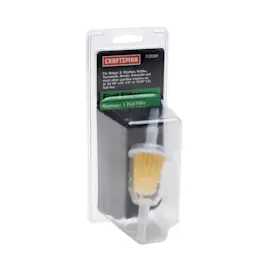
- Match those numbers when buying engine-specific items (air filter, spark plug, fuel filter)
- Use the manual’s product specifications and maintenance sections for the correct service intervals
| What you’re looking for | What it tells you | Best place to find it |
|---|---|---|
| 22.0 HP rating | Power class for the tractor | 917272280 owner's manual |
| Engine make and model | Exact parts and tune-up specs | Engine ID label on the engine |
| Low-emission design note | Starting and running behavior can differ | 917272280 owner's manual |
The HP rating helps you understand performance, but the engine model number is what ensures you get the right maintenance parts and settings. This is especially important on low-emission engines, where choke use, throttle settings, and tune-up parts must match the engine’s design.
Last updated: February 2026
What year was Craftsman 917272280 made?
Craftsman model 917272280 was produced across multiple years (not a single model-year). The most accurate way to pin down the exact build year for your specific tractor is to match the product number and serial number on the ID label (typically under the seat or on the frame) to the identification details in the 917272280 owner's manual.
Use the tractor’s ID label information to determine when it was made.
- Park on a level surface, set the parking brake, and remove the key
- Lift the seat and look for the model/product number and serial number label
- If it is not under the seat, check the rear frame area near the seat pan
- Write the numbers down exactly as shown (including any dashes)
- Compare those numbers to the identification guidance in the 917272280 owner's manual
On Craftsman riding mowers, the model number identifies the tractor family and configuration, not the calendar year. The same model number can be sold for several seasons with small running changes (decals, brackets, wiring routing, or hardware).
| Item | What it tells you | Where to find it |
|---|---|---|
| Model number (917272280) | Series/configuration | ID label, manual |
| Serial number | Best clue to build date | ID label |
| Parts diagram match | Confirms exact version | Parts lists and diagrams |
Knowing the exact build year (or at least the exact serial number range) helps us match the correct parts and diagrams for your Craftsman lawn tractor, especially for fit-sensitive items like steering components, chassis parts, and deck hardware.
If you are ordering steering or front-end parts, matching the diagram callouts is key. For example, the steering assembly for this model lists items such as the lawn tractor steering shaft 532177883 and husqvarna lawn tractor tie rod 171888.
Last updated: February 2026
Is it worth replacing a lawn mower engine?
Yes, replacing the engine on your Craftsman lawn tractor model 917272280 is worth it when the tractor’s deck, chassis, and drive system are still solid and you want more years of reliable mowing. If the tractor has widespread wear (deck rust-through, steering slop, transmission issues), the money is better spent elsewhere.
- The mower deck is straight and not rusted through
- The tractor still drives strongly (no slipping, no loss of motion)
- Steering and front axle feel tight (no severe wobble)
- You can do the work safely (engine off, key removed, spark plug wire disconnected)
- The total engine-swap cost stays well below the cost of replacing the tractor
Before you commit, we recommend checking the high-cost, high-wear areas that commonly decide the value of an engine swap:
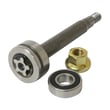
- Mower deck and mandrels: listen for bearing growl and check for vibration; a worn mandrel can add cost (see husqvarna lawn tractor mandrel assembly 532130794)
- Belts and drive: inspect for cracking, glazing, or stretching; a worn drive belt can mimic “weak engine” symptoms (see lawn tractor ground drive belt, 1/2 x 82-in 532140294)
- Safety interlock system: the manual notes the engine should only start with brake depressed and PTO disengaged; if interlocks are failing, fix those issues so you do not misdiagnose the engine (see 917272280 owner's manual)
| Option | Best when | Typical outcome |
|---|---|---|
| Replace engine | Deck, chassis, and drivetrain are in good shape | Restores reliability and extends service life |
| Repair instead (tune-up, belts, electrical) | Engine cranks but runs poorly or power feels weak | Lower cost, often solves the real problem |
| Replace tractor | Multiple major systems are worn (deck, steering, transmission) | Better long-term value than stacking repairs |
An engine swap only pays off when the rest of the tractor can safely use that new power. The manual emphasizes keeping fasteners tight, maintaining safety devices, and inspecting after impacts; those same checks help you avoid putting a new engine onto a tractor with hidden structural or safety problems.
Last updated: February 2026