Owner’s manual
 Error Codes

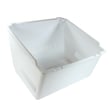
What is top mount and bottom mount refrigerator?
A top-mount refrigerator has the freezer on top and the fresh-food section below; a bottom-mount (bottom-freezer) refrigerator flips that layout, putting the fresh-food section at eye level and the freezer in a lower drawer. Your Kenmore 79575083402 is a bottom-mount style (bottom freezer). See the owner's manual for the parts-and-features layout and door/drawer details.
| Style | Freezer location | Fresh-food location | Best for |
|---|---|---|---|
| Top mount (top freezer) | Top | Bottom | Frequent freezer use, simpler layout |
| Bottom mount (bottom freezer) | Bottom drawer | Top (eye level) | Frequent fresh-food use, less bending |
- Ergonomics: Bottom-mount designs reduce bending for everyday items like milk, produce, and leftovers.
- Freezer access: Bottom-mount freezers typically use pull-out baskets or a drawer system.
- Door swing and clearance: Bottom-mount units often need extra clearance for the freezer drawer to pull out fully.
- Organization: Bottom drawers can make it easier to separate frozen foods into zones.
The refrigerator style affects where key components sit and how you service them. For example, bottom-mount models commonly route cold air from the freezer up into the refrigerator section, so airflow and temperature settings can impact both compartments.
- Confirm both compartments are set to typical targets (often 37°F refrigerator and 0°F freezer).
- Keep vents clear so air can circulate between freezer and refrigerator sections.
- Make sure doors and drawers close fully and seal evenly.
- Level the cabinet so doors close easily and the freezer drawer aligns.
Last updated: February 2026
What water filter fits my Kenmore fridge?
For Kenmore model 79575083402, the correct water filter is the one specified for this exact model and its filter housing; we match it by model number and the filter’s printed part number. Use the owner's manual to confirm the filter location and replacement details before ordering.
- Check the model tag inside the fresh food compartment: 79575083402
- Remove the current filter and write down the number printed on the cartridge
- Confirm whether your filter mounts:
- Inside the refrigerator (often upper right or in the base grille area), or
- In-line on the water line behind the unit
- If your dispenser flow is slow, replace the filter first before diagnosing the water valve
- If your home has sediment, an in-line filter can help protect the refrigerator water valve
Your refrigerator’s water system needs the right water pressure to work correctly. The manual specifies:
| Setup | Typical required water pressure |
|---|---|
| Without a water filter | 20 to 120 psi |
| With a water filter | 40 to 120 psi |
Low pressure can mimic a “bad filter” symptom (weak dispenser flow, small ice cubes), so confirming pressure and a fresh filter saves time.
Some installations use an in-line filter on the supply line behind the refrigerator. When you connect the water line, keep enough extra tubing coiled so the refrigerator can be pulled out for service without stressing the line.
If replacing the filter does not restore normal flow, these model-compatible parts are common next checks:
- Refrigerator water inlet valve 5220JA2009D (controls water to the dispenser and ice maker)
- Refrigerator water tubing 5210JA3005W (can kink or leak)
- Refrigerator water tube fitting 5040JA2015A (connection point that can seep)
Using the correct filter for 79575083402 protects taste and odor performance and helps prevent restricted flow that can strain the water inlet valve and reduce ice maker output.
Last updated: February 2026
How to tell if a Kenmore refrigerator compressor is bad?
On Kenmore refrigerator model 79575083402, a “bad compressor” usually shows up as no cooling or weak cooling along with repeated clicking (start attempts), unusual loud humming, or the compressor never staying on long enough to pull temperatures down. Before condemning the compressor, we confirm airflow, power, and start components because normal operation can include clicking and higher-pitched compressor sounds.
Unplug the refrigerator before touching any electrical parts.
- Listen for patterns: a click every few minutes with no steady run often points to a start problem (relay/overload) or a locked compressor.
- Check fans: if the evaporator fan and condenser fan are not moving, cooling will fail even with a good compressor.
- Check condenser coils: dirty coils make the compressor run longer and struggle to cool.
- Confirm doors seal and close: warm air leaks can mimic compressor failure.
- Give it time after power loss: after plugging in, cooling can take up to 24 hours to stabilize.
Your manual notes that modern, high-efficiency compressors can run longer and may sound pulsating or high-pitched; you can also hear refrigerant gurgling and occasional clicking as controls cycle. Use the sound guide in the owner's manual to separate normal cycling from repeated start-fail clicking.
| What you notice | What it usually means | What to check next |
|---|---|---|
| Click, then silence; repeats | Start device/overload tripping or compressor locked | Start relay, wiring, power supply |
| Runs but fridge stays warm | Sealed system problem or weak compressor | Coils, fans, frost pattern, temps |
| Loud buzzing/hum then click off | Compressor struggling to start | Start relay, voltage, overload |
| Compressor runs “all the time” | Often not a bad compressor | Coils, door gasket, settings |
If the compressor is trying to start but cannot, the start device is a common suspect. For this model, we often see customers replace the start relay when diagnosing start problems.
A compressor diagnosis affects cost and downtime. Many “compressor” complaints are actually airflow issues (dirty condenser coils, failed fan) or door sealing problems, which are faster fixes and restore proper temperatures sooner.
Last updated: February 2026
What is the code 5Y EF on a Kenmore refrigerator?
On Kenmore model 79575083402, the 5Y EF (or SY EF) error code points to a problem in the evaporator fan circuit, meaning the refrigerator is not sensing the evaporator fan running correctly. The most common causes are a failed fan motor, an iced-up fan area, wiring issues, or a control problem.
- Power reset: Unplug the refrigerator for 5 minutes, then restore power.
- Listen for the evaporator fan: You should typically hear airflow when the unit is running.
- Check for frost buildup: Heavy frost on the rear freezer panel often indicates an airflow or defrost issue that can stop the fan.
- Confirm doors are closing fully: Poor sealing can cause moisture intrusion and icing.
- Give it time after changes: Temperature and airflow changes can take up to 24 hours to stabilize after adjustments.
If the fan is not running or is noisy, these model-matched parts are common suspects:
| Symptom | Likely area | Example model-matched part |
|---|---|---|
| Fan not running, warm temps | Fan feedback or sensing issue | Refrigerator thermistor 6500JB2002T |
| Frost buildup, fan hits ice | Defrost sensing issue | Refrigerator defrost sensor assembly 6615JB2005C |
| Intermittent cooling, odd behavior | Control not driving fan correctly | Kenmore elite refrigerator electronic control board 6871JB1215J |
The evaporator fan moves cold air through the refrigerator and freezer. When the fan circuit fails, temperatures rise, food can spoil faster, and frost can build up because airflow is reduced.
For control settings, airflow guidance, and troubleshooting steps for this refrigerator, use the owner's manual.
Last updated: February 2026
What are the most common problems with Kenmore refrigerators?
The most common issues we see on Kenmore refrigerators like model 79575083402 are cooling problems, water leaks, ice maker and dispenser troubles, excess frost, unusual noises, and door sealing or alignment issues. Many of these trace back to airflow restrictions, dirty condenser coils, or a failing sensor, fan, valve, or control.
- Not cooling or warm temperatures: blocked vents, dirty condenser coils, evaporator fan issues, or a temperature sensing problem.
- Ice maker not making ice or slow ice: freezer not cold enough, door left open, heavy use, or water supply restriction.
- Water leaking or puddles: a clogged/iced drain path or a drain tube issue.
- Bad tastes or odors in ice: old ice, unwrapped food odors, or water quality; cleaning the bin and interior often helps.
- Doors hard to open or not sealing: dirty or sticky gaskets, or door alignment problems.
- Noisy operation: normal operating sounds, a fan problem, or vibration from placement/leveling.
- Confirm controls are set correctly; adjust the refrigerator control first, then wait 24 hours before changing again.
- Make sure air vents are not blocked by food packages.
- Clean condenser coils (dust buildup is a common cooling complaint).
- Check doors close fully; clean gasket surfaces if they feel sticky.
- For ice issues, verify the freezer is cold enough and allow 24 hours after changes or hookup.
| Symptom | Likely area | Example part for 79575083402 |
|---|---|---|
| Interior light issues or door alarm behavior | Door switch | Lg refrigerator door switch 6600JB1010A |
| Leaking/puddles, drain icing | Defrost drain path | Refrigerator drain tube 5251JA3003D |
| Warm temps, erratic cooling | Temperature sensing | Refrigerator thermistor 6500JB2002T |
| Defrost problems, frost buildup | Defrost sensing | Refrigerator defrost sensor assembly 6615JB2005C |
| Water dispenser/ice maker not filling | Water supply control | Refrigerator water inlet valve 5220JA2009D |
Cooling, ice, and leak complaints often get worse over time; a small airflow restriction or a partially clogged drain can turn into spoiled food, ice buildup, or recurring puddles. Following the care, cleaning, and troubleshooting steps in the owner's manual helps you pinpoint the cause faster.
Last updated: February 2026