Owner’s manual
 Error Codes


What are the dimensions of the Samsung RF28HMEDBWW?
For the Samsung RF28HMEDBWW bottom-mount refrigerator, the installation manual lists a cabinet width of 35 6/8 in (35 3/4 in), cabinet height of 68 7/8 in, and overall height of 70 in. Depth varies by how you measure (cabinet vs. overall). See the RF28HMEDBWW owner's manual for the full dimension diagram.
Dimension breakdown (what each measurement means)
Refrigerator dimensions can look inconsistent because Samsung provides multiple reference points (cabinet only vs. overall). Use these as your planning numbers:
- Width (B): 35 3/4 in (908 mm)
- Cabinet height (C): 68 7/8 in (1749 mm)
- Overall height (D): 70 in (1777 mm)
- Cabinet depth (A): 34 in (864 mm)
- Overall depth (E): 36 1/2 in (926 mm)
Quick reference table
| Measurement | Manual label | Size |
|---|---|---|
| Width | B | 35 3/4 in |
| Cabinet height | C | 68 7/8 in |
| Overall height | D | 70 in |
| Cabinet depth | A | 34 in |
| Overall depth | E | 36 1/2 in |
Space and clearance tips (so it actually fits)
Beyond the cabinet size, we plan for airflow, door swing, and hookups:
- Leave at least 3 3/4 in (95 mm) clearance on the hinge side when installed next to a fixed wall so the door can swing open.
- Allow extra space behind the unit if you have an ice maker water line connection.
- Measure doorways, stairways, and tight turns before moving the refrigerator into place.
- Install on a level, hard surface that can support a fully loaded refrigerator.
Why it matters
Using the correct “cabinet” vs. “overall” depth prevents common fit issues like doors hitting adjacent walls, drawers not pulling out fully, or the refrigerator sticking out farther than expected in a standard kitchen cutout.
Last updated: January 2026
What is the most common problem with Samsung refrigerators?
The most common issues we see on Samsung refrigerators like model RF28HMEDBWW are ice maker problems (no ice, small cubes, freezing up) and cooling complaints caused by restricted airflow or frost buildup that affects fans and vents. These problems often show up as temperature swings, noise, or water leaks.
Most common symptoms customers report
- Ice maker stops producing ice or produces hollow/small cubes
- Ice bucket clumps or the ice room freezes up
- Water leaking inside the fresh food section or under the crisper
- Refrigerator section warm while freezer seems OK (or vice versa)
- Fan noise, clicking, or intermittent cooling
- Filter light on, slow water dispensing, or dispenser flow reduced
Quick checks that solve many “common problems”
Start with these basics before replacing parts:
- Check airflow: Do not block interior air vents with food packages; blocked vents can cause overcooling and icing.
- Confirm doors seal and close fully: Poor sealing drives frost and temperature instability.
- If the unit was unplugged: Wait at least 5 minutes before plugging back in.
- If the water line is not connected: Turn the ice maker off to stop the water valve noise.
- If you will be away: Close the water valve to reduce leak risk.
Parts that are commonly involved (when troubleshooting points there)
If the checks above do not help, these model-matched parts are often involved in ice and cooling complaints:
| Symptom | Common area | Example model-matched part |
|---|---|---|
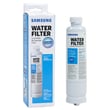
| Slow water, filter light on, odd taste/odor | Filtration | Refrigerator water filter DA29-00020B |
| Warm temps, frost buildup, erratic cooling | Temperature sensing/airflow | Refrigerator temperature sensor DA32-10104N |
| Ice room issues, poor ice production | Ice system airflow/ice room | Samsung refrigerator ice maker service kit DA82-02673A |
Why it matters
Ice maker and airflow problems can cascade into bigger issues: ice buildup restricts circulation, temperatures drift, and the refrigerator works harder than it should. Addressing airflow, water supply, and filter maintenance early helps stabilize cooling and reduce leaks.
Where to confirm settings and indicators
For the exact control panel behavior, filter-change steps, and ice maker on/off instructions for RF28HMEDBWW, follow the RF28HMEDBWW owner's manual.
Last updated: January 2026
Why is my Samsung bottom freezer icing up?
Bottom-freezer ice buildup in your Samsung RF28HMEDBWW is usually caused by warm, humid air leaking past the door gasket or by restricted airflow and drainage inside the freezer. Fixing the air leak and clearing any ice blockage typically stops the problem from returning.
Most common causes (and what to check first)
- Door not sealing: A torn, dirty, or warped gasket lets humid kitchen air in, which freezes on the floor of the freezer.
- Door left slightly open: A bin, bag, or overpacked drawer can prevent full closure.
- Airflow blocked: Frost and ice can build up when vents are covered by food packages or ice.
- Drain area icing over: Meltwater from defrost can refreeze if the drain area is partially blocked by ice.
- Frequent openings or high humidity: More moisture enters the freezer and turns into frost and ice.
Step-by-step: stop the icing and prevent it from coming back
- Inspect the freezer drawer seal: Wipe the gasket and the cabinet sealing surface with warm, soapy water; dry fully.
- Do a paper test: Close the drawer on a strip of paper; you should feel steady resistance when pulling it out. Test multiple spots.
- Check drawer alignment and obstructions: Make sure the bin and rails sit squarely and nothing is pinching the gasket.
- Clear vents and improve circulation: Keep packages away from vent openings and avoid overfilling.
- Defrost the ice safely: Unplug the refrigerator, remove food, and let ice melt; do not chip ice with sharp tools.
Quick symptom-to-cause guide
| What you see | Most likely cause | Best next step |
|---|---|---|
| Ice sheet on freezer floor | Air leak at gasket or drawer not closing | Clean gasket, remove obstructions, paper test |
| Heavy frost on walls/vents | Humid air intrusion or blocked airflow | Verify seal, clear vents, reduce overpacking |
| Water then ice near bottom | Drain area icing over | Fully defrost, then monitor for return |
Why it matters
Ice buildup reduces airflow, forces longer run times, and can lead to temperature swings that affect food quality. Keeping the drawer sealing tightly and vents clear is the fastest way to stabilize freezer performance.
For model-specific drawer removal and handling cautions, follow the RF28HMEDBWW owner's manual.
Last updated: January 2026