Owner’s manual
 Error Codes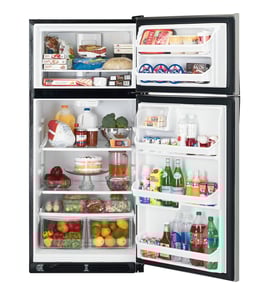



How to tell what model Kenmore refrigerator?
To identify your Kenmore refrigerator model, we look for the model/serial tag on the cabinet (not the door). On Kenmore top-mount units like model 10670232900, it’s typically inside the fresh food compartment on a side wall or ceiling, or near the crisper area; confirm the exact location in the owner's manual.
Where to find the model number tag
Check these common spots first:
- Inside the refrigerator section on the left or right side wall
- On the ceiling of the fresh food compartment
- Behind or just above the crisper drawers
- Along the front frame (mullion) where the door seals meet the cabinet
- Near the bottom front, behind the toe grille (kick plate)
What the model number looks like (and why it matters)
Kenmore model numbers are usually a long string of numbers (sometimes with a dot). For this page, the model is 10670232900.
Why it matters
- Ensures you get the correct replacement parts (gaskets, shelves, ice maker parts)
- Helps match the right diagrams and troubleshooting steps
- Prevents ordering a part that “looks right” but does not fit
Quick check: model number vs. serial number
Use this table to avoid mix-ups:
| You see on the tag | What it’s used for | Example format |
|---|---|---|
| Model number | Finding parts and manuals | 10670232900 |
| Serial number | Production tracking and age | Letters plus numbers |
If the tag is hard to read
Try these practical steps:
- Take a photo with your phone and zoom in
- Wipe the label gently with a damp cloth (do not soak it)
- Use a flashlight held at an angle to make faint print stand out
- Write down the full number exactly as shown (include any dots)
After you find the model number
Once you confirm the model, we use it to match parts precisely. For example, if you’re troubleshooting ice production, the parts list for this model includes the refrigerator ice maker 4317943.
Last updated: February 2026
What are the disadvantages of a top mount fridge?
Top-mount refrigerators like the Kenmore 10670232900 are reliable and efficient, but the main disadvantages are less convenient fresh-food access (you bend more), fewer premium organization features, and fewer built-in dispenser options compared with many bottom-freezer designs. See the owner's manual for layout and use details.
Common disadvantages (what most owners notice)
- Fresh-food access is lower: the refrigerator compartment sits below the freezer, so you reach down more often.
- Freezer is at eye level: convenient for frozen items, but it pushes everyday fresh foods lower.
- Organization can be simpler: many top-mount models have fewer adjustable bins and specialty drawers than higher-end layouts.
- Less common to have external dispensers: water and ice dispensers are less typical on top-mount units.
- Door swing clearance matters: you may need extra side clearance near a wall so doors open fully.
What to check on your Kenmore 10670232900
Use these quick checks to decide if the “disadvantages” are actually affecting performance or just convenience:
| Concern | What you can do | Why it helps |
|---|---|---|
| Bending for fresh food | Store daily items on upper shelves | Reduces repeated reaching down |
| Uneven temps from blocked airflow | Keep vents clear of packages | Helps airflow between freezer and fridge |
| Door not closing well | Reposition bins/shelves; avoid overloading | Prevents warm air leaks and moisture issues |
| Tight installation space | Allow typical ventilation clearances | Improves cooling efficiency and reduces noise |
Why it matters
Most “downsides” of a top-mount refrigerator are about ergonomics and features, not basic cooling. If airflow is blocked or doors do not seal well, convenience issues can turn into temperature swings, odors transferring between sections, and frost or moisture problems.
Last updated: February 2026
What is the top part of a fridge called?
On a Kenmore top-mount refrigerator like model 10670232900, the top compartment is the freezer compartment (often just called the freezer). It’s the section designed to keep foods frozen and it also supplies cold air that circulates to the fresh food section.
What the freezer does in a top-mount design
In this style of refrigerator, we rely on the freezer section for more than just freezing:
- Produces and stores frozen foods
- Sends cold air down to help cool the refrigerator section
- Uses vents and airflow paths to balance temperatures between sections
- Often houses the ice maker (if equipped)
- Can develop temperature issues if vents are blocked by packages
For model-specific feature locations and use details, check the owner's manual.
Airflow matters (and what to avoid)
Because air circulates between the freezer and refrigerator sections, airflow problems can make the refrigerator warm even when the freezer seems cold.
Common airflow blockers:
- Food packages pressed against freezer vents
- Overfilled freezer shelves
- Frost buildup restricting vent openings
- Items pushed under or against the freezer floor area
Quick check table
| Symptom | What it often points to | What to do first |
|---|---|---|
| Freezer cold, fridge warm | Blocked vent or poor circulation | Clear vents; rearrange items |
| Both sections warm | Cooling system not running properly | Verify controls are not set to OFF |
| Odors transfer between sections | Shared airflow between compartments | Clean both sections; wrap foods tightly |
Why it matters
Knowing the top section is the freezer helps with troubleshooting: many cooling complaints, odor transfer, and ice maker issues start with freezer airflow, loading habits, or temperature control settings.
Last updated: February 2026
What is the life expectancy of a Kenmore refrigerator?
Kenmore refrigerators typically last 12 to 15 years with normal household use. For your Kenmore 10670232900 top-mount refrigerator, consistent care (especially keeping airflow clear and cleaning) is what most often determines whether it reaches the high end of that range.
Typical lifespan and what affects it
Most refrigerators fail early due to heat stress, poor airflow, or sealing problems. These factors have the biggest impact:
- Condenser coil cleanliness (dust buildup makes the compressor work harder)
- Door seal condition (warm air leaks increase run time and frost)
- Room temperature and ventilation around the cabinet
- Ice maker and water system upkeep (if equipped)
- How full the freezer is (overpacking can block airflow)
Quick maintenance that helps you reach 12 to 15 years
Use these habits to extend the service life of your 10670232900:
- Vacuum and brush dust from the condenser area regularly
- Keep food packages from blocking interior vents
- Confirm doors close fully and stay aligned
- Clean spills promptly to prevent odors and corrosion
- Replace worn seals if you feel cold air leaking around the door
Common “wear” items vs. major repairs
Some parts are normal wear items; others point to bigger cooling-system stress.
| What you notice | Common cause | Typical next step |
|---|---|---|
| Door not sealing, moisture, frost | Worn or warped gasket | Inspect and replace gasket if needed |
| Warm fridge but freezer cold | Airflow issue or fan problem | Check vents; test evaporator fan |
| No ice or slow ice | Water supply or valve issue | Check water pressure; test inlet valve |
| Clicking, hard starting | Start components | Check capacitor and compressor circuit |
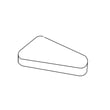
Model-matched examples you can use include the gasket panel (white) 2159061 and the refrigerator evaporator fan motor WP2315539.
Why it matters
A refrigerator that runs longer and hotter than it should wears out the compressor and control components faster. Simple airflow and sealing maintenance reduces run time, stabilizes temperatures, and helps the sealed system last.
For model-specific care and cleaning guidance, follow the owner's manual.
Last updated: February 2026
What are the common problems with Kenmore 10670232900 refrigerators?
Common issues on the Kenmore 10670232900 top-mount refrigerator are no-cool or warm temperatures, the unit not running at all, unusual (but sometimes normal) operating noises, door-closing problems, and ice maker or water-supply complaints. Many of these start with basic checks and the troubleshooting steps in the owner's manual.
Most common symptoms and what they usually point to
- Refrigerator will not operate: power cord unplugged, dead outlet, tripped breaker, controls turned off.
- Not cooling or weak cooling: needs time after installation (allow about 24 hours), airflow blocked by food, dirty condenser area, evaporator fan not running.
- Motor runs a lot: warm room, frequent door openings, large food load, door left ajar (often normal for high-efficiency designs).
- Noises: pulsating, hissing/rattling, popping, or water dripping during defrost can be normal.
- Door will not close: packages blocking the door, bin or shelf out of position, crisper cover interference.
Quick checks we recommend before replacing parts
- Verify the outlet works (plug in a lamp) and reset the breaker if needed.
- Confirm the temperature control is turned on and set to a normal mid-range setting.
- Give the refrigerator a full 24 hours to stabilize after a move, power interruption, or major temperature change.
- Make sure vents inside the fresh food and freezer sections are not blocked.
- If you have an ice maker, confirm the water supply valve is fully open and the water line is not kinked.
Parts that commonly solve specific complaints
| Symptom | Common part involved | Example part for this model |
|---|---|---|
| Warm fridge/freezer, poor airflow | Evaporator fan motor | Refrigerator evaporator fan motor WP2315539 |
| No ice or slow ice production | Ice maker assembly | Refrigerator ice maker 4317943 |
| Water not dispensing or no ice fill | Water inlet valve | Refrigerator water inlet valve WP2315576 |
| Light stays off or door switch issues | Light switch | Refrigerator light switch W11384469 |
Why it matters
Cooling, ice, and noise complaints often come from airflow, power, or door-seal issues. Starting with the simple checks prevents unnecessary part replacement and helps you pinpoint whether you are dealing with a control, fan, or water-supply problem.
Last updated: February 2026