Installation guide
 Owner’s manual


Are Whirlpool washer parts interchangeable?
Whirlpool washer parts are interchangeable only when the replacement part is listed as compatible with your exact washer model. For Whirlpool WTW4915EW1, use parts specified for WTW4915EW1 to ensure proper fit, correct operation, and safe performance; confirm details in the WTW4915EW1 installation guide.
What “interchangeable” really means for WTW4915EW1
Parts can look similar across Whirlpool top-load washers, but small differences (mounting points, wiring connectors, belt length, or calibration) can prevent a correct repair.
Common areas where exact matching matters:
- Electrical connectors (lid lock, wire harnesses, control components)
- Drive system geometry (pulley alignment, belt length, brake engagement)
- Water fill performance (valve flow rates and connector style)
- Drain routing (hose length and end fittings)
- Cabinet and lid fit (hinges, strike alignment)
How we recommend confirming compatibility
Use your model number (WTW4915EW1) as the starting point, then match the part by its ID.
Checklist:
- Match the model number: WTW4915EW1
- Match the part ID from the parts list (example: washer lid lock W11307244)
- Compare the symptom to the part’s function (fill, drain, spin, lock)
- Verify any install notes and measurements in the WTW4915EW1 installation guide
Examples of parts that should be model-matched
| Washer system | Example part for WTW4915EW1 | Why exact match matters |
|---|---|---|
| Lid locking | Lid lock | Prevents start/spin issues and misalignment |
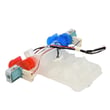
| Water fill | Inlet valve | Correct flow and connector fit |
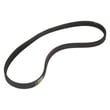
| Drive | Belt and pulley | Prevents slipping, noise, and no-spin |
Why it matters
Using the correct WTW4915EW1-COMPATIBLE part reduces repeat failures, prevents leaks and vibration problems, and helps the washer level and operate as designed (leveling and stable operation are emphasized in the installation instructions).
Last updated: February 2026
How much does it cost to repair a Whirlpool washing machine?
For a Whirlpool washer like model WTW4915EW1, most repairs typically land in the $150 to $400 range when you include parts and labor. Simple fixes can cost less, while bigger jobs involving the motor, controls, or major drive components cost more; use the WTW4915EW1 installation guide to confirm installation basics that can prevent repeat failures.
Typical repair cost ranges (parts + labor)
- No fill or slow fill: often tied to inlet screens, hoses, or a valve
- No drain: commonly a drain hose issue or a drain system setup problem
- Won’t spin or loud during spin: often drive system or suspension related
- Lid won’t lock: lid lock or strike problems
- Out of balance / banging: leveling, floor slope, or suspension components
| Repair type | Common symptoms | Typical total cost range |
|---|---|---|
| Water supply / fill | won’t fill, fills slowly | $150 to $300 |
| Drain / siphoning issues | won’t drain, drains while filling | $150 to $300 |
| Spin / drive system | won’t spin, squeal, burning rubber smell | $200 to $450 |
| Lid lock system | won’t start, lid lock light flashing | $200 to $400 |
| Electrical / control | dead washer, erratic cycles | $250 to $600 |
What drives the price up or down
- Service call and labor time (diagnosis plus repair time)
- Part cost and availability (some assemblies cost more than wear items)
- Access time (repairs that require removing the tub or basket take longer)
- Installation conditions (tight closets, poor access, or unlevel floors)
- Repeat damage from setup issues (siphoning, low water pressure, freezing conditions)
Installation issues that can look like “a repair”
The WTW4915EW1 installation requirements can directly affect performance and error-like symptoms:
- Water pressure should be 20 to 100 psi
- Standpipe height should be 39 to 96 inches
- Avoid siphoning; keep drain hose insertion to about 4.5 inches into the standpipe
- Use a level floor (max slope about 1 inch under the washer)
Why it matters
If the washer is installed outside these ranges, you can see problems like no fill, no drain, or poor spin that lead to unnecessary parts replacement. Verifying the drain setup and leveling first often reduces the total repair cost.
Last updated: February 2026
What is the most common problem with Whirlpool washers?
For the Whirlpool WTW4915EW1 washer, the most common problems we see are draining or spinning issues, water leaks during fill or drain, and excessive vibration from an unbalanced load or an unlevel washer. Many of these start with simple checks in the WTW4915EW1 installation guide.
Most common issues (and what usually causes them)
- Won’t drain or leaves clothes wet: kinked drain hose, restricted standpipe, or a drain hose installed incorrectly
- Won’t spin or stops mid-cycle: lid not locking, load out of balance, or a drive system problem
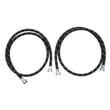
- Leaks: loose inlet hose couplings, worn hoses, or a leaking inlet valve
- Loud banging or walking: washer not level, weak floor, or overloaded tub
- Fills slowly or not at all: clogged inlet screens, low water pressure, or a failing inlet valve
Quick checks we recommend first
- Confirm the washer is level; leveling reduces noise and vibration and helps the washer spin correctly.
- Check water supply basics: both hot and cold hoses connected, faucets fully open, and no kinks.
- Verify water pressure is in a normal range; this model’s installation requirements call for 20-100 psi.
- Inspect hoses for age and condition; replacing inlet hoses every 5 years helps prevent failures.
- Look for obvious leak points at hose couplings and the inlet valve connections.
Common symptoms and the most likely parts
| Symptom | Most likely area | Part on this model that often relates |
|---|---|---|
| Won’t fill or fills very slowly | Water supply and inlet valve | Washer water inlet valve W11210459 |
| Won’t spin and lid won’t latch | Lid lock system | Washer lid lock W11307244 |
| Spins weakly, squeals, or slips | Belt and pulley drive | Washer drive belt WPW10006384, Whirlpool washer drive pulley W10721967 |
| Excess vibration or banging | Leveling and suspension | Damper assembly W10780044 |
Why it matters
Drain, spin, and vibration complaints often trace back to installation basics (leveling, drain hose routing, and correct hose connections). Fixing those first prevents repeat failures and helps protect major components like the motor, belt, and control.
Last updated: February 2026
What parts fail in a washing machine?
In a Whirlpool top-load washer like model WTW4915EW1, the parts that fail most often are the ones that move water (fill and drain), lock the lid for spin, and transfer motor power to the basket. When these parts wear out, you typically see leaking, no fill, no drain, no spin, or loud vibration.
Most common washer parts that fail
- Water inlet valve: slow fill, no fill, or overfilling (see washer water inlet valve W11210459)
- Drain hose and clamps: leaks at the back or at the standpipe connection (see washer drain hose W11244231)
- Lid lock and strike: won’t start, won’t spin, or lid won’t latch (see washer lid lock W11307244)
- Drive belt and pulley: won’t agitate or spin, burning rubber smell, squealing (see washer drive belt WPW10006384 and Whirlpool washer drive pulley W10721967)
- Suspension/damper: banging, walking, out-of-balance loads (see damper assembly W10780044)
- Motor capacitor or motor: hums, weak start, intermittent spin (see washer run capacitor W11395618)
Quick symptom-to-part checklist
| Symptom | Most likely area | What we check first |
|---|---|---|
| Won’t fill | Fill system | Faucets on, inlet screens, inlet valve |
| Leaks | Hoses/tub | Inlet hoses, drain hose, clamps |
| Won’t drain | Drain path | Kinked hose, standpipe height, blockage |
| Won’t spin | Safety/drive | Lid lock, belt/pulley, basket drive |
| Loud banging/vibration | Leveling/suspension | Leveling feet, load size, dampers |
Why installation and setup matter (and can look like a “failed part”)
Many “part failures” are actually installation issues that cause poor filling, leaks, or vibration. For WTW4915EW1, we follow the setup basics in the installation guide:
- Use new inlet hoses (old hoses can leak or restrict flow)
- Tighten hose couplings correctly (snug plus a small additional turn, not overtight)
- Turn on both faucets and check for leaks at the faucets and washer connections
- Level the washer so it does not walk or bang during spin
When to replace a part vs. correct a condition
- Correct a condition first: unlevel washer, overloaded tub, kinked drain hose, clogged inlet screens
- Replace a part when symptoms repeat after setup checks, or when you see obvious wear (cracked hose, stretched belt, broken lid strike)
Last updated: February 2026