Error Codes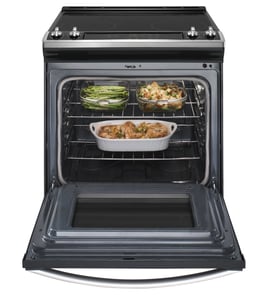



Are JennAir ovens gas or electric?
Jenn-Air ovens can be gas, electric, or dual-fuel, depending on the model. The model on this page, JES9750AAW, is an electric range, so its oven is electric.
How to tell what your Jenn-Air model uses
We recommend confirming by checking the model number and the appliance’s utility connections.
- Model number lookup: If your model is JES9750AAW, it is electric.
- Power cord and outlet: Electric ranges typically use a heavy 240V cord and range receptacle.
- Gas line: Gas and dual-fuel ranges have a gas supply line connected.
- Rating label: The data plate usually lists electrical requirements and may list gas type if applicable.
Quick comparison: gas vs electric vs dual-fuel
| Type | Cooktop heat source | Oven heat source | What you will see behind the range |
|---|---|---|---|
| Gas range | Gas | Gas | Gas line (and standard 120V plug) |
| Electric range | Electric | Electric | 240V power cord, no gas line |
| Dual-fuel range | Gas | Electric | Gas line plus electrical connection |
Why it matters
Fuel type affects installation requirements, troubleshooting, and which replacement parts fit. For example, an electric oven commonly uses a bake element like the bake element WP74010750, while gas ovens use an igniter and gas valve system.
Last updated: January 2026
How long should a JennAir oven last?
A Jenn-Air electric oven like model JES9750AAW typically lasts 15 to 20 years. With normal home cooking, good cleaning habits, and timely replacement of wear parts (like heating elements and door gaskets), many ranges reach the high end of that range.
What affects lifespan most
- Heat stress and usage: daily high-heat baking and broiling shortens component life.
- Self-clean frequency: frequent self-clean cycles can accelerate wear on wiring, thermostats, and door seals.
- Ventilation and grease control: keeping the downdraft filter clean helps reduce heat and grease buildup.
- Door seal condition: a leaking gasket makes the oven work harder and can overheat nearby parts.
- Electrical connection quality: a loose or overheated power connection can damage wiring and terminals.
Typical lifespan by major component
| Component | Typical lifespan | Common symptom when failing |
|---|---|---|
| Bake element | 8 to 15 years | No heat or uneven baking |
| Broil element | 10 to 15 years | Weak broil or no broil |
| Door gasket | 5 to 10 years | Heat leaks, longer preheat |
| Oven light bulb | 1 to 5 years | Light out |
Parts that commonly extend the life of JES9750AAW
If performance drops but the range is otherwise in good shape, these are common, practical fixes:
- Replace a weak or broken bake element WP74010750.
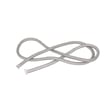
- Replace a torn or flattened door gasket WPW10162384 to stop heat loss.
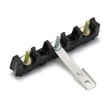
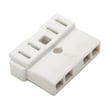
- Swap a burned or loose terminal block WPW10245259 if the power connection shows heat damage.
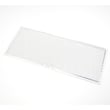
- Install a fresh range downdraft vent grease filter WP71002111 to keep airflow strong.
Why it matters
A range that is forced to run hotter or longer (because of heat leaks, weak elements, or restricted venting) puts extra strain on the thermostat, wiring, and controls. Fixing the “small” wear items often prevents bigger, more expensive failures.
Last updated: January 2026
What are common problems with JennAir stoves?
Common problems we see with the Jenn-Air JES9750AAW electric range include the oven not heating, uneven baking, surface elements not working, a downdraft vent that is weak or noisy, and power or display issues. Many fixes start with checking power, cleaning, and testing heating and airflow parts.
Most common symptoms and likely causes
- Oven not heating or slow to preheat: failed bake element, wiring issue, or temperature control problem
- Uneven baking or hot spots: weak bake element, rack placement, or door seal leak
- Broil not working: failed broil element or control issue
- Surface element not heating correctly: failed surface element control switch or receptacle connection
- Downdraft vent weak/noisy: clogged grease filter, damaged blower wheel, or failing motor
Parts that commonly solve these issues (when symptoms match)
| Symptom | Part to check first | What it affects |
|---|---|---|
| Oven won’t bake | Bake element WP74010750 | Primary oven heat for baking |
| Oven heat leaks, uneven temps | Door gasket WPW10162384 | Seals heat inside the oven cavity |
| Downdraft airflow weak | Range downdraft vent grease filter WP71002111 | Airflow through the vent system |
| Downdraft rattles or vibrates | Blower wheel WPY707985 | Moves air; damage causes noise and low airflow |
Quick checks we recommend before replacing parts
- Confirm the range has full power (a tripped breaker can leave the oven partially powered).
- For baking issues, look for visible damage on the bake element (blisters, cracks, burn spots).
- For uneven cooking, verify the door closes firmly and the gasket is not torn or flattened.
- For downdraft problems, remove and clean the grease filter; heavy buildup restricts airflow.
- If you smell hot wiring or see discoloration at the cord connection, stop using the range and inspect the terminal block.
Why it matters
Heating and airflow problems usually get worse over time; a weak element can cause long cook times, and restricted venting can overheat components. Catching the failing part early helps protect the control area and wiring.
Last updated: January 2026
Why is my JennAir electric oven not heating?
If your Jenn-Air electric range model JES9750AAW isn’t heating, the most common causes are a failed bake element, a failed broil element (some models use it to help preheat), a temperature control problem, or a power supply issue (one leg of 240V missing). Start with a quick power check, then inspect the heating elements.
Quick checks first (fastest wins)
- Confirm the range is getting 240 volts at the outlet; if one breaker leg trips, the oven can look “on” but not heat.
- Try Bake and Broil; note whether either element glows red.
- Make sure Delay Start is off and the clock is set (some controls will not start a cycle correctly if settings are wrong).
- If the oven light works but heat does not, that still does not confirm proper 240V supply.
- If the oven heats very slowly or never reaches temp, suspect a weak element or temperature sensing issue.
Parts that commonly stop heating on JES9750AAW
On this model, heating failures most often trace back to one of these components.
- Bake element: cracks, blisters, or a visible break; often the top cause of “no bake.”
- Broil element: can cause “no broil” and can also affect preheat performance.
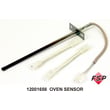
- Oven temperature sensor or control: can prevent the control from energizing elements.
- Wiring/terminal connection: loose or overheated connections can interrupt power to the oven.
Helpful model-matched parts to consider:
What to look for (symptoms guide)
| Symptom | Most likely cause | What we recommend |
|---|---|---|
| No heat on Bake, Broil works | Bake element failed | Inspect element; replace if damaged |
| No heat on Broil, Bake works | Broil element failed | Inspect broil element; replace if damaged |
| No heat on both Bake and Broil | Power supply, control, wiring | Verify 240V, then check connections |
| Heats but won’t reach set temp | Weak element or sensor issue | Check element condition; consider sensor/control diagnosis |
Why it matters
An oven that will not heat is often a simple fix (like a failed element), but a power supply or terminal block problem can create overheating at connections and lead to repeated failures. Catching the root cause helps restore safe, consistent baking performance.
Last updated: January 2026