


How many years should a lawn mower last?
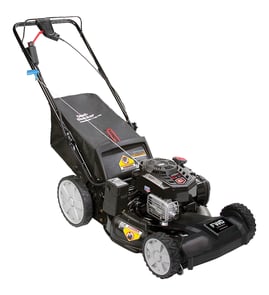
Most walk-behind gas mowers like the Murray M22450-96114002500 typically last about 8 to 15 years; the real lifespan depends more on hours of use and maintenance than calendar age. Keeping the cutting system tight and sharp (for example, the lawn mower 22-in deck mulching blade 532406713) helps reduce strain and extend service life.
What affects lifespan the most
- Annual hours of mowing (large yards and weekly mowing add up fast)
- Maintenance habits (oil changes, air filter service, clean deck)
- Storage (dry storage reduces rust and fuel-system issues)
- Cutting conditions (sand, sticks, wet grass accelerate wear)
- Impact damage (hitting roots or curbs can bend the blade system)
Quick maintenance checklist (high impact)
- Change engine oil on schedule and keep the oil at the correct level.
- Keep the underside of the deck clean to prevent corrosion and drag.
- Sharpen or replace the blade when cuts look ragged.
- Check blade mounting hardware for tightness after blade service.
- Use fresh fuel and avoid long-term storage with untreated fuel.
When repair usually makes sense vs replacement
| What you’re seeing | What it often means | Typical next step |
|---|---|---|
| Uneven cut, vibration | Blade or adapter wear, bent blade | Inspect blade and adapter; replace worn parts |
| Starts but runs rough | Fuel, carburetion, air filter | Tune-up and fuel-system cleaning |
| Frequent breakdowns | Multiple worn systems | Compare repair cost to mower value |
Why it matters
A mower can be “old” but still reliable if the wear items are kept up. A dull or damaged blade increases vibration and load, which can shorten the life of the crankshaft, blade adapter, and fasteners over time.
Last updated: January 2026
Are 4 blades better than 2 lawn mower?
For the Murray M22450-96114002500 walk-behind mower, “4 blades vs 2 blades” usually is not an upgrade choice; most walk-behind mowers are designed for a specific blade system. What’s “better” depends on your goal: mulching and leaf shredding vs raw cutting power and discharge.
What matters most on this model
This model is set up around a standard 22-inch deck blade style; changing to a different blade count is typically not compatible unless the deck and spindle system were designed for it. If you want better mulching performance, focus on using the correct mulching blade for this mower, such as the lawn mower 22-in deck mulching blade 532406713.
- Use a mulching blade when you want finer clippings and better leaf chopping
- Use a standard/high-lift blade (if applicable for your setup) when you want stronger bagging or side discharge
- Keep the blade sharp; a dull blade hurts cut quality more than “blade count” helps
- Match blade type to grass conditions (wet, tall, sandy, leafy)
4 blades vs 2 blades: practical differences
In general, more cutting edges can increase recutting and airflow, but it also increases drag.
| Goal | Typically better choice | Tradeoff |
|---|---|---|
| Mulching and leaf shredding | More recutting action (often mulching-style blades) | More load on the engine |
| Tall, dry grass | Less drag (simpler blade setup) | Larger clippings |
| Wet grass | Mulching can help, but clogging risk rises | May bog down |
| Bagging | Higher lift airflow designs | Can be noisy and power-hungry |
Quick checks before you change anything
- Confirm the mower’s deck and blade adapter are designed for the blade you want to run
- Inspect the blade adapter for wear or rounding (a loose blade cuts poorly)
- Verify the blade is installed right-side up and torqued correctly
- Mow slower in heavy grass; take a narrower pass if the engine lugs
Why it matters
Using the wrong blade style (or an incompatible multi-blade setup) can reduce cut quality, strain the engine, and create vibration that damages the blade adapter, fasteners, or crankshaft.
Last updated: January 2026
Where can I find my Murray model number?
On Murray model M22450-96114002500, the model number is usually on a sticker or metal tag attached to the mower deck, most often near the handle mounting area. Using the exact model number helps us match the correct diagrams and compatible replacement parts.
Where to look on M22450-96114002500
Check these common label locations on the mower itself:
- On top of the mower deck, near the center
- Between the brackets where the lower handle mounts to the deck
- On the rear portion of the deck near the discharge opening
- Near the engine mounting area on the deck (not on the plastic engine cover)
- Under grass or dirt buildup; wipe the deck clean to reveal the tag
What to write down from the tag
Copy the information exactly as shown (including dashes and any suffixes):
- Model number: M22450-96114002500
- Product number or type code (if listed)
- Serial number (if listed)
- Any revision or suffix characters
| Label item | Why we use it |
|---|---|
| Model number | Identifies the correct parts breakdown for your mower |
| Product/type code | Helps narrow down design variations |
| Serial number | Helps confirm the production version when parts changed |
Why it matters
Murray model numbers can be very similar across different deck and handle configurations. Matching the full model number first helps prevent ordering a part that looks right but will not fit.
If you are shopping for cutting parts, confirm the model number first, then match the description and measurements for items like the lawn mower 22-in deck mulching blade 532406713.
Last updated: January 2026
How old is my lawn mower by serial number?
For Murray walk-behind mower model M22450-96114002500, the mower serial number usually identifies the unit for parts and production tracking, but it often does not translate into a clear “build date” you can decode at home. The most dependable way to estimate age is typically the engine date code.
What you can use on this Murray model
Because Murray serial formats can vary by production run, we recommend using the mower tag for identification and the engine tag for dating.
- Use the mower model and serial tag to confirm you are working with M22450-96114002500
- Use the engine’s model and date code to estimate the manufacture date
- Compare the engine date to your purchase or service records to estimate mower age
- If the mower tag includes an obvious date field, use it as a secondary clue
Where to look for the tags
Common locations on walk-behind mowers like this Murray model:
- Mower model/serial tag on the deck (often near the handle mount area)
- Engine identification label on the engine shroud or blower housing
- Stamped numbers on the engine (varies by engine maker)
How to interpret what you find
The engine date code is usually the easiest to convert into a calendar date; the mower serial may not include a readable date.
| What you find | What it tells you | Best use |
|---|---|---|
| Mower model/serial | Unit identification | Matching correct parts and diagrams |
| Engine date code | Engine build date | Best estimate of mower age |
Why it matters
Age affects maintenance planning and parts fit. Wear items like blades, blade adapters, and control cables are commonly replaced over a mower’s life, and confirming the exact model helps avoid ordering the wrong component.
Parts you may match while servicing
- Lawn mower 22-in deck mulching blade 532406713
- Lawn mower blade adapter 581547901
- Lawn mower engine zone control cable 582991501
Last updated: January 2026