Installation guide
 Owner’s manual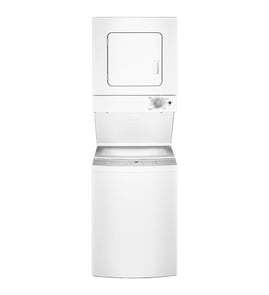


Are all washers 27 inches wide?
No. While 27 inches is a very common “standard” washer width, many washers are narrower (often around 24 inches) or slightly wider. For the GE GUD27GSSM2WW laundry center specifically, the installation specs list it as a 27-inch nominal model, with a measured width of about 26-1/8 inches with the door closed (including handle/knobs); see the GUD27GSSM2WW installation guide.
Common washer width ranges (what you’ll see in homes)
Most washer widths fall into a few buckets:
- Compact washers: about 24 inches wide
- Standard full-size washers: about 27 inches wide
- Oversize/high-capacity models: can be closer to 28 to 30 inches wide
- Laundry centers (like GUD27GSSM2WW): commonly built around 24-inch or 27-inch footprints
Why “27-inch washer” does not always measure 27 inches
Manufacturers often use “nominal” sizing. That means the label (24-inch or 27-inch) is a category, and the real measurement can be slightly different.
Here’s how to measure correctly:
- Measure widest point (handles, knobs, door curvature can add width)
- Measure with the door closed
- Confirm clearances for airflow and service access
- Account for hoses, venting, and drain outlet behind the unit
Quick comparison: nominal vs measured width
| Size label | What it usually means | What to do before buying |
|---|---|---|
| 24-inch | Compact footprint | Measure the opening and door swing |
| 27-inch | Standard footprint | Verify actual width and required clearances |
| 28 to 30-inch | Larger footprint | Confirm space, especially depth and door clearance |
Why it matters
Width is only part of fit. If you are installing in a closet or alcove, you also need the right ventilation and minimum clearances so the dryer can vent properly and the unit can be serviced safely.
Last updated: February 2026
Do you really need a stacking kit for a washer and dryer?
For the GE GUD27GSSM2WW laundry center, you do not need a stacking kit because the washer and dryer are already built as one unitized, stacked appliance. What you do need is correct installation, outdoor venting, and solid leveling so the unit stays stable during high-speed spin.
What to use instead of a stacking kit
A stacking kit is for separate, standalone washers and dryers. With a unitized laundry center like this GE model, stability comes from installation and leveling steps in the GUD27GSSM2WW installation guide.
Key setup items that matter most:
- Level the unit side-to-side and front-to-back; eliminate rocking on all four legs.
- Keep leveling leg extension as short as possible to reduce vibration.
- Exhaust the dryer to the outdoors using 4-inch rigid metal ducting (no plastic vent).
- Replace old plastic or foil duct with UL-listed duct.
- Follow gas-connection requirements if your unit is a gas dryer (qualified installer recommended).
Quick checklist: stacked pair vs. laundry center
| Setup type | Stacking kit needed? | What provides stability? |
|---|---|---|
| Separate washer + separate dryer | Usually yes | Stacking bracket kit and anti-tip design |
| GE GUD27GSSM2WW unitized laundry center | No | Cabinet design plus leveling legs and proper install |
Why it matters
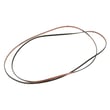
A stacking kit’s job is to prevent a separate dryer from shifting or falling. On a unitized laundry center, the bigger risk is vibration, noise, and premature wear if the appliance is not leveled and vented correctly. Proper setup helps protect components like the laundry center washer drive belt WE12X27300 and reduces strain during spin.
When to stop and get service help
We recommend professional service if you notice:
- Persistent rocking even after leveling
- Excessive banging during spin
- Gas smell or any concern with the gas hookup
Last updated: February 2026
What does GUD27GSSM2WW stand for?
GUD27GSSM2WW is the GE model number that identifies your specific unitized (stacked) laundry center configuration. It tells us the exact design family and feature set so we can match the correct parts, wiring, and operating instructions for your appliance.
How to read the model number (practical breakdown)
Model numbers are primarily an identifier, not a plain-English description. For GE laundry centers like GUD27GSSM2WW, the characters typically help indicate:
- Brand and product family (GE unitized laundry center series)
- Size/class (the “27” commonly aligns with the 27-inch unitized platform)
- Feature/engineering revision (letters often reflect feature packages or design updates)
- Color/finish code (the ending letters often indicate the finish, such as white)
For the exact model and serial tag location and the supported model family list, use the GUD27GSSM2WW owner’s manual.
Why the exact model number matters for parts
Even small letter changes can mean different belts, controls, or switches. When ordering parts or troubleshooting, always match the full model number.
Common examples on this GE platform include:
- Dryer drive issues: dryer drum belt WE03X29897
- Washer won’t start or won’t spin: lid lock and control checks
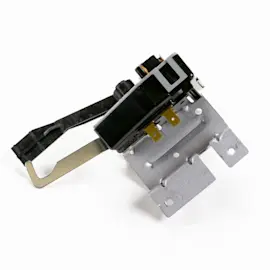
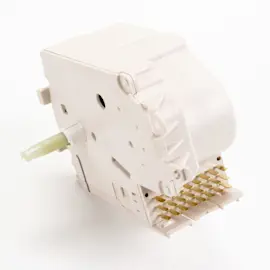
- Dryer won’t start: start switch and timer checks
Quick reference: what you should record
| Item | Where to find it | Why it matters |
|---|---|---|
| Model number (GUD27GSSM2WW) | Model/serial tag (often inside the dryer door area) | Ensures correct parts and instructions |
| Serial number | Same tag | Helps identify production run/version |
| Fuel type (gas vs electric) | Rating label and installation setup | Affects heating parts and diagnostics |
Why it matters
Using the full GUD27GSSM2WW model number prevents ordering the wrong GE parts (like a belt, control board, or switch) and keeps troubleshooting steps aligned with your exact laundry center design.
Last updated: February 2026
What is the downside to a stackable washer and dryer?
A stackable unit like the GE GUD27GSSM2WW laundry center saves floor space, but the main downsides are harder service access, more vibration sensitivity, and fewer layout options. You also need correct venting and loading habits to avoid long dry times and out-of-balance spins (see the GUD27GSSM2WW owner’s manual).
Common downsides (and what they mean day to day)
- Harder to service: Many repairs require removing panels and working in tight spaces; some jobs can require partial disassembly of the stacked cabinet.
- More noise and vibration: Because the washer and dryer share a frame, an out-of-balance washer load can transmit vibration through the whole unit.
- Control reach and visibility: Dryer controls can sit higher; shorter users may find them less convenient.
- Capacity tradeoffs: Laundry centers often have smaller washer and dryer capacities than full-size separate machines.
- Less flexibility: You cannot separate the washer and dryer later to change your laundry room layout.
- Venting is less forgiving: Poor ducting increases dry time and heat issues; rigid 4-inch metal ducting is the standard for safe, efficient airflow.
Quick comparison: stackable laundry center vs separate units
| Feature | Stacked laundry center (like GUD27GSSM2WW) | Separate washer + dryer |
|---|---|---|
| Space used | Smaller footprint | Larger footprint |
| Service access | Tighter, more disassembly | Easier access |
| Vibration control | More sensitive to leveling and load balance | Usually more isolated |
| Future flexibility | Limited | High |
How we reduce the downsides
Washer tips (balance and performance)
- Load items loosely and evenly around the basket; avoid packing.
- Keep loads below the top row of holes in the basket.
- If the load ends wet, redistribute and run Drain & Spin.
Dryer tips (dry time and safety)
- Clean the lint filter before every load.
- Use 4-inch rigid metal ducting; avoid plastic venting.
- Do not overload; dry one washer load at a time.
Why it matters
Most “stackable problems” are really installation and use issues: leveling, load balance, and venting. When those are right, a GE laundry center can run efficiently and help reduce total energy by spinning longer to shorten dryer time.
Last updated: February 2026
What is the most common problem with a GE dryer?
The most common GE dryer problem is poor drying or no heat, and it is often caused by restricted airflow (lint buildup or a kinked/crushed vent). On the GE GUD27GSSM2WW laundry center, the manual also highlights basic no-start and no-heat checks like power, breakers/fuses, and gas shutoff (for gas models). See the GUD27GSSM2WW owner's manual for model-specific troubleshooting steps.
Most common symptoms and what they usually mean
- Dryer tumbles but doesn’t heat: a tripped breaker/blown fuse (electric), gas shutoff closed (gas), or a heating system issue.
- Clothes take too long to dry: lint screen clogged, ducting obstructed, or venting installed in a way that restricts airflow.
- Dryer won’t start: power cord not fully seated, breaker/fuse issue, or a start circuit problem.
- Shaking or noise: some vibration is normal, but an uneven floor or unlevel unit can make it loud.
Quick checks we recommend first (fast, high-impact)
- Clean the lint screen before every load.
- Inspect the vent path for kinks, crushing, or heavy lint buildup.
- Confirm the outside damper opens freely when the dryer runs.
- Check the home breaker/fuse box (many electric dryers use two breakers/fuses).
- If you have a gas dryer, confirm both gas shutoffs are fully open.
Venting guidance that prevents “no heat” complaints
The installation instructions for this unit recommend rigid metal ducting for best performance; if flexible metal is used, keep it short and avoid enclosed spaces. Reference the GUD27GSSM2WW installation guide for venting limits and best practices.
| Venting choice | Drying performance | Risk of restriction |
|---|---|---|
| Rigid metal duct | Best | Lowest |
| UL-listed flexible metal duct | Good (when kept short/straight) | Medium |
| Foil-type flexible duct | Last resort only | Highest |
When a part is the likely fix
If the dryer won’t tumble (motor runs but drum does not turn, or you hear motor noise with no drum movement), a worn belt is a common cause. For this model, the correct replacement is the dryer drum belt WE03X29897.
Why it matters
Airflow problems do more than slow drying; they can also cause overheating, nuisance shutdowns, and repeated component failures. Keeping the lint screen and exhaust duct clear is the simplest way to protect performance.
Last updated: February 2026