Installation guide
 Owner’s manual
 Error Codes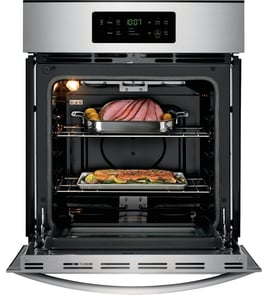



Are wall ovens a standard size?
Yes, wall ovens are built around standard cabinet cutout widths, but they are not one single universal size. For Kenmore Elite model 79048179000, the installation instructions show cutout specs for 27-inch and 30-inch cabinet widths, so you match the oven to the existing cutout (or adjust the cabinet).
Common “standard” wall oven sizes
Most single wall ovens are designed to fit one of these cabinet cutout widths:
- 24 inches (compact/smaller kitchens)
- 27 inches (common)
- 30 inches (most common)
Heights and depths vary by model, so we always recommend measuring the cabinet cutout and comparing it to the specs in the installation guide.
What the 79048179000 installation guide calls out
The installation instructions for this Kenmore Elite wall oven focus on fitting a limited variety of cutout sizes and provide a cutout chart for 27-inch and 30-inch installations.
Cutout width (cabinet opening)
| Nominal size | Cutout width range (W) | Notes |
|---|---|---|
| 27-inch | 24 7/8 to 25 1/4 in. | Minimum cabinet width 27 1/8 in. |
| 30-inch | 28 1/2 to 29 in. | Minimum cabinet width 30 1/8 in. |
Cutout height and depth (typical targets)
| Spec | Typical range shown | Why it matters |
|---|---|---|
| Cutout height | 48 7/8 to 49 7/8 in. | Ensures the oven chassis fits without binding |
| Cutout depth | 23 in. | Helps the oven sit correctly in the cabinet |
How to measure so you order the right size
- Measure the cutout width at the front and back of the opening.
- Measure the cutout height on both sides (cabinets can be out of square).
- Measure cutout depth from the cabinet face frame to the back wall.
- Confirm you have enough front clearance for the door to open.
- Compare your measurements to the cutout chart in the installation guide before buying parts or planning a replacement.
Why it matters
A wall oven that is “standard size” still needs the correct cutout width, height, and depth. If the opening is too small, the oven will not fit; if it is too large, you can get alignment issues and heat buildup concerns.
Last updated: February 2026
Do electric wall ovens need to be vented?
Yes. A Kenmore Elite electric wall oven like model 79048179000 must have adequate ventilation around the cabinet cutout so heat can dissipate during baking, broiling, and self-cleaning. Using the oven for long periods without adequate ventilation is unsafe and can overheat surrounding cabinetry.
What “vented” means for a built-in electric wall oven
Built-in electric wall ovens typically do not connect to a duct like a range hood. Instead, they rely on:
- Correct cabinet cutout and clearances
- Airflow paths designed into the oven and trim
- A properly installed, grounded electrical connection
- Keeping vents and openings unobstructed
For model-specific installation requirements, follow the installation guide.
Installation checks that affect ventilation
These items directly impact how well your 79048179000 sheds heat:
- Cutout dimensions match the guide (too tight restricts airflow)
- Oven support surface is level (prevents binding and misalignment that can block airflow)
- No insulation, foil, or packing material left in the cabinet opening
- Cabinet sides and trim are not pinching the oven chassis
- Oven is not installed in an unapproved configuration (these ovens are not approved for stackable or side-by-side installation)
Quick do/don’t table
| Situation | What to do | Why |
|---|---|---|
| Cabinet opening feels tight | Verify cutout size and clearances | Prevents heat buildup and cabinet damage |
| You smell hot wood or see discoloration | Stop using the oven and inspect airflow paths | Overheating indicates restricted ventilation |
| Oven runs hot after shutoff | Confirm cooling airflow is unobstructed | Normal cooling needs free airflow |
Why it matters
Adequate ventilation protects your cabinetry, helps the oven maintain stable temperatures, and reduces the risk of overheating during long bake cycles or self-clean.
Last updated: February 2026
What do you call an oven in the wall?
An oven installed into cabinetry is called a wall oven (also called a built-in oven). Your Kenmore Elite model 79048179000 is a wall oven designed to be mounted in a cabinet cutout, not used as a freestanding range.
Common names you will see
- Wall oven
- Built-in oven
- Single wall oven (one oven cavity)
- Double wall oven (two oven cavities)
- Under-counter built-in oven (installed below a cooktop in some layouts)
How a wall oven is different from a range
A wall oven is built into a cabinet opening and wired through a junction box; a range is a freestanding unit with a cooktop attached.
| Feature | Wall oven (built-in) | Range (freestanding) |
|---|---|---|
| Installation | Cabinet cutout | Slides between cabinets |
| Cooktop included | No | Yes |
| Typical wiring | Hardwired | Often corded or hardwired |
| Ergonomics | Can be installed higher | Fixed height |
Installation notes that matter for this model
From the installation instructions for Kenmore wall ovens:
- The cabinet base must support the oven’s weight (capacity depends on 27-inch vs 30-inch models).
- Allow clearance in front of the oven for the door to open.
- The oven must be centered in the cutout; do not remove spacers if equipped.
- These ovens are not approved for stackable or side-by-side installation.
For cutout sizing, clearances, and electrical grounding details, use the installation guide.
Why it matters
Using the right term (wall oven or built-in oven) helps you match the correct parts and installation requirements for model 79048179000, especially for cabinet cutout dimensions, wiring, and safety clearances.
Last updated: February 2026