Error Codes


Where can I find my Frigidaire dryer model number?
On your Frigidaire dryer, the model number is typically printed on a rating label around the door opening. For model FSE446RHS2, check along the top edge of the door opening first, then scan the door frame area for a sticker or metal tag.
Where to look on the dryer
Check these common label locations in this order:
- Along the top of the door opening (most common)
- On the inside door frame (left or right side)
- On the back panel near the power cord entry
- Behind the toe grille area (if your unit has a lower access panel)
What the label looks like
The tag usually includes both a model and serial number.
| You may see | What it means | Example format |
|---|---|---|
| Model number | Identifies the exact dryer design | FSE446RHS2 |
| Serial number | Identifies your specific unit | Letters and numbers |
Why it matters
We use the exact model number to match the correct Frigidaire dryer parts and diagrams. Even small model-number differences can change which belt, thermostat, or heating component fits.
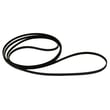
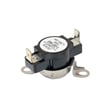
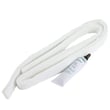
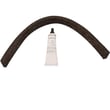
If you are ordering common wear items for this dryer, matching by model helps you land on the right part the first time, such as the belt 134503600 or the Frigidaire dryer heating element assembly 131553900.
Quick tips before you write it down
- Copy the model number exactly as shown (letters and numbers)
- Take a clear photo of the label for reference
- If the label is worn, try shining a flashlight across it at an angle to make the print easier to read
Last updated: February 2026
Does Frigidaire make clothes dryers?
Yes. Frigidaire manufactures clothes dryers, including electric and gas models, and they’re commonly sold as standalone dryers or as matched laundry pairs. If you own a Frigidaire dryer like model FSE446RHS2, we can help you identify the right replacement parts and common fixes.
What “Frigidaire clothes dryer” includes
Frigidaire clothes dryers are built in multiple configurations, so the best way to confirm what you have is by matching the model number on the dryer’s ID tag.
Common Frigidaire dryer types include:
- Electric vented dryers
- Gas vented dryers
- Stackable or laundry center style units (model-dependent)
- Standard capacity and compact capacity designs
How to confirm your exact dryer model
Use the model number from the appliance label (not the control panel name). For FSE446RHS2, that model number is already the key identifier for parts matching.
Check these spots for the label:
- Door opening (around the frame)
- Inside the door
- Rear panel
- Side panel near the bottom
Why it matters for parts and troubleshooting
Frigidaire makes many dryer designs, and parts like a heating element, thermostat, belt, or timer must match the exact model series to fit and work correctly.
| What you’re doing | What to match | Example for this model |
|---|---|---|
| Fixing a no-heat issue | Heating and safety parts | Frigidaire dryer heating element assembly 131553900 |
| Fixing a drum that won’t turn | Drive parts | Belt 134503600 |
| Checking fault symptoms | Brand-specific guidance | Frigidaire dryer error codes |
Quick next steps if your dryer isn’t working right
- Clean the lint screen and check airflow restrictions
- Verify the dryer is getting the correct power or gas supply
- Listen for drum movement (belt and bearing symptoms)
- Watch for overheating signs (thermal limiter or thermostat issues)
- Use brand-specific diagnostics when available
Last updated: February 2026
How to take off the front of a Frigidaire dryer?
To remove the front panel on a Frigidaire dryer model FSE446RHS2, we disconnect power, open up the top/front fasteners, unplug the door switch wiring, then lift the front panel up and off the lower retaining tabs. This gives access to the drum, belt, and blower area.
Before you start (safety and prep)
- Unplug the dryer (or switch off the breaker); electric dryers can still have live voltage at the terminal block.
- If it is a gas dryer, shut off the gas supply valve as well.
- Pull the dryer forward so you can reach the rear and sides.
- Have a container ready for screws so nothing gets lost.
- Wear cut-resistant gloves; cabinet edges can be sharp.
Front panel removal steps (typical Frigidaire-built design)
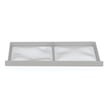
- Remove the lint screen, then remove the screws that are usually located under the lint screen opening (these often secure the top).
- Release the top panel: use a putty knife to pop the spring clips near the front corners, then lift the top.
- Remove the front panel mounting screws (commonly at the upper inside corners once the top is raised).
- Disconnect the door switch wire harness (and any zip tie holding the harness to the panel).
- Lift the front panel up and out to unhook it from the lower tabs, then set it aside.
What you may see once the front is off
| Area | What to inspect | Common symptom |
|---|---|---|
| Drum drive | Belt and idler path | Squealing, thumping, drum not turning |
| Front support | Drum glides/felt | Scraping, wear marks on drum |
| Airflow | Blower housing | Poor drying, overheating |
Why it matters
Removing the front panel is the first step for many repairs on the FSE446RHS2, including replacing a broken drum belt, servicing drum support parts, or clearing lint buildup that can cause long dry times and overheating.
Parts that are commonly replaced during this repair
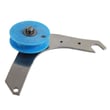
- If the drum will not turn or you find a snapped belt, replace the belt 134503600.
- If you hear grinding or rumbling from the rear drum support, consider the dryer drum bearing 131825900 or the dryer drum bearing bracket 131724301.
- If you see worn front support surfaces, inspect the dryer drum glide 137513300 and the lower felt 5303937183.
Helpful DIY reference
For related troubleshooting and repair direction, we recommend what are the main parts of a clothes dryer to identify components you will see once the front panel is removed.
Last updated: February 2026
Why did my Frigidaire dryer stop working?
If your Frigidaire FSE446RHS2 dryer stopped working, the most common causes are a loss of power to the dryer, a door not fully latching, or an overheating safety device opening (thermal limiter or high-limit thermostat). Start with the simplest checks first, then test heat and motor circuits.
Quick checks we recommend first
- Confirm the dryer has power: check the breaker (electric dryers often use a 2-pole breaker) and the outlet.
- Make sure the door closes firmly; a weak latch can prevent the motor from running.
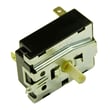
- Try a different cycle and press Start firmly; a worn start switch can fail intermittently.
- Clean the lint screen and check airflow at the outside vent hood.
- If the dryer ran hot or smelled “burnt,” suspect an overheat condition and stop using it until venting is cleared.
What to test next (most likely failures)
A “dead” dryer (no response) usually points to a power issue, timer/control issue, or an open safety device. A dryer that starts then stops often points to overheating, a failing motor, or a poor door switch/latch connection.
| Symptom | Most likely area | Common related parts for FSE446RHS2 |
|---|---|---|
| No lights, no start | House power, timer, open safety device | Dryer thermal limiter 134120900, dryer timer 131905500 |
| Starts then stops | Overheating, restricted venting | Kelvinator dryer high-limit thermostat 3204267 |
| Runs but no heat | Heating circuit, thermostat/limiter | Frigidaire dryer heating element assembly 131553900, dryer thermal limiter 134120900 |
| Door must be slammed | Door latch alignment/wear | Frigidaire dryer door catch 131658800, strike 5303207102 |
Why airflow problems matter
Restricted venting is one of the top reasons dryers shut down or blow a thermal limiter. Poor airflow makes the heater housing and drum area run too hot, which can open the high-limit thermostat or thermal limiter to protect the dryer.
Helpful DIY guidance
- Use our Frigidaire dryer error codes reference if your control panel shows a code.
- If you suspect heat-related shutdowns, clean the entire vent run (dryer outlet to exterior hood) and re-test.
- If the drum does not turn but the motor hums, inspect the belt and drum support parts.
Last updated: February 2026