Owner’s manual


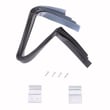
How to tell if a dryer start switch is bad?
A bad start switch on your Kenmore 11087531702 dryer usually shows up as a dryer that will not start even though the door is closed and you press and hold START firmly. The sure way to confirm is a continuity test of the switch with the dryer unplugged (see the owner's manual for safe access guidance).
Before you open the console, rule out the common no-start causes the manual calls out:
- Make sure the controls are set to a running or “On” position.
- Close the dryer door fully (a door that is not fully latched can prevent starting).
- Press and hold START for about 1 second (not a quick tap).
- Confirm the dryer is plugged in and the power supply is connected.
- Check the household breaker or fuses (many electric dryers use two fuses or a 2-pole breaker).
If the checks above look good, test the switch.
- Unplug the dryer (or shut off power at the breaker) before any disassembly.
- Access the start switch from the control panel area.
- Label or photograph wire positions before removing any wires.
- Remove at least one wire from the switch terminal so you do not read through the circuit.
- Use a multimeter on continuity or ohms:
- With the button not pressed, the switch should typically read open.
- With the button pressed, it should typically read closed (continuity).
If the readings do not change when you press the button, the start switch is bad.
These issues can cause the same symptom (won’t start) and are worth checking:
| Symptom | More likely cause | What to check |
|---|---|---|
| No response at all | Power supply issue | 2 fuses/2-pole breaker, outlet power |
| Starts only with door pressure | Door latch/switch issue | Door closes firmly, latch alignment |
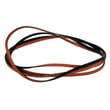
| Hums but won’t turn | Drive system drag | Drum turns by hand, belt/idler/rollers |
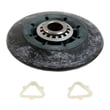
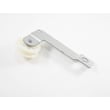
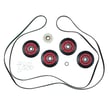
If the drum is hard to turn or you hear squealing or thumping, worn drum support parts are common. A rebuild kit such as the dryer repair kit 4392067 often addresses rollers, idler, and related wear items.
A failing start switch can stop the dryer from running at all, but a no-start complaint is also a key safety signal for power supply or door-switch problems. Checking the basics first prevents unnecessary parts replacement.
Last updated: February 2026
Is it worth replacing the heating element in a dryer?
Yes. For Kenmore dryer model 11087531702, replacing a failed heating element is usually worth it because the repair cost is typically far less than replacing the dryer, and it often restores normal drying performance when the rest of the machine is in good shape. Confirm the no-heat diagnosis first using the checks in the owner's manual.
We recommend replacing the heating element when the dryer tumbles normally but produces no heat, and basic power and airflow checks pass.
- The drum turns but clothes stay cold or damp
- You have proper 240V power (electric dryers commonly use 2 fuses or breakers)
- The vent is not crushed or kinked and airflow is strong
- The dryer is otherwise in good condition (no major noise, drum damage, or repeated shutdowns)
- You want to extend the dryer’s useful life without buying a new unit
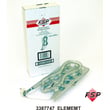
A common replacement for this model is the dryer heating element WP3387747.
The manual’s troubleshooting points are the fastest way to avoid replacing the wrong part.
- Run a Timed Dry heated cycle (do not use “Air Only”) and check for heat after about 5 minutes
- Verify the dryer is on a 240V supply and both household fuses or breakers are good
- Make sure the door fully closes and Start is pressed firmly
- Check the vent path for restrictions (kinks, crushed duct, heavy lint)
- Clean the lint screen and confirm strong exhaust airflow outside
If the element is good, other heat-related parts can stop heating and may be replaced as a set.
| Symptom | Common cause | Example part on this model page |
|---|---|---|
| No heat, drum turns | Heating circuit failure | Heating element |
| No heat, may be overheating history | Safety cut-off opened | Thermal cut-off kit |
| Heat is erratic or cycles oddly | Temperature sensing issue | Thermistor |
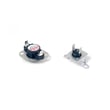
Model-matched examples include the dryer thermal cut-off fuse kit 279973 and dryer thermistor WP8577274.
A no-heat dryer often wastes hours of laundry time and can point to airflow problems that also stress the heating system. Fixing the root cause (heat part plus venting) helps prevent repeat failures and improves drying efficiency.
Last updated: February 2026
What is the life expectancy of a Kenmore dryer?
A Kenmore dryer like model 11087531702 typically lasts 10 to 13 years. With consistent dryer care (especially lint screen and vent cleaning), it’s common for this type of dryer to reach 15 years of service before major repairs become more likely; see the owner's manual.
- Airflow and venting: restricted exhaust makes the heater and thermal safety devices work harder.
- Lint removal: cleaning the lint screen every load reduces heat stress and drying time.
- Load size: frequent overloading strains the drive motor, drum support rollers, and belt system.
- Heat management: repeated overheating can shorten the life of the heating element and thermal cut-off.
- Routine maintenance: periodic interior lint removal helps prevent hot spots and wear.
- Clean the lint screen before or after every load.
- Check and clean the exhaust duct and outside hood regularly.
- Keep the area around the dryer clean and free of lint buildup.
- If drying times increase, inspect airflow first before replacing parts.
- Address squealing or thumping early; worn rollers or an idler pulley can damage the drum or belt.
| What you notice | Most common wear area | Example part for this model |
|---|---|---|
| Squealing, thumping, rumbling | Drum support and belt path | Support WPW10314173 |
| Dryer runs but no heat | Heating circuit or safety cut-off | Dryer heating element WP3387747 |
| Overheating or cycling oddly | Temperature sensing | Dryer thermistor WP8577274 |
A dryer that’s running hot or struggling to move air can still “work,” but it ages faster. Good airflow and lint control reduce stress on the heating element, thermal cut-off fuse, and drive components, which is the simplest way to extend the service life of your Kenmore dryer.
Last updated: February 2026