Error Codes

How to identify a Kenmore washer model?
Your Kenmore washer model number is printed on the appliance’s ID label; for Kenmore units it often starts with 110 (like 11026844691). On most washers, you’ll find that label under the lid (top-load) or around the door opening (front-load), and it’s the key to matching the correct replacement parts.
Where to look on the washer
Check these common ID-label locations first:
- Top-load washers: under the lid, along the rim of the tub opening
- Front-load washers: on the door opening frame, or just inside the door area
- Back panel: near the power cord entry or lower rear cabinet
- Control console area: behind the console or on the cabinet edge near the controls
What the model number looks like (and what to write down)
For Kenmore, the model number is usually 11 characters or longer and may include a prefix and a full model string.
| What to capture | Example | Why it matters |
|---|---|---|
| Full model number | 11026844691 | Ensures parts fit your exact washer |
| Serial number | (varies) | Helps date the unit and confirm production run |
| Type | Top-load or front-load | Narrows down correct diagrams and parts |
Quick tips to avoid ordering the wrong part
These steps prevent the most common mix-ups:
- Copy the model number exactly, including all digits
- Take a clear photo of the ID label before it wears or smudges
- Match parts by model first, then confirm by symptom (no spin, no drain, leaks)
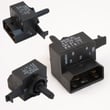
- If the washer will not start or stops mid-cycle, check common failure items like the washer lid switch WP3949238
Why it matters
Kenmore model numbers identify the exact design family, wiring, and drive system. Even small model-number differences can change which drain pump, lid switch, coupling, or gear case fits.
Last updated: February 2026
What is the average lifespan of a Kenmore washer?
A Kenmore washer typically lasts 10 to 15 years with normal household use. For Kenmore model 11026844691, consistent care (proper loading, correct detergent, and addressing small leaks or noises early) helps you reach the high end of that range.
Typical lifespan and what affects it
Most washers wear out from mechanical stress, water exposure, and vibration. These factors have the biggest impact:
- Load size and frequency (overloading shortens life)
- Installation and leveling (out-of-balance shaking accelerates wear)
- Water quality (sediment can strain fill and drain components)
- Detergent use (too much can cause residue and odor issues)
- Fixing small problems early (a minor leak can become a major failure)
Parts that commonly limit washer life
On many Kenmore top-load designs like model 11026844691, these parts often show wear first:
- Lid switch problems that stop spin or agitation
- Drain pump wear that causes slow draining or leaks
- Drive system wear that causes poor agitation or spinning
- Suspension issues that increase vibration and tub movement
If your washer will not spin or stops mid-cycle, the washer lid switch WP3949238 is a common starting point.
Quick “repair or replace” guide
Use this as a practical decision tool.
| What you’re seeing | Most likely direction | Why |
|---|---|---|
| Minor leak, slow drain, or intermittent no-spin | Repair | Often a single part and straightforward labor |
| Loud grinding, heavy oil leak, or repeated drive failures | Replace or major repair | Can involve gear case or multiple drive components |
| Frequent out-of-balance, tub banging | Repair first | Suspension and leveling issues are often correctable |
Why it matters
A washer near the end of its lifespan can still be reliable, but small symptoms (slow drain, no-spin, extra vibration) are early warnings. Catching them early helps prevent secondary damage to the motor, gear case, and tub.
Last updated: February 2026
What replacement parts are most commonly needed for the 11026844691?
For Kenmore washer model 11026844691, the most commonly replaced parts are the ones that wear with normal use or stop the washer for safety, filling, draining, or agitation. Start with the lid switch, drain pump, motor coupling, and agitator components.
Most common replacement parts for this model
These are frequent fixes for no spin, no drain, won’t start, weak agitation, leaks, and loud operation:
- Washer lid switch WP3949238 (won’t start, won’t spin, stops mid-cycle)
- Washer drain pump WP3363394 (won’t drain, humming, water left in tub)
- Coupling 285753A (motor runs but won’t agitate or spin)
- Agitator dog 80040 (agitator top “ratchets” or doesn’t move clothes well)
- Inlet valve 285805 (won’t fill, slow fill, overfills)
- Clutch 285785 (slow or no spin, burning smell, noisy spin)
Quick symptom-to-part guide
| Symptom | Most likely part(s) to check | What you’ll notice |
|---|---|---|
| Won’t start or won’t spin | Lid switch | No click at lid, stops when lid is moved |
| Won’t drain | Drain pump, drain hose | Water stays in tub, pump hums or rattles |
| No agitation or no spin (motor runs) | Motor coupling | Tub/agitator doesn’t move, rubber/plastic debris |
| Weak agitation | Agitator dogs, agitator cam | Upper agitator slips or doesn’t “grab” |
| Won’t fill or fills slowly | Inlet valve | Long fill times, hot/cold imbalance |
Why these parts fail most often
Wear items take the most stress in a top-load Kenmore washer like the 11026844691:
- Safety switches cycle thousands of times
- Pumps handle lint, coins, and small debris
- Couplings protect the motor by breaking first
- Agitator parts wear down from heavy loads
Tips before you order
- Match parts by model 11026844691 to ensure fit.
- If you have multiple symptoms, fix the “no start/no drain” issue first.
- Check for simple causes: kinked drain hose, clogged pump inlet, unbalanced load.
Last updated: March 2026