Owner’s manual
 Error Codes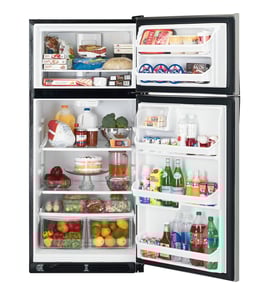





What are the disadvantages of a top mount fridge?
A top-mount (top-freezer) refrigerator like the GE GIE22JTNBRBB is usually reliable and efficient, but its main disadvantages are convenience and layout: fresh-food items sit lower (more bending), freezer access is higher, and storage features are often simpler than bottom-freezer designs.
Common disadvantages you may notice
- More bending for daily use: the refrigerator compartment is below the freezer, so produce, drinks, and leftovers are lower.
- Less “eye-level” organization: shelves and bins can feel less flexible than some premium layouts.
- Freezer ergonomics: reaching into a top freezer can be awkward for some users, especially for bulky items.
- Fewer built-in features on many models: top-mount designs often skip exterior ice and water dispensing.
- Door swing and clearance needs: you may need extra space for doors to open fully and for airflow behind the unit.
What to check on your GE GIE22JTNBRBB
Your model’s setup and clearances affect day-to-day usability. We recommend confirming the exact clearance requirements and leveling steps in the GIE22JTNBRBB owner’s manual.
Quick clearance reference (typical for this GE top-freezer platform)
| Area | Typical clearance guidance | Why it matters |
|---|---|---|
| Sides | 1/8 in to 3/4 in (varies by capacity) | Door swing, airflow |
| Top | About 1 in | Heat release |
| Back | About 1 in to 2 in (varies by capacity) | Compressor airflow |
Why it matters
Most “disadvantages” come down to ergonomics and kitchen workflow. If you access fresh food many times a day, bending lower can be the biggest drawback; if you use the freezer more, a top freezer can actually feel more convenient.
When a “top mount” is still a great choice
- You want a straightforward design with fewer complex features
- You prefer a freezer at chest or eye level
- You want easier access for cleaning behind the refrigerator using rollers and leveling legs
Last updated: January 2026
What is the life expectancy of a top freezer refrigerator?
A top-freezer refrigerator like the GE GIE22JTNBRBB typically lasts 10 to 15 years. With consistent care (clean airflow paths, good door sealing, and stable temperatures), many owners reach the upper end of that range.
Typical lifespan and what affects it
Most top-freezer designs are durable because they use a straightforward cooling layout, but lifespan still depends on usage and maintenance.
- Coil cleanliness and airflow (dust buildup makes the system run hotter and longer)
- Door seal condition (air leaks cause longer run times and frost)
- Temperature stability (frequent warm-ups add wear)
- Ice maker and water system upkeep (if equipped and connected)
- How full it runs (overpacking blocks vents; underpacking can cause temperature swings)
Maintenance checklist to help it reach 15 years
Use these habits to reduce compressor run time and prevent common cooling complaints.
- Keep freezer and fresh-food vents clear of packages
- Confirm doors close fully every time; avoid “propping” doors open
- Wipe door gaskets and mating surfaces so they seal tightly
- Clean spills promptly to prevent odors and gasket damage
- If you have an ice maker, connect the water line correctly and allow time for temperatures to stabilize
Quick reference: symptoms that shorten lifespan
| What you notice | Common cause | What to do first |
|---|---|---|
| Frost buildup in freezer | Door not sealing or left open | Check gasket contact and door closure |
| Warm refrigerator section | Airflow blocked or fan issue | Clear vents; listen for fan operation |
| Loud or constant running | Dirty coils or poor ventilation | Clean coils; ensure clearance |
| No ice production | Freezer not cold enough or ice maker off | Wait 24 hours after setup; verify settings |
Why it matters
A refrigerator that runs longer than necessary uses more energy and puts extra stress on key components like the compressor, evaporator fan, and defrost system. Preventing frost and keeping airflow clear are two of the most effective ways to protect long-term reliability.
For model-specific operating and care guidance (including normal sounds, temperature control, and ice maker basics), follow the GIE22JTNBRBB owner’s manual.
Last updated: January 2026
What is the most common problem with GE profile refrigerators?
The most common issue we see across GE Profile refrigerators is a cooling problem (fresh food section warm, freezer not holding temperature, or temperatures swinging). On the GE GIE22JTNBRBB top-mount refrigerator, the same “not cooling” symptom is usually tied to airflow, fan operation, or a defrost-related ice buildup.
Most common symptoms customers report
- Refrigerator section warm but freezer seems OK
- Freezer warm and ice cream soft
- Loud humming, rattling, or clicking from the back or freezer area
- Ice maker slow or not making ice
- Water under the refrigerator or inside the fresh food section
Quick checks we recommend first (no parts yet)
- Confirm doors fully close and gaskets seal; clean gaskets with warm soapy water and dry them well (maintenance helps gaskets last longer). See the GIE22JTNBRBB owner’s manual.
- Set temperatures to normal settings and allow 24 hours to stabilize.
- Make sure vents inside the refrigerator and freezer are not blocked by food.
- Listen for the evaporator fan running when the compressor is on.
- Check for heavy frost on the freezer back panel (a strong clue of a defrost problem).
Common causes and the parts that often relate
| Problem pattern | What it usually points to | Example part for this model |
|---|---|---|
| Warm fridge, freezer OK | Airflow issue from freezer to fridge | Fixed damper WR02X31092 |
| Warm temps, weak airflow, fan noisy or not running | Evaporator fan issue | Evaporator f WR60X31522 |
| Heavy frost on freezer back panel | Defrost system not clearing ice | Refrigerator defrost heater assembly WR55X31113 |
| Random symptoms, no clear pattern | Control or power management issue | Refrigerator main control board WR55X43825 |
Why it matters
Cooling problems can snowball fast: poor airflow and frost buildup force the compressor to run longer, which can spoil food and increase energy use. Catching the early signs (weak airflow, frost, unusual fan noise) helps prevent bigger failures.
Last updated: January 2026