 Owner’s manual


How to hard reset kenmore washer?
To hard reset your Kenmore washer model 41742052100, disconnect power at the outlet for 2 minutes, then restore power and start a normal cycle. If the control is still acting up, stop the cycle by pushing in the cycle selector knob and reselect the cycle as described in the 41742052100 owner's manual.
- Push in the cycle selector knob to stop the washer.
- Unplug the washer (or switch the breaker off).
- Wait 2 minutes to fully discharge the control.
- Restore power.
- Close the door fully, then pull out the cycle selector knob to start a cycle.
- If the washer was overheated, allow up to 30 minutes for the motor overload protector to reset before testing.
| Symptom | Reset helps? | What to check next |
|---|---|---|
| Control seems frozen or won’t respond | Yes | Power supply, cycle selector position |
| Washer won’t start at all | Sometimes | Outlet, breaker/fuse, door closed, dispenser drawer closed |
| Stops mid-cycle after heavy use | Sometimes | Motor overheating and cool-down period |
| Door won’t open during spin | No (normal) | Wait 1 to 2 minutes for the lock to release |
- Confirm the plug is seated firmly and the outlet has power.
- Reset the house breaker or replace the fuse (use the correct rating).
- Turn on both water supply faucets.
- Move the cycle selector slightly clockwise, then pull out the knob to start.
- Make sure the door is fully closed and latched.
- Make sure the dispenser drawer is completely closed (some models shut off if it is pulled out).
A hard reset clears minor control glitches after a power interruption or a paused cycle. It also helps you separate a simple control issue from a real problem like a door latch issue, an overheated motor, or a power supply problem.
Last updated: January 2026
What is the average lifespan of a Kenmore washer?
A Kenmore washer typically lasts 10 to 15 years. For the Kenmore 41742052100 (a front-load “Tumble Action” style washer), 10 to 12 years is the most common lifespan range with normal household use, and good care can push it closer to the high end.
Most Kenmore washers fall into these real-world ranges:
- Front-load washers: 10 to 12 years
- Top-load washers: 12 to 15 years
- Heavy use (large families, frequent loads): tends toward the lower end
- Light use and good maintenance: tends toward the higher end
| Washer type | Typical lifespan | What usually ends it first |
|---|---|---|
| Front-load | 10 to 12 years | Bearings, door seal leaks, drain issues |
| Top-load | 12 to 15 years | Suspension wear, transmission or drive issues |
These are the most common factors we see affecting longevity:
- Overloading the drum, especially with heavy items
- Too much detergent (causes residue, odors, and extra strain)
- Not cleaning the door boot/bellows after use
- Poor leveling (increases vibration and wear)
- Slow draining from clogs or a weakening pump
If you want model-specific care and operating guidance, follow the maintenance and usage sections in the 41742052100 use and care guide.
A washer can often run for years longer when wear items are replaced early.
| Symptom | Common area to check | Example part for this model |
|---|---|---|
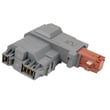
| Door will not latch or start | Door lock/catch | Door catch 131763256 |
| Excessive shaking or banging | Suspension/shocks | Level shock 5304485917 |
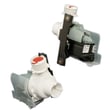
| Won’t drain or drains slowly | Drain pump or hose restriction | Washer drain pump 137108000 |
Knowing the typical lifespan helps you decide whether to repair or replace. If your Kenmore 41742052100 is already in the 10 to 15 year window, fixing a single part (like a door catch, shock, or drain pump) can still be a smart, cost-effective way to keep it running.
Last updated: January 2026
How to unclog drain hose on Kenmore washer?
On the Kenmore 41742052100 washer, a slow or no-drain problem is usually caused by a kinked or clogged drain hose. We recommend unplugging the washer, draining any standing water safely, then removing and flushing the drain hose to clear lint, coins, or small clothing items. See the Kenmore 41742052100 washer manual for model-specific access and safety notes.
- Unplug the washer and turn off both water supply faucets.
- Pull the washer forward and check for a kinked drain hose first; straighten it.
- Place towels and a shallow pan under the hose connection to catch water.
- Disconnect the drain hose and flush it with hot water from a sink or tub.
- If flushing does not clear it, gently work a plastic zip tie or small drain snake through the hose to push out debris.
- Reinstall the hose and run a Spin/Drain cycle to confirm normal draining.
A drain hose can act “clogged” if the installation causes siphoning or restricted flow.
- Confirm the standpipe is not higher than 8 ft (2.4 m).
- Confirm the standpipe height is at least 23.6 in (60 cm) to prevent siphoning.
- Make sure the hose is not shoved too far down the standpipe (it needs an air gap).
- Check the house drain for slow flow; a partially blocked standpipe can mimic a washer clog.
| What you see | Most common cause | What to do |
|---|---|---|
| Drains slowly | Hose kink or partial blockage | Straighten hose; flush hose |
| Won’t drain at all | Hose fully blocked or house drain clogged | Clear hose; check standpipe flow |
| Water returns to tub | Standpipe backing up | Unclog standpipe; reduce suds |
If the hose is clear but the washer still drains slowly, the drain pump or hose itself can be the restriction.
- Washer drain hose 134592700 (cracked, collapsed, or internally restricted)
- Washer drain pump 137108000 (impeller jammed by debris)
A restricted drain can leave loads too wet after spin, trigger oversudsing symptoms, and strain the drain pump. Fixing the hose routing and standpipe height helps prevent repeat drain problems.
Last updated: January 2026
What is the most expensive part to replace on a washing machine?
On the Kenmore 41742052100 washer, the most expensive repair is the tub and basket area when it requires major disassembly (outer tub, bearings, seals, or basket-related work). The part cost can be high, but labor time is usually the biggest cost driver; use the 41742052100 owner's manual to confirm care steps that help prevent these failures.
These repairs commonly top the list on front-load washers because access requires extensive teardown:
- Outer tub or tub assembly work (deep disassembly)
- Bearing and seal service (often tied to tub removal)
- Wash basket or drum-related repairs (heavy components, long labor time)
- Drive motor or motor control issues (higher-priced components plus diagnosis)
- Main control board replacement (electronics plus troubleshooting time)
This model uses a front-load design with a door boot and drain system; leaks or poor draining can lead to additional damage that increases the total repair bill.
If you are already opening the machine for a leak or drain problem, these model-matched parts are commonly involved:
- Bellows 5303937187 (door boot seal that prevents leaks at the door opening)
- Washer drain pump 137108000 (pumps water out for drain and spin)
- Electrolux washer front outer tub assembly 131618600 (major tub component used in large disassembly repairs)
| Repair category | Typical labor level | Why it gets expensive |
|---|---|---|
| Tub, basket, bearings, seals | High | Major disassembly and long labor time |
| Motor, motor control, control board | Medium to high | Higher part cost plus diagnosis |
| Pump, door boot, inlet valve | Low to medium | Easier access, but still time and setup |
When the tub and bearing area fails, the repair often approaches the value of the washer because labor is intensive. Identifying whether you have a leak, drain issue, or bearing noise helps you focus on the right repair path and parts.
Last updated: January 2026



