Owner’s manual
 Error Codes




How to do a diagnostic test on LG dryer?
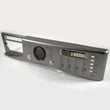
To run a basic diagnostic on your LG dryer model DLEX3360V, start with the dryer powered Off. Press Power, then quickly press Temp and Signal together until “INS” appears; press Start/Pause to begin the installation check (see the DLEX3360V manual).
Before you start (quick safety and setup)
- Make sure the dryer is empty.
- Close the door fully; a door that is not latched can stop tests.
- If the control panel is unresponsive, unplug the dryer for 1 minute, then retry.
- For accurate airflow results, clean the lint screen first.
- If you recently had long dry times, inspect the vent path for restrictions.
Diagnostic steps (installation check)
- Turn the dryer Off (not unplugged).
- Press Power.
- Quickly press Temp and Signal at the same time.
- When INS shows on the display, press Start/Pause.
What you should see
| Display/behavior | What it usually indicates | What to do next |
|---|---|---|
| INS starts and runs | Control panel accepted the test | Let it finish and note any messages |
| INS will not appear | Button sequence not accepted | Retry with quicker timing; confirm dryer is Off first |
| Test runs but drying is still poor | Often airflow or lint buildup | Clean lint screen and venting; check exhaust duct |
Why it matters
Running the installation check helps confirm the dryer is set up to move air properly. Good airflow protects the heater system and helps prevent long dry times and overheating symptoms.
Parts that commonly affect airflow and drying performance
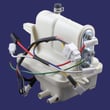
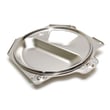
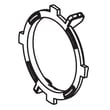
If the test points to airflow issues or you are troubleshooting long dry times, these model-compatible parts are often involved:
- Lint filter - dryer part by LG ADQ56656401 (clogged or damaged filter restricts airflow)
- LG dryer lint screen housing MCK49049101 (warped housing can leak air and reduce flow)
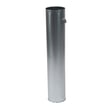
- Dryer exhaust duct 5209EL1006A (crushed or lint-packed ducting slows exhaust)
Last updated: January 2026
How to reset an LG sensor dry dryer?
To reset the Sensor Dry function on our LG DLEX3360V dryer, we typically power-cycle the dryer (turn it off, unplug for 1 minute, then restore power) and restart the cycle. If Sensor Dry still ends too soon or acts erratically, cleaning the moisture sensor bars and airflow path usually fixes it.
Quick reset steps (DLEX3360V)
- Press Power to turn the dryer off.
- Unplug the dryer (or switch the breaker off) for 60 seconds.
- Restore power.
- Select a Sensor Dry cycle and press Start/Pause.
- If the panel is unresponsive, repeat the power-cycle once.
For control and cycle behavior details specific to this model, use the DLEX3360V dryer manual.
If Sensor Dry is not drying correctly after a reset
Sensor cycles rely on moisture sensor bars plus good airflow. These checks solve most “stops early” or “still damp” complaints:
- Clean the lint screen before every load; wash it with mild soap and water if you see residue.
- Clean the moisture sensor bars inside the drum (usually near the lint filter housing) with rubbing alcohol and a soft cloth.
- Avoid dryer sheets for a few loads; waxy buildup can insulate the sensor.
- Confirm the vent is not crushed, kinked, or excessively long.
- Try a Time Dry cycle once; if Time Dry works but Sensor Dry does not, focus on the sensor circuit.
If the sensor assembly is damaged or not reading moisture, the compatible replacement for this model is the dryer moisture sensor 6500EL3001A.
What “reset” can and cannot do
| Situation | What a reset helps | What to check next |
|---|---|---|
| Control panel glitch, cycle won’t start | Clears temporary control logic | Door closed, power supply, settings |
| Sensor Dry ends too soon | Sometimes | Sensor bar buildup, venting, load size |
| No heat | Usually not | Heating circuit components, airflow restrictions |
Why it matters
Sensor Dry uses moisture readings to prevent over-drying and reduce energy use. When the sensor bars are coated (or airflow is restricted), the dryer can “think” clothes are dry and shut off early, leading to longer laundry time and inconsistent results.
Last updated: January 2026
What is the most common problem with LG dryers?
The most common issue we see with LG dryers, including model DLEX3360V, is clothes taking too long to dry or not drying well. In most cases, the root cause is restricted airflow (lint buildup or a blocked exhaust path), followed by heating or sensor-related problems.
What to check first (fast, high-impact)
- Clean the lint screen before every load; replace a torn or warped screen such as the lint filter ADQ56656401.
- Inspect the lint screen chute and housing for buildup; damage here can reduce airflow (see LG DLEX3360V manual for cleaning and access guidance).
- Confirm strong airflow at the outside vent hood while the dryer runs.
- Avoid crushed, kinked, or extra-long vent runs; shorten and straighten where possible.
- Do not overload; heavy loads restrict tumbling and airflow.
If it runs but still will not dry: likely causes
Restricted airflow is most common, but if airflow is good, these DLEX3360V-COMPATIBLE parts are often involved:
- Heating circuit issue: dryer heating element 5301EL1001J
- Temperature sensing issue: dryer thermistor AGM30045804
- Overheating protection opening: dryer high-limit thermostat 6931EL3003D
- Weak airflow inside the dryer: blower wheel or ducting problems (inspect for lint and damage)
Noisy operation is the other frequent complaint
A thumping, rumbling, or squealing sound is often wear in drum support or belt-drive components.
| Symptom | Most likely area | What we typically do |
|---|---|---|
| Thump/rumble | Drum support | Inspect rollers and drum contact points |
| Squeal | Belt/idler area | Check belt routing and pulley condition |
| Vibration | Leveling/installation | Level the cabinet and verify vent routing |
Why it matters
Poor drying is not just inconvenient; it increases energy use and can overheat the dryer. Keeping airflow clear helps protect key components like the heating element, thermostats, and sensors.
Last updated: January 2026