Installation guide
 Owner’s manual


Is Kenmore Elite high end?
Yes. Kenmore Elite is Kenmore’s higher-end line, and the Kenmore Elite washer model 11027082601 is built to deliver premium cleaning performance and convenience features compared with standard Kenmore models (more cycle options, temperature choices, and specialty cycles).
What “high end” means for this Kenmore Elite washer
On model 11027082601, “high end” typically shows up as more control over how you wash and maintain the washer.
- More wash and rinse temperature selections for different fabric types
- Extra cleaning options such as a second rinse and stain-focused options
- A dedicated tub-cleaning cycle designed to keep the washer fresh
- Convenience features such as Delay Start (up to 13 hours, depending on model)
- Designed to run smoothly when properly installed and leveled
Features you can expect (examples)
These are common premium-style features called out for this washer family in the documentation.
| Feature | What it does | Why it’s “premium” |
|---|---|---|
| Clean Washer cycle | Uses higher water volume with liquid chlorine bleach to clean the inside | Helps reduce odors and buildup with routine maintenance |
| 2nd Rinse | Adds an extra spray rinse | Helps remove detergent residue |
| Stain Treat | Boosts cleaning action for tough stains | Reduces the need to pre-treat |
| Delay Start | Delays cycle start in 1-hour steps | Adds scheduling flexibility |
Why it matters
A “high-end” washer is not just about looks; it is about better control, better cleaning options, and easier upkeep. Using cycles like Clean Washer monthly and choosing the right temperature and rinse options can improve results and help the washer last longer.
Where to confirm the exact features on your unit
Control panels and option names can vary by version, so we recommend matching what you see on your console to the cycle and option descriptions in the 11027082601 owner’s manual.
Last updated: January 2026
How to hard reset kenmore washer?
To hard reset your Kenmore Elite washer model 11027082601, we recommend disconnecting power for about 2 minutes, then restoring power and starting a fresh cycle. This clears many temporary control glitches and lets the washer restart normally (POWER, select cycle, START).
Hard reset steps (safe first)
- Press STOP twice to end the current cycle and turn the washer off.
- Unplug the washer (or switch the breaker off).
- Wait 2 minutes.
- Restore power.
- Press POWER, select a cycle, then press START (the lid must be closed to start).
If the washer is stuck or will not start
These checks fix the most common “won’t start” situations after a reset.
- Confirm the lid is fully closed; the washer will not start with the lid open.
- If you paused the cycle, wait for the Lid Lock light to turn off before opening the lid.
- Try pressing STOP once to pause and unlock, then STOP twice to fully stop and power down.
- Run a non-clothing cycle if odor or residue is part of the issue (see table below).
Use this cycle to clear odor and improve performance
Your washer includes a cleaning cycle designed to refresh the tub.
| Situation | What to run | What it does |
|---|---|---|
| Musty smell, residue, or poor wash results | Clean Washer (not for clothing) | Uses higher water volume with liquid chlorine bleach to clean the inside |
| You just need to restart after a glitch | Any normal cycle | Reboots the control logic after power is restored |
Why it matters
A hard reset restores the control to a known “fresh start” state. If the washer was paused, mid-cycle, or confused by a power blip, resetting plus a proper STOP and restart sequence often gets the lid lock, cycle selection, and START behavior back to normal.
For model-specific button behavior and cycle details, follow the steps in the 11027082601 owner's manual.
Last updated: January 2026
How to force a Kenmore Elite washer to drain?
If your Kenmore Elite washer model 11027082601 won’t drain, we recommend canceling the cycle, then draining the tub by gravity through the drain hose or by carefully removing water at the pump area. A clogged drain path or failed pump is the most common cause.
Fast ways to get the water out
- Cancel/stop the cycle and unplug the washer.
- Gravity drain: lower the drain hose into a shallow pan or floor drain (keep control of the hose to prevent spills).
- Check for a kinked hose behind the washer; straighten it and try a Drain/Spin again.
- Inspect the drain path for clogs (lint, coins, small socks).
- If the washer hums but won’t drain, the drain pump may be jammed or failing.
For model-specific access and safety steps, follow the 11027082601 owner's manual.
What to check before replacing parts
- Drain hose height and routing: make sure it is not shoved too far down the standpipe and is secured properly.
- Hose form/U-bend support: confirm the hose is shaped and supported to prevent siphoning or kinks.
- Pump area blockage: debris can stop the impeller from turning.
- Lid/lock operation: some cycles will not drain/spin correctly if the lid isn’t latching.
Common symptoms and likely causes
| What you notice | Most likely cause | What we do next |
|---|---|---|
| Tub full of water, no pump sound | No power to pump, control issue | Verify outlet, reset cycle, check wiring |
| Pump hums, little or no draining | Pump jam or restricted hose | Clear obstruction, inspect hose |
| Drains slowly | Partial clog in hose or pump | Clean drain path, check standpipe |
| Won’t spin and leaves water | Lid not latching or out-of-balance stop | Check latch, redistribute load |
Parts that commonly fix a no-drain problem
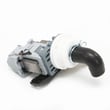
- Water pump W10536347 (drain pump) if the motor is seized, leaking, or the impeller is damaged
- Latch WPW10619844 if the washer won’t proceed into drain/spin due to lid-latch problems
- Washer drain hose u-bend bracket WP8576642 if the drain hose keeps kinking or won’t stay routed correctly
Why it matters
Standing water can cause odors, poor rinsing, and repeated cycle failures. Restoring proper draining protects the tub, motor system, and helps prevent leaks and vibration issues.
Last updated: January 2026
Does a Kenmore Elite washer have a filter?
Yes. The Kenmore Elite washer model 11027082601 uses a drain pump system that can trap debris; cleaning the pump area and checking the drain path is the practical “filter” maintenance for this washer. For model-specific access and safety steps, follow the 11027082601 owner's manual.
Where the “filter” is on this washer
Many Kenmore Elite top-load designs do not have a simple, twist-out lint filter like some front-load washers. Instead, the most important place to check for clogs is the drain system.
Common debris sources we see:
- Coins, hair pins, and small socks
- Lint buildup from heavy loads
- Pet hair and fabric strings
- Detergent residue (especially with non-HE detergent)
How to tell the drain system needs cleaning
If the drain path is restricted, you will usually notice one or more of these symptoms:
- Washer will not drain or drains slowly
- Standing water left in the tub after the cycle
- Loud humming or grinding during drain
- Wet clothes after spin
- Intermittent draining (works sometimes, not others)
What to check first (quick, safe steps)
Before opening the cabinet, we recommend these basics:
- Unplug the washer (electrical shock prevention)
- Confirm the drain hose is not kinked or crushed
- Make sure the standpipe or laundry tub is not backing up
- Verify you are using HE detergent and not overfilling
- Run a drain/spin cycle and listen for the pump
Parts that are commonly involved
If the washer is not draining and the hose and household drain are clear, the drain pump is a common suspect on model 11027082601.
| Symptom | Most common area to inspect | Typical fix |
|---|---|---|
| Hums but won’t drain | Drain pump and inlet area | Clear obstruction or replace pump |
| Drains slowly | Hose, pump, tub-to-pump path | Clear restriction |
| Leaks during drain | Pump housing or clamps | Tighten/replace clamp or pump |
If replacement is needed, use the exact model-matched pump: water pump W10536347.
Why it matters
Keeping the drain path clear helps prevent no-drain problems, reduces strain on the motor and pump, and improves spin performance so loads come out less wet.
Last updated: January 2026