 Installation guide
 Owner’s manual



How do I find the cubic feet of my dryer?
To find the cubic feet (capacity) of your GE DBXR463EG7WW electric dryer, we measure the inside of the drum and calculate its volume. Use the drum diameter and drum depth, then convert cubic inches to cubic feet; the exact drum dimensions are shown in the DBXR463EG7WW owner's manual.
Quick steps (drum measurement method)
- Unplug the dryer before measuring inside the drum.
- Measure drum diameter (inside wall to inside wall, straight across the center).
- Measure drum depth (from the inside of the front drum opening straight back to the rear drum wall).
- Use the cylinder formula below.
- Convert to cubic feet.
- If you prefer not to measure, check the capacity/specs section in the DBXR463EG7WW owner's manual.
Capacity formula (most accurate)
Dryer drums are essentially cylinders.
| What you need | Symbol | Example unit |
|---|---|---|
| Drum diameter | D | inches |
| Drum radius (D ÷ 2) | r | inches |
| Drum depth | h | inches |
| Drum volume | V = π × r² × h | cubic inches |
| Cubic feet | V ÷ 1728 | cubic feet |
Example: If your drum measures 24 in diameter and 20 in deep:
- r = 12
- V = 3.1416 × 12² × 20 = 9,047 in³
- 9,047 ÷ 1,728 = 5.2 ft³
Typical capacity range (for context)
Most full-size GE electric dryers like DBXR463EG7WW land in this general range:
| Dryer type | Typical capacity |
|---|---|
| Compact | ~3.4 to 4.4 ft³ |
| Full-size | ~5.0 to 7.5 ft³ |
Why it matters
Capacity helps us match your dryer to the right load size and cycle expectations. Overloading reduces airflow and can increase dry time; the manual notes drying time varies with load size and exhaust/venting condition, so knowing capacity helps you avoid chronic “takes too long to dry” complaints.
Last updated: February 2026
What is the most common problem with a GE dryer?
The most common problems we see on a GE electric dryer like model DBXR463EG7WW are poor drying (usually airflow restrictions), no heat (heater or thermostat issues), and a drum that will not turn (belt or idler problems). Start with lint filter and venting checks from the DBXR463EG7WW owner’s manual.
Quick checks first (fastest fixes)
- Clean the lint filter before every load.
- Check the outside exhaust hood; the flaps should move freely and not be blocked.
- Inspect the vent duct for kinks, crushing, or long runs; use the shortest path possible.
- Avoid plastic ducting; use 4-inch rigid metal or flexible metal duct.
- Do not overload; heavy fabrics need smaller loads to dry efficiently.
Most common symptoms and what they usually point to
| Symptom | Most common cause | What to check next |
|---|---|---|
| Takes too long to dry | Restricted venting/ducting | Lint filter, duct condition, outside damper |
| Runs but no heat | Heating circuit problem | House power (240V), heater, thermostats |
| Drum will not turn | Worn/broken belt or idler | Belt condition, idler pulley movement |
| Will not start | Door switch or timer/control issue | Door switch click, timer setting |
Parts that commonly fix “drum not turning”
If the motor runs but the drum does not tumble, the drive system is the first place we look.
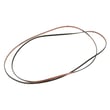
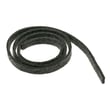
- Dryer drum belt WE03X29897 (belt broken, stretched, or slipping)
- Idler pulley WE12X83 (pulley seized or noisy, belt loses tension)
Why it matters
Airflow problems are the root cause behind many dryer complaints. Proper venting helps the DBXR463EG7WW dry faster, use less energy, and reduces overheating that can damage components like thermostats and the heating element.
Last updated: February 2026
What is the average lifespan of DBXR463EG7WW?
The average lifespan of the GE DBXR463EG7WW electric dryer is 13 years. You can often reach or exceed that with consistent lint and vent maintenance, plus timely replacement of common wear parts like the drum belt, glides, and thermostats.
Typical lifespan and what affects it
A dryer’s service life is mostly driven by heat management, airflow, and drum support wear.
- Clean the lint screen every load to keep airflow strong
- Keep the exhaust duct clear and as short as practical
- Avoid overloading; it strains the motor, belt, and drum supports
- Use the correct heat setting for the fabric to reduce overheating
- Address squealing, thumping, or long dry times early
Common wear parts that can shorten lifespan
If the dryer runs but gets noisy, stops tumbling, or dries slowly, these parts are frequent culprits on this model:
- Dryer drum belt WE03X29897 (broken or stretched belt, drum will not turn)
- Idler pulley WE12X83 (squeal, belt tension problems)
- Dryer drum glide bearing (green) WE03X37317 and dryer drum front glide pad WE03X37318 (scraping, thumping, drum support wear)
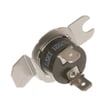
- Dryer operating thermostat WE4M216 or dryer high-limit thermostat WE4M137 (overheating, cycling heat issues)
Quick check: is it maintenance or a repair?
| Symptom | Most common cause | What to do first |
|---|---|---|
| Clothes take too long to dry | Restricted venting | Clean lint screen, inspect and clear ducting |
| Dryer tumbles but no heat | Heating circuit issue | Verify power supply, then test thermostats and heater circuit |
| Squealing or scraping | Idler or drum glides | Inspect idler pulley and front glides |
| Thumping | Worn glides or drum support | Check glides and drum contact points |
Why it matters
A restricted vent or failing drum support parts make the dryer run hotter and longer; that accelerates wear on the motor, belt, and thermostats and can cut years off the dryer’s life. For model-specific operating and care guidance, use the owner's manual.
Last updated: March 2026





