Owner’s manual


Where is the model number on a Kenmore Elite dryer?
On Kenmore Elite dryer model 11087088602, the model number is on the model and serial number label attached to the dryer cabinet; we typically find it inside the door opening on the door frame area. For the exact label location and what to record, use the 11087088602 owner's manual.
Quick places to check first
- Open the dryer door and inspect the cabinet frame around the opening (top, left, and right sides).
- Check the inner edge of the door itself.
- Look near the lint screen housing area (some designs place labels nearby).
- If the label is worn, use a flashlight and view from an angle to read faint print.
What to write down (and why)
The manual recommends recording your complete model number and serial number from the product label. Having both helps us match the correct Kenmore parts, diagrams, and troubleshooting steps for your exact dryer.
| Item | What it’s used for | Example format |
|---|---|---|
| Model number | Identifies the exact dryer design and parts list | 11087088602 |
| Serial number | Identifies production run details | Letters and numbers |
| Purchase date | Helps with service history and records | Month/day/year |
Why it matters
Kenmore Elite dryers can look similar across multiple series, but parts like a dryer heating element, thermistor, or drum support roller can vary by model. Using the correct model number prevents ordering the wrong replacement part and speeds up repair.
Last updated: February 2026
What year is my Kenmore dryer model?
For Kenmore Elite dryer model 11087088602, the exact year is determined from the serial number on the model tag, not the model number alone. Your model falls in the Kenmore 110.8708/8709 series shown in the 11087088602 owner's manual, so the serial number is the reliable way to date it.
How to find the year from the serial number
We use the serial number because it encodes the manufacturing date.
- Locate the model and serial tag (commonly on the door opening, door frame, or inside the cabinet opening).
- Write down the full serial number exactly as shown.
- Use the serial format to identify the manufacturing week and year (varies by manufacturer that built the Kenmore unit).
- If the tag is damaged or missing, check your purchase receipt or delivery paperwork.
- Keep the serial number handy when ordering parts like a heating element or thermistor.
What we can tell from the model number (and what it means)
The manual identifies this as an electric Kenmore Elite dryer in the 110.8708_ / 110.8709_ family. That narrows the platform, but it does not pinpoint a single calendar year without the serial.
| Identifier | What it tells us | Best use |
|---|---|---|
| Model number (11087088602) | Design family and configuration | Finding correct parts diagrams and compatible parts |
| Serial number | Build date (year/week) | Dating the dryer and confirming production run |
| Purchase date | When you bought it | Warranty and service history |
Why it matters
Knowing the build year helps when you are matching revisions of wear parts (drum support rollers, idler pulley, blower wheel) and when you are troubleshooting heat or cycling issues that can involve sensors like the dryer thermistor WP8577274.
Last updated: February 2026
What are common problems with Kenmore dryers?
Common problems we see with Kenmore dryers (including Kenmore Elite model 11087088602) are no heat, long dry times, the dryer not starting, the drum not turning, and unusual noises. Most of these trace back to airflow restrictions (lint buildup), power supply issues, or normal wear on moving parts; see the 11087088602 owner's manual for model-specific troubleshooting steps.
Most common symptoms and what usually causes them
- No heat (drum turns but clothes stay wet): tripped breaker or blown fuse (many electric dryers use two), failed heating circuit parts
- Long drying times: clogged lint screen, restricted venting, lint buildup inside the cabinet or ducting
- Won’t start or stops quickly: door not fully closed, Start button not held long enough, power supply problem
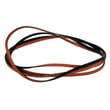
- Drum won’t turn: worn idler pulley, drum rollers, belt, or a failing drive motor
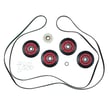
- Squealing, thumping, scraping: worn drum support rollers, idler pulley, or debris caught at drum edges
Quick checks we recommend first (fast, no parts needed)
- Confirm power: for electric dryers, verify a 240-volt supply and check that both breakers or fuses are good.
- Check the door and Start: make sure the door is firmly closed; large loads can require holding Start for 2 to 5 seconds.
- Restore airflow: clean the lint screen, then inspect the vent path for kinks, crushing, or heavy lint.
- Listen and look: thumping after long non-use can be normal for a few minutes; persistent noise points to worn support parts.
- Safety first: keep flammables away from the dryer and never dry items that have had flammable substances on them.
Parts that commonly fix these issues on model 11087088602
| Symptom | Common wear item | Example part for this model |
|---|---|---|
| Squealing or rumbling | Drum support roller | Support WPW10314173 |
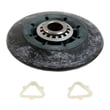
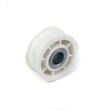
| Drum not turning, belt slack | Idler pulley | Dryer idler pulley 279640 |
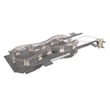
| No heat | Heating element | Dryer heating element WP8544771 |
| Overheating or heat cycling issues | Thermistor | Dryer thermistor WP8577274 |
Why it matters
Catching airflow problems early helps prevent overheating, reduces dry times, and lowers strain on the heating element, thermostats, and drive system. Fixing worn rollers or an idler pulley also prevents belt damage and keeps the drum turning smoothly.
Last updated: February 2026
What size is a Kenmore model 11087088602?
The Kenmore Elite dryer model 11087088602 is a full-size dryer; most units in this style are about 27 inches wide, 27 to 30 inches deep, and 38 to 39 inches tall without a pedestal. For the exact cabinet dimensions and clearances, use the 11087088602 owner's manual.
Typical dimensions you can plan around
These are the measurements we use most often for a standard, full-size Kenmore 110-series style dryer:
- Width: ~27 in.
- Depth: ~27 to 30 in. (depth can vary with door style and vent hookup)
- Height: ~38 to 39 in. (without pedestal)
- Garage installs: plan for extra height and required elevation above the floor
Pedestal height changes (from the manual)
Your manual notes optional pedestals that increase total dryer height:
| Setup | Added height | Approx. total height |
|---|---|---|
| No pedestal | 0 in. | ~38 to 39 in. |
| 10 in. pedestal | +10 in. | ~46 in. |
| 15.5 in. pedestal | +15.5 in. | ~51.5 in. |
How to measure your space correctly
Use these steps so the dryer fits and vents correctly:
- Measure width at the narrowest point between walls or cabinets.
- Measure depth from the back wall to the front edge of the door swing.
- Measure height to the lowest overhead obstruction (shelf, counter, door trim).
- Leave room for the exhaust duct and power cord so the dryer is not pushed tight to the wall.
- Confirm required clearances and venting guidance in the 11087088602 owner's manual.
Why it matters
Dryer “size” is not just cabinet width; depth and clearance behind the dryer affect airflow. Proper space for venting helps drying performance and reduces overheating issues that can damage parts like the dryer heating element WP8544771 and dryer high-limit thermostat WP8557403.
Last updated: February 2026
What are the codes for Kenmore Elite dryer?
On Kenmore Elite dryer model 11087088602, the most common display codes are PF (power failure) and F-series service codes (such as F1, F2, F20). PF is usually cleared by restarting the cycle; F-codes point to a control or sensor problem that needs diagnosis. See the 11087088602 owner's manual for the exact reset steps and troubleshooting flow.
Common codes and what they mean
- PF: Power failure interrupted the cycle; press and hold START to restart.
- F1: Main electronic control board fault.
- F2: Keypad or user interface fault.
- F20: Heater relay fault.
- F22 / F23: Outlet thermistor fault.
- F24 / F25: Inlet thermistor fault.
Quick checks we recommend before replacing parts
- Unplug the dryer (or switch off the breaker) for 1 minute, then restore power and retry the cycle.
- If you see PF, confirm the outlet and breaker are stable (no loose plug, no tripped breaker).
- Clean the lint screen and confirm strong airflow at the outside vent hood.
- If drying is erratic or overheating accompanies an F-code, inspect the exhaust path for restrictions.
- If the code returns immediately, plan for electrical testing with a meter.
Parts that often relate to heat and sensor-related codes
If your troubleshooting points to temperature sensing or overheating, these model-compatible parts are commonly involved:
| Symptom you notice | Commonly involved part | Example part for this model |
|---|---|---|
| Overheats, shuts down, heat issues | Thermistor or thermostat | Dryer thermistor WP8577274, dryer high-limit thermostat WP8557403 |
| No heat or weak heat (electric) | Heating circuit | Dryer heating element WP8544771 |
Why it matters
A PF code is usually a simple restart after a power interruption. F-series codes help narrow the problem to the control, user interface, or temperature sensing and heating circuits, which prevents unnecessary part replacement and repeat failures.
Last updated: February 2026
Is Kenmore Elite high end?
Yes. Kenmore Elite is Kenmore’s higher-end line, and the Kenmore Elite dryer model 11087088602 is built around premium convenience features such as Sensor Smart drying controls and a broader set of cycles and options than basic Kenmore dryers (details vary by model). For feature lists and operation specifics, use the 11087088602 owner's manual.
What “high end” means for Kenmore Elite dryers
Kenmore Elite typically sits above standard Kenmore models in features and user experience.
Common “Elite” traits include:
- More automatic drying control (sensor-based drying to reduce overdrying)
- More cycle and option choices (fabric care, wrinkle reduction, signals)
- Better fit-and-finish (door, drum, interior lighting on many models)
- More serviceable design with widely available replacement parts
Quick comparison: Kenmore vs Kenmore Elite (typical)
| Category | Standard Kenmore dryer | Kenmore Elite dryer |
|---|---|---|
| Drying control | Timed + basic auto | More sensor-driven auto cycles |
| Cycle selection | Fewer | More (plus modifiers/options) |
| Convenience features | Basic | More premium (signals, specialty options) |
| Parts support | Good | Good (often more components and options) |
Why it matters when you’re buying parts
“Elite” models often use additional sensors and controls; that changes which parts affect performance. For example, if drying is inconsistent or shuts off early, the moisture-sensing system and temperature sensing components are more likely to be involved.
Parts that commonly relate to “premium feature” performance include:
- Moisture sensing: dryer moisture sensor WP3387223
- Temperature feedback: dryer thermistor WP8577274
- Overheat protection: dryer high-limit thermostat WP8557403
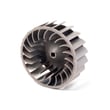
- Airflow movement: dryer blower wheel WP697772
When “Elite” performance doesn’t feel high end
If clothes take too long to dry or cycles end with damp loads, we focus on airflow and sensing first.
Checklist:
- Clean the lint screen and confirm strong airflow at the vent outlet
- Check for crushed, kinked, or excessively long venting
- Clean accumulated lint inside the cabinet and ducting (per the manual)
- If symptoms persist, test moisture sensor bars and temperature sensing components
Last updated: February 2026