Installation guide
 Owner’s manual
 Error Codes


What brand of dryer has the least problems?
If you want the fewest problems overall, we see the best long-term results from simple, well-supported dryer designs with strong parts availability and service networks. For a GE gas dryer like model DHDSR46GG7WW, reliability also depends heavily on correct venting, routine cleaning, and safe operation per the DHDSR46GG7WW owner's manual.
In real-world use, “least problems” usually comes down to build simplicity, consistent quality control, and how easy it is to maintain and repair.
- Speed Queen: commercial-style build, fewer features to fail, strong durability reputation.
- Whirlpool family (Whirlpool, Maytag, Amana): widely serviced, parts are commonly available, straightforward designs.
- LG: strong performance and features; reliability is best when installation and venting are correct.
- GE: solid reliability, especially on traditional designs; maintenance and airflow make a big difference.
For a gas dryer like GE DHDSR46GG7WW, many “problem” calls are airflow, power, or gas-supply related, not a failed major component.
- Clean the lint screen before every load.
- Keep venting short, not crushed, and free of kinks.
- Make sure the outside damper opens easily.
- Have the interior and exhaust duct connection cleaned about once per year by a qualified technician.
- If the dryer tumbles but does not heat, confirm gas shutoffs are fully open.
| What you prioritize | What to look for | Why it reduces problems |
|---|---|---|
| Fewer breakdowns | Fewer electronic features | Less to fail over time |
| Easier repairs | Common brand with broad service | Faster diagnosis and parts sourcing |
| Better drying consistency | Proper venting and maintenance | Prevents overheating and long dry times |
A “reliable” dryer still performs poorly if airflow is restricted. Good venting and regular cleaning reduce long dry times, overheating, and nuisance shutdowns, which are some of the most common dryer complaints.
Last updated: January 2026
What is the life expectancy of a gas dryer?
A gas dryer typically lasts 13 years. For your GE DHDSR46GG7WW gas dryer, consistent airflow maintenance (lint screen and venting) and safe, correct installation practices help you reach that lifespan and avoid premature wear on the motor, drum support parts, and burner system.
Most gas dryers land in a fairly tight range; the difference is usually maintenance and venting.
- Typical life expectancy: 13 years
- Shorter life is common when: venting is restricted, the dryer runs hot, or loads are consistently oversized
- Longer life is common when: venting is kept clear and the drum support system stays quiet and aligned
| Scenario | What you’ll notice | Likely impact on lifespan |
|---|---|---|
| Clean venting and normal loads | Normal dry times, steady heat | Meets typical lifespan |
| Partially clogged vent | Longer dry times, hotter cabinet | Shortens lifespan |
| Worn drum support parts | Squealing, thumping, scraping | Can lead to bigger failures |
These steps reduce heat stress and mechanical strain, which are the two biggest dryer life reducers.
- Clean the lint screen every load; wash and fully dry it periodically to remove residue.
- Keep the exhaust ducting clear and properly vented outdoors.
- Have the interior and exhaust duct connection inside the dryer cleaned at least once a year by a qualified technician (per the DHDSR46GG7WW owner’s manual).
- Avoid overloading; heavy loads strain the drive motor and belt.
- Stop using the dryer if you hear persistent squealing or scraping; address drum support wear early.
If your dryer still heats but gets noisy or stops tumbling, these are frequent wear items on this model family.
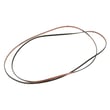
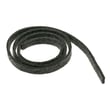
- Dryer drum belt WE03X29897 (belt wear can cause no-tumble)
- Idler pulley WE12X83 (squeal, belt tension issues)
- Drum glides and felt seals (scraping, thumping, poor drum support)
A gas dryer that runs with restricted airflow or worn drum support parts often dries slower and runs hotter; that extra heat and run time accelerates wear on the motor, thermostats, and burner components.
Last updated: January 2026
What is the most common problem with a GE dryer?
The most common GE dryer problems are no heat, long dry times, or the drum not turning. On GE gas dryer model DHDSR46GG7WW, the top real-world causes are restricted venting and airflow (lint buildup or crushed duct), plus normal wear parts like the drum belt and door switch; see the troubleshooting section in the DHDSR46GG7WW owner's manual.
- Dryer runs but doesn’t heat: gas shutoff closed, airflow restriction, or a failed ignition system component
- Clothes take too long to dry: full lint filter, obstructed ducting, outside damper not opening freely
- Drum won’t turn or squeals: worn belt, idler pulley, or drum glides
- Dryer won’t start: power issue, door not latching, or a failed door switch
- Clean the lint filter before every load (a full filter is a top cause of long dry times).
- Check venting: use 4-inch rigid or flexible metal duct, keep it short, avoid crushing or kinks, and never use plastic duct.
- Confirm gas is on: make sure the shutoff at the dryer and the main shutoff are fully open.
- Listen and look: if the motor runs but the drum does not move, inspect the belt and idler system.
| Symptom | Most common cause | What to do next |
|---|---|---|
| Tumbles, no heat | Gas off or ignition failure | Verify gas supply; then test igniter and sensor |
| Long dry times | Vent restriction or lint filter clogged | Clean filter and vent path; confirm outside damper opens |
| Drum not turning | Broken/slipping belt | Inspect and replace the dryer drum belt WE03X29897 |
| Won’t start | Door switch or power issue | Check door closure; test switch and outlet/breaker |
Airflow problems do more than slow drying. Poor venting makes a gas dryer run longer, waste energy, and can trigger overheating-related shutdown symptoms. Keeping the lint filter and exhaust duct clear is the most effective “first fix” for GE dryer complaints.
Last updated: January 2026