 Installation guide
 Owner’s manual




What is the average life expectancy of a GE dishwasher?
A GE dishwasher like model GDT580SMF8ES typically lasts 10 to 12 years with normal household use and basic upkeep. Consistent cleaning, correct loading, and fixing small issues early can help you reach the upper end of that range; heavy daily use can shorten it.
- Average: 10 to 12 years
- Heavy use (multiple loads daily): 8 to 10 years
- Light to moderate use with good maintenance: 12 to 15 years
- Water quality (hard water speeds up mineral buildup)
- How often you run it and how heavily it is loaded
- Keeping spray arms and filters clear of debris
- Door sealing and latch alignment (prevents leaks and interruptions)
- Proper installation and leveling (reduces vibration and door issues; see the GDT580SMF8ES installation guide)
- Clean the filter area and remove food debris regularly
- Inspect and rinse spray arm holes if wash performance drops
- Run a dishwasher cleaner or descale cycle periodically (especially with hard water)
- Check the door for smooth closing and a solid latch
- Address draining or drying problems early instead of repeatedly re-running cycles
| Type | Examples | What you’ll notice first |
|---|---|---|
| Wear items | Door seals, rack rollers, spray arms | Leaks, noisy operation, poor cleaning |
| Major components | Pump, heater, control board | No wash action, cold water, won’t start |
Knowing the typical life expectancy helps you decide whether to repair or replace. If your GDT580SMF8ES is near the 10 to 12 year mark and you are seeing multiple symptoms (poor cleaning plus draining issues, for example), it often makes sense to diagnose the root cause before replacing several parts.
Last updated: January 2026
What is the most common problem with a GE dishwasher?
The most common GE dishwasher problems are drainage and wash-performance issues caused by food debris buildup (filters, sump area, drain path) and door-latch related no-start symptoms. On GE model GDT580SMF8ES, we see these show up as “won’t drain,” “won’t start,” or “not cleaning well.”
- Not draining: check the filter/sump area for debris and confirm the drain hose is not kinked.
- Won’t start: confirm the door closes firmly and the latch engages.
- Not cleaning well: inspect spray arms for clogged jets and verify they spin freely.
- Not drying: heating and venting issues can reduce drying performance.
- Leaks: door sealing surfaces and tub gasket areas are common leak points.
- Turn off power at the breaker before touching wiring or internal components.
- Open the door and confirm it closes smoothly and does not rub the cabinet; alignment problems can cause door and cabinet damage and can also affect latching.
- Look for a pinched drain hose behind the dishwasher and make sure the unit is level with all legs on the floor.
- Remove and rinse the filter area (if equipped) and clear visible debris from the sump.
- Spin the spray arms by hand; clear any blocked holes.
| Symptom | Common area | Example part for this model |
|---|---|---|
| Won’t start or stops mid-cycle | Door not latching | GE dishwasher door latch lock WD21X10490 |
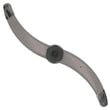
| Not cleaning well | Spray arm clogged or not spinning | Dishwasher spray arm, lower WD22X33499 |
| Not drying well | Heater circuit or heating issue | Dishwasher heating element WD05X30818 |
Drain and wash issues often start small (a partial clog or a weak spray pattern) and then snowball into longer cycles, poor cleaning, odors, and standing water. Catching the root cause early helps protect the circulation pump and keeps performance consistent.
- Use the installation guide to confirm the dishwasher is level, the drain hose is not pinched, and the unit is installed for future service removal.
- If you’re seeing a code or beeping pattern, match it using GE electronic dishwasher error codes.
Last updated: January 2026
How to do a hard reset on a GE dishwasher?
For a GE GDT580SMF8ES dishwasher, the most reliable “hard reset” is a power reset: turn the dishwasher’s breaker OFF (or unplug it) for 1 to 5 minutes, then restore power and start a new cycle. This clears the electronic control and often restores normal operation.
- Turn the dishwasher OFF at the circuit breaker (preferred) or unplug the power cord (if accessible).
- Wait 1 to 5 minutes.
- Restore power.
- Close the door firmly so it latches.
- Select a cycle and press Start.
If the dishwasher is stuck mid-cycle or you need to stop it and clear the cycle:
- Press and hold Start for 3 seconds to cancel.
- Let the unit drain completely.
- Start a fresh cycle.
These steps match the cancel/drain behavior described in the GDT580SMF8ES installation guide.
A reset helps most when the control is “glitched”, but it will not fix a latch, fill, or drain problem. Check these common items:
- Door is fully closed and latched (a weak latch can prevent starting).
- Water supply valve is ON.
- Dishwasher is getting power (breaker not tripped).
- Drain hose is not kinked and the drain path is open.
- If you see an error code, use the GE electronic dishwasher error codes reference.
| What you see | What it usually points to | What to do next |
|---|---|---|
| Has power but will not start | Door not latched, control lock, control issue | Power reset; verify latch engagement |
| Starts then stops and drains | Cycle canceled or fault detected | Cancel (hold Start 3 sec), then restart |
| No water entering | Water supply off, fill issue | Confirm water valve ON and supply line open |
A true hard reset (power reset) clears temporary control-board logic faults, which can cause a GE dishwasher to ignore button presses, freeze mid-cycle, or behave inconsistently.
Last updated: January 2026
Is it worth fixing a GE dishwasher?
Fixing your GE GDT580SMF8ES dishwasher is worth it when the problem is a single, straightforward failure (like a latch, drain issue, or heating problem) and the total repair cost stays well below the price of a comparable new dishwasher. Replacement makes more sense when multiple major components are failing or the unit has repeated breakdowns.
- Choose repair if the dishwasher is generally reliable and the issue is isolated.
- Choose replacement if you have frequent service needs or multiple symptoms at once.
- Repair is usually a good value for common fixes such as a door that will not latch, poor drying, or not draining.
- Replacement is usually a better value when the wash system or electronics have multiple failures.
- Use the troubleshooting and safety steps in the GDT580SMF8ES installation guide before any service work.
These are typical “single-part” repairs that can restore normal operation quickly:
- Door will not close or start: check the latch and strike alignment; consider GE dishwasher door latch lock WD21X10490 and dishwasher door latch strike WD13X10071.
- Not drying or water not heating: a failed heater is a common cause; consider dishwasher heating element WD05X30818.
- Not draining: inspect the drain path and hose routing; consider dishwasher drain hose WD24X10062.
- Poor cleaning: clogged or damaged spray arms can reduce wash pressure; consider dishwasher spray arm, lower WD22X33499.
Use this as a practical guide when deciding where to put your money:
| Situation | Usually best choice | Why |
|---|---|---|
| One clear symptom, one failed part | Repair | Lowest cost, fastest return to service |
| Multiple symptoms (leaks + no heat + not draining) | Replace | Often indicates multiple failing systems |
| Repeated breakdowns over the last year | Replace | Repair costs tend to stack up |
| Major electrical or wash-system issues plus other problems | Replace | Higher parts cost and more labor |
A dishwasher repair is “worth it” when it restores dependable cleaning and drying without turning into a cycle of repeat service. Using model-correct parts and confirming proper installation (leveling, door clearance, and hose routing) helps prevent avoidable failures and performance complaints.
Last updated: January 2026





