Installation guide
 Owner’s manual
 Error Codes




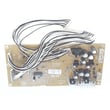
How do I know which LG oven I have?
You can identify which LG oven you have by finding the model/serial tag on your oven and matching the model number to your appliance records. For this LG built-in wall oven, the model number is LWD3081ST; the full model tag may also include a suffix like “/00”.
Where to find the model number on LG LWD3081ST
On LG wall ovens like LWD3081ST, the model/serial plate is typically visible when you open the oven door and look around the oven frame area. Our LWD3081ST user manual also shows the model and serial number plate as a labeled feature.
Common places to check:
- Along the oven frame behind the door (upper or lower oven frame)
- On the side trim area visible with the door open
- On a label near the control panel frame (visible when the door is open)
- On the unit frame behind the lower door on double ovens
How to read what you find
LG model tags often include a base model plus a revision/suffix. For example, you may see:
- LWD3081ST (base model)
- LWD3081ST/00 (model plus version code)
Quick comparison
| What you see on the tag | What it means | What to use for parts |
|---|---|---|
| LWD3081ST | Base model | Start with LWD3081ST |
| LWD3081ST/00 | Version/revision of the model | Use the full tag when possible |
| Serial number | Production identifier | Not used to pick most parts |
Why it matters
Using the exact model (and suffix when present) helps us match the correct LG wall oven parts, wiring, and door components so you avoid ordering a look-alike part that will not fit.
Last updated: January 2026
Is a 27 inch wall oven too small?
A 27-inch wall oven is usually not too small for everyday cooking; it is a common “standard” size that works well for most households. For LG model LWD3081ST, the exact oven cavity size and usable rack width are not identified by the model-specific information we have, so we recommend sizing based on your cabinet cutout and what you cook most.
How to decide for your kitchen
Use these practical checks before choosing 27-inch vs. 30-inch:
- Measure your cabinet cutout and confirm it matches the oven’s required opening dimensions.
- Think about your largest pan (full-size sheet pan, roasting pan, pizza stone) and whether you use it often.
- Consider holiday cooking: large roasts and multiple side dishes benefit from more width.
- Plan for airflow and clearance: wall ovens need proper spacing and venting.
- Match the oven to your cooking style: frequent batch baking usually favors a larger cavity.
For installation dimension guidance that applies to this LG wall oven family, use the LWD3081ST installation guide.
27-inch vs. 30-inch: what changes most
In most kitchens, the biggest differences are capacity and fit, not basic cooking performance.
| Size | Best for | Common tradeoff |
|---|---|---|
| 27-inch | Standard cabinets, everyday baking and roasting | Less room for oversized cookware |
| 30-inch | Large cookware, big meals, more flexibility | Requires a larger cutout and more space |
| 24-inch | Tight spaces, secondary ovens | Noticeably reduced capacity |
Why it matters
Wall oven size is hard to “work around” later. If the cutout is built for 27-inch and you later want 30-inch, cabinetry changes are often required. Starting with the right fit helps avoid installation issues and ensures your racks and cookware are practical for daily use.
Last updated: January 2026
What is the standard size of a double wall oven?
A “standard” double wall oven is typically built around a 30-inch cabinet width, with common overall widths also available in 24 and 27 inches. For the LG LWD3081ST, the installation guide shows a 30-inch cabinet width and a typical double-oven cutout height around 52 inches; confirm your cabinet cutout before ordering or installing using the LWD3081ST installation guide.
Common standard sizes (what you’ll see most often)
Most double wall ovens are sold in these width classes:
- 24-inch (space-saving kitchens)
- 27-inch (mid-size)
- 30-inch (most common “standard”)
Depth varies by brand and cabinet design; the cabinet cutout depth is often around the mid-20-inch range, while the door and handle add more projection into the room.
Model-specific fit notes for LG LWD3081ST
For the LG LWD3081ST, the installation instructions include a dedicated 30-inch double-oven cutout diagram. Use those cutout dimensions (not just “overall oven size”) to verify fit.
- Measure cutout width, cutout height, and cutout depth
- Confirm door clearance when open
- Plan for the junction box location and hard-wiring requirements
Quick reference table (typical standards vs. what matters)
| Dimension | Common “standard” expectation | What you should measure for install |
|---|---|---|
| Width | 24, 27, or 30 inches | Cabinet cutout width |
| Height | Just over ~50 inches for double ovens | Cabinet cutout height |
| Depth | Varies; door/handle add depth | Cutout depth plus door clearance |
Why it matters
A double wall oven can look “standard” by width but still fail to fit if the cutout height, depth, or electrical junction box placement is off. Verifying the cutout dimensions first helps avoid cabinet rework and installation delays.
Last updated: January 2026