Installation guide
 Owner’s manual
 Error Codes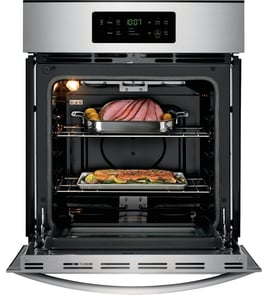




Do I need an electrician to install a wall oven?
For the LG LWS3010ST electric wall oven, we recommend using a qualified installer or technician; the unit must be hard-wired (direct-wired) into an approved junction box and must be properly grounded. If you need new wiring, a new breaker, or a new junction box, hire a licensed electrician.
When you can skip an electrician (common scenarios)
If your existing setup already matches the oven’s electrical requirements and is in good condition, a qualified appliance installer can often complete the swap.
- You are replacing an existing hard-wired electric wall oven
- The junction box is already in the correct location and has enough wire length
- The circuit breaker and wire gauge already match the oven’s rating plate
- The grounding method is already correct for your home and local code
When you should hire an electrician
Electrical work is the part that most often triggers the need for an electrician, especially in older homes or remodels.
- You are converting from gas to electric (new 240V circuit work is typically needed)
- You need a new dedicated branch circuit, breaker, or wiring run
- The existing wiring is damaged, undersized, aluminum, or overheated
- You need to change from a 3-wire to a 4-wire connection due to local code, mobile home, RV, or new construction rules
- The oven is not currently hard-wired to a junction box (plug and receptacle setups are not permitted for this model)
What the installer must do for this model
The installation instructions for the LWS3010ST call out several requirements that affect safety and performance.
| Installation item | What to verify | Why it matters |
|---|---|---|
| Power connection | Hard-wired to an approved junction box | Prevents unsafe connections and meets installation requirements |
| Grounding | Properly grounded per code | Reduces shock risk |
| Circuit protection | Dedicated circuit sized from the rating plate | Prevents nuisance trips and overheating |
| Airflow | Do not block the bottom air exhaust | Helps prevent cabinet damage and malfunctions |
Why it matters
Wall ovens draw high current and generate heat inside cabinetry. Correct grounding, dedicated circuit protection, and proper airflow help prevent electrical hazards, overheating, and installation-related performance problems.
For step-by-step requirements (including 3-wire vs 4-wire guidance and junction box details), use the LWS3010ST installation guide.
Last updated: January 2026
Is a LG convection oven good?
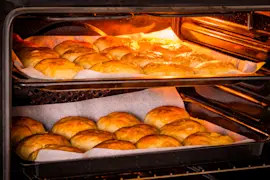
Yes. LG convection wall ovens like model LWS3010ST are a strong choice when you want faster, more even baking because the convection fan circulates hot air for better heat distribution. Overall “good” comes down to fit, features, and keeping the oven operating accurately over time.
What “good” means for convection baking
Convection is most noticeable when you bake multiple trays or want more consistent browning.
- More even heat across racks (less hot-spot shuffling)
- Often shorter cook times (start checking early)
- Better browning and crisping for roasted foods
- Helpful for large meals where timing matters
What to check on your LWS3010ST before deciding
We recommend confirming the basics and then judging performance in your kitchen.
| What to evaluate | What you should see | If it’s not happening |
|---|---|---|
| Convection bake | Fan runs with the door closed | Check settings in the LWS3010ST owner’s manual |
| Bake performance | Temperature rises steadily after you set 350°F | Consider calibration steps and sensor checks |
| Broil performance | Upper element glows red and produces strong heat | Inspect broil circuit and element condition |
| Cooling behavior | Fan may run after cooking to manage heat | If noisy, inspect the cooling fan assembly |
Common issues that affect “good” long-term performance
Even a great convection design can feel “not good” if a few common parts start acting up.
- Temperature seems off: verify with an oven thermometer and follow calibration guidance
- Uneven baking: confirm rack placement and convection mode selection
- No heat or intermittent heat: a safety device can open the circuit; see wall oven wont heat troubleshooting thermal switch problems video
- Fan noise or poor airflow: check for obstructions; a failing fan can reduce convection benefits
Parts that may be involved (when symptoms match)
If you’re troubleshooting heat control or airflow issues on this LG wall oven, these model-matched parts are commonly related.
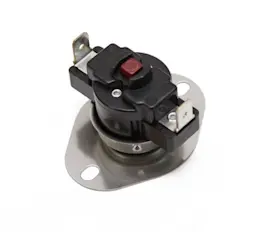
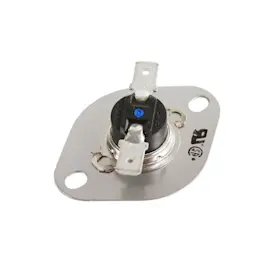
- Range safety thermostat 6930W1A003X (overheat protection that can interrupt heating)
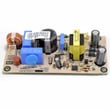
- Wall oven relay control board EBR64624604 (switches power to heating components)
- Wall oven cooling fan assembly ADP75673301 (helps manage cabinet and control temperatures)
Why it matters
A convection oven is “good” when it holds temperature accurately and moves air correctly. If either heat control or airflow is compromised, you can see longer cook times, uneven browning, or error codes.
Last updated: January 2026
What is the disadvantage of a wall oven?
A wall oven like the LG LWS3010ST costs more overall than a freestanding range because it needs built-in cabinetry work, hard-wired electrical installation, and a separate cooktop. Repairs can also take longer because the oven often must be pulled from the cabinet.
Main disadvantages to plan for
- Higher total cost: wall oven plus cooktop, plus cabinet cutout and trim work
- More complex installation: hard-wired to an approved junction box (no plug and receptacle)
- Electrical requirements: dedicated circuit, proper grounding, and correct 3-wire or 4-wire connection based on code and application
- Service access: some repairs require removing the oven from the wall
- Heavy handling: the door and unit are heavy; two-person handling is commonly needed
Installation and cabinet considerations (LG LWS3010ST)
The biggest practical drawback is that a built-in wall oven puts more demands on the cabinet opening and surrounding materials. The LWS3010ST installation guide calls out cabinet and wall covering heat tolerance, keeping the oven centered with side spacers, and keeping the bottom air exhaust unblocked.
| Planning item | What it affects | Why it can be a disadvantage |
|---|---|---|
| Cabinet cutout and support | Fit and stability | May require carpentry changes and reinforcement |
| Venting and exhaust clearance | Cooling and reliability | Blocking exhaust can cause cabinet damage and malfunctions |
| Electrical hookup | Safety and code compliance | Often requires an electrician and a junction box connection |
Why it matters
Wall ovens perform well when the cabinet, ventilation, and electrical supply are built correctly. When those details are missed, customers run into avoidable issues like cabinet heat damage, nuisance shutdowns, or difficult service access later.
For more planning and ownership tips, see wall oven common questions.
Last updated: January 2026