Error Codes


How to force a Kenmore Elite washer to drain?
To force-drain a Kenmore washer like model 11091554210, we first stop power to the washer, then manually remove water through the drain system and clear any blockage so the drain pump can move water again. If the pump is jammed or failed, replacing the pump is the next step.
Safe way to get the water out (manual drain)
- Unplug the washer (or switch off the breaker).
- Turn off both water supply valves.
- Set towels down and use a shallow pan or wet/dry vacuum.
- If the tub is full, bail water out with a cup first to reduce spills.
- Check the drain hose at the standpipe or sink for a kink, crush, or clog.
Clear the most common drain blockage points
On many Kenmore top-load washers, a no-drain problem is caused by a clog at the pump inlet, a blocked hose, or an item stuck in the pump impeller.
- Remove the cabinet or front access (varies by design) and inspect the pump and hoses.
- Look for socks, coins, lint buildup, or a small washcloth at the pump inlet.
- Spin the pump impeller by hand; it should turn with slight resistance and not bind.
- If the pump leaks, grinds, or will not turn freely, replace the pump.
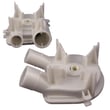
Helpful part for this model: washer drain pump WP3363394
Quick diagnosis table (what you see vs. what it usually means)
| Symptom | Most likely cause | What to do next |
|---|---|---|
| Hums but won’t drain | Pump jammed or seized | Check impeller; replace pump if stuck |
| Drains slowly | Partial clog in hose or pump | Clear hose and pump inlet |
| Won’t drain and won’t spin | Lid switch or drive issue | Check lid switch and drive system |
| Water on floor during drain | Pump housing crack or loose clamps | Tighten clamps; replace pump if leaking |
Why it matters
A washer that cannot drain often cannot spin properly, which leaves clothes soaking wet and can strain the drive system. Clearing the blockage quickly helps prevent repeat clogs and reduces wear on the pump and motor.
Last updated: January 2026
What is the average lifespan of a Kenmore washer?
A Kenmore washer typically lasts 10 to 15 years with normal household use. For Kenmore model 11091554210, lifespan depends most on load size, water quality, and how quickly you address wear items such as the drive system and drain components.
Typical lifespan ranges (what to expect)
Most washers fall into these real-world ranges when they are installed correctly and maintained:
- Top-load washers: about 12 to 15 years
- Front-load washers: about 10 to 12 years
- Heavy use (large family, daily loads): often closer to 8 to 12 years
What usually ends a washer’s life
On older Kenmore-style washers, the most common “end-of-life” failures are mechanical wear and water leaks.
- Drive system wear (coupler, clutch, gear case)
- Drain problems (pump wear, hose restrictions)
- Leaks at tub seals and gaskets
- Agitation issues (worn agitator dogs or cam)
- Spin issues from basket drive or drive block wear
Quick maintenance that adds years
These habits reduce strain on the motor, transmission, and seals:
- Keep loads balanced; avoid washing single heavy items alone
- Do not overload; heavy loads accelerate clutch and coupler wear
- Use the right detergent amount; excess suds can stress draining
- Check fill hoses and drain hose routing periodically
- Address small leaks early to protect bearings and the gear case
Parts that commonly restore performance
If your washer is otherwise in good shape, replacing a few common wear parts can extend service life.
| Symptom | Common wear area | Example part for this model |
|---|---|---|
| Won’t drain or drains slowly | Drain pump | Washer drain pump WP3363394 |
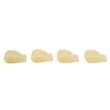
| Agitator slips or won’t “ratchet” | Agitator dogs | Agitator dog 80040 |
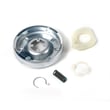
| No agitation or spin, motor runs | Motor coupling | Coupling 285753A |
Why it matters
Knowing the typical lifespan helps you decide whether to repair or replace. If your Kenmore 11091554210 is within the 10 to 15 year window, a targeted repair (like a pump or coupling) often restores reliable washing for years.
Last updated: January 2026
What does OE mean on a front loader?
On most front-load washers, OE means the washer is not draining fast enough (a drain error). Kenmore model 11091554210 is a top-load washer, so an “OE” display is not a standard code for this model; treat it as a drain problem and troubleshoot the drain path.
What to check first (no-parts steps)
- Unplug the washer.
- Verify the drain hose is not kinked, crushed, or shoved too far into the standpipe.
- Make sure the standpipe or laundry tub is draining quickly (a slow house drain can trigger drain errors).
- Run a drain/spin with the tub empty; listen for the drain pump running.
- If water drains slowly, check for lint, coins, or a small sock blocking the hose or pump inlet.
Parts to inspect on Kenmore 11091554210 when it will not drain
A drain restriction or weak pump is the most common cause on this style of Kenmore top-load washer.
- Washer drain pump WP3363394
- Drain hose and hose sleeve connections
- Lid switch circuit (some top-loaders will not complete drain/spin if the switch is failing)
Symptom guide
| What you notice | Likely cause | What to do next |
|---|---|---|
| Pump is silent, tub full | No power to pump, lid switch issue | Check lid switch operation and wiring |
| Pump runs or hums, little/no flow | Pump jam or blockage | Inspect pump inlet/outlet and hoses |
| Drains slowly, then stops | Partial clog or standpipe restriction | Clear restriction; verify household drain |
| Drains but won’t spin out | Drain issue or load balance problem | Rebalance load; re-test drain/spin |
Why it matters
Drain problems stop the cycle with water left in the tub and can overheat or damage the pump. Clearing restrictions early prevents repeat drain errors and helps the washer spin out properly.
For additional Kenmore error-code patterns and troubleshooting approach, use our Kenmore 110 high efficiency front load washer error codes reference (OE is commonly a drain-related code on front-load designs).
Last updated: January 2026
What is the capacity of a Kenmore 11091554210 washer?
Kenmore model 11091554210 is a standard-capacity, direct-drive style top-load washer; the typical tub volume for this Kenmore 110 design is about 3.2 cu. ft. Use basket fill and good turnover as the practical way to size loads for best cleaning and spinning.
What “3.2 cu. ft.” means in everyday loading
Capacity is a tub-volume number; real performance depends on how freely items move during agitation.
- Load items loosely and distribute them evenly around the basket.
- Fill to about the top row of basket holes (roughly 3/4 full), not packed tight.
- Keep a hand’s width of space at the top so clothes can roll and circulate.
- For towels and jeans, reduce the load if turnover slows or the washer strains.
- For bulky items (blankets, comforters), wash fewer pieces so water can penetrate.
Quick load guide (practical, not marketing)
| Load type | Basket fill target | What you should see |
|---|---|---|
| Small | 1/3 full | Fast, easy turnover |
| Medium | 1/2 full | Steady rollover, good circulation |
| Large | 3/4 full | Still loose, not compressed |
| Bulky | Varies | One bulky item (or two small) with room to move |
If overloading causes problems
Overloading commonly leads to poor cleaning, out-of-balance spinning, and extra wear on the drive system. If the washer won’t agitate or spin under load, a common failure point on this design is the motor-to-transmission coupler: coupling 285753A.
Why it matters
Correct loading protects the gear case, clutch, and drive motor, and it improves rinsing so detergent does not stay trapped in fabrics.
Last updated: January 2026