Owner’s manual
 Error Codes



What are the disadvantages of a bottom freezer?
Bottom-freezer refrigerators like the Maytag MBF1958XES4 keep fresh food at a more comfortable height, but they make frozen items harder to reach and easier to lose in deep bins. The drawer and rail system also adds moving parts that can wear over time.
Common drawbacks you will notice
- You have to bend, squat, or kneel to reach the freezer drawer and lower baskets.
- Large or heavy frozen items (roasts, bulk bags, frozen pizzas) can be awkward to lift up and out.
- Food can get buried in deep bins, so items are easier to forget and waste.
- Kids can access the freezer more easily, which can lead to frequent opening and messes.
- Drawer slides and alignment can get stiff if frost builds up or the door is not sealing well.
Bottom freezer vs. top freezer: quick comparison
| Feature | Bottom freezer | Top freezer |
|---|---|---|
| Access to fresh food | Easier (less bending) | Harder (more bending) |
| Access to frozen food | Harder (lower drawer) | Easier (upper door) |
| Organization | Deep bins can hide items | Shelves often show items better |
| Moving parts | Drawer rails and baskets | Simpler door and shelves |
Tips to reduce the downsides
- Use smaller bins to group foods (meat, vegetables, breakfast, snacks).
- Keep heavier items in the upper basket so you lift less.
- Avoid overpacking; airflow and visibility both improve.
- If the drawer feels hard to close, confirm the refrigerator is level and the door closes fully; leveling guidance is in the MBF1958XES4 owner's manual.
Why it matters
Most bottom-freezer complaints come down to ergonomics and visibility. If bending is uncomfortable or you store lots of bulky frozen food, the bottom-mount layout can feel less convenient even though the refrigerator section is easier to use.
Last updated: February 2026
What is the life expectancy of a bottom freezer refrigerator?
A bottom-freezer refrigerator like the Maytag MBF1958XES4 typically lasts 10 to 15 years. With steady upkeep (clean condenser coils, good door seals, correct temperatures), it commonly reaches the upper end of that range and can run longer with timely repairs.
Typical lifespan and what changes it
Most bottom-mount (bottom-freezer) refrigerators fall into a similar lifespan range; what shortens or extends life is usually maintenance and operating conditions.
- Heat and airflow: tight cabinets and dusty coils make the compressor work harder
- Door seal condition: air leaks cause longer run times and frost issues
- Usage patterns: frequent door openings and overpacking reduce efficiency
- Water and ice system health: leaks or low water flow can create recurring problems
- Repair timing: fixing small issues early prevents major component stress
Maintenance that helps you reach 15 years (and beyond)
Use these as a practical checklist for MBF1958XES4 ownership.
- Vacuum and brush condenser coils regularly (more often with pets)
- Keep doors closing tightly; clean and condition gaskets as needed
- Set temperatures to typical targets: 37°F fresh food, 0°F freezer
- Leave space for airflow around vents; avoid blocking the damper area
- Address puddles, frost buildup, or warm spots quickly
Common “life-shortening” symptoms and likely areas to check
| Symptom | What it often points to | Example part on this model page |
|---|---|---|
| Warm refrigerator, freezer OK | Airflow/damper issue | Refrigerator damper control assembly WPW10196393 |
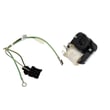
| Noisy or weak cooling airflow | Evaporator fan issue | Refrigerator evaporator motor W11024089 |
| Ice maker not filling or slow fill | Water supply/valve issue | Refrigerator water inlet valve assembly WP2315576 |
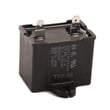
| Runs a lot, poor cooling | Start components or sealed system strain | Refrigerator run capacitor WPW10662129 |
Why it matters
Knowing the expected lifespan helps you decide when routine maintenance is worth it versus when a major repair (like a compressor-related issue) may not be the best long-term value for your kitchen.
For model-specific care and cleaning intervals, follow the MBF1958XES4 owner's manual.
Last updated: February 2026
Where can I get Maytag replacement parts?
For your Maytag MBF1958XES4 bottom-mount refrigerator, you can get replacement parts from the parts list for this model on Sears PartsDirect. Use your model number to match the exact component (for example, an ice maker, control board, or door gasket) before ordering.
Best way to make sure you get the right part
We recommend confirming the exact part by using the exploded-view diagrams and part listings in the MBF1958XES4 owner's manual. This helps you match the correct part ID and verify where it installs.
- Match the full model number: MBF1958XES4
- Identify the failed system (cooling, ice maker, lighting, door seal)
- Cross-check the part name and part ID (not just a description)
- Compare color/finish when ordering doors or gaskets (white vs black)
- If you are replacing an electrical part, unplug the refrigerator first
Common Maytag MBF1958XES4 parts customers replace
These are examples of model-matched parts available for MBF1958XES4:
| Symptom or need | Part to check | Example model-matched part |
|---|---|---|
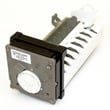
| No ice or intermittent ice | Ice maker | Refrigerator ice maker D7824706Q |
| Warm fridge or unstable temps | Electronic control | Refrigerator electronic control board WPW10503278 |
| Water not filling ice maker | Water valve | Refrigerator water inlet valve assembly WP2315576 |
| Frost buildup or poor airflow | Evaporator fan motor/blade | Refrigerator evaporator motor W11024089 |
| Door not sealing, moisture, frost | Door gasket | Refrigerator door gasket (black) WPW10436245 |
Why it matters
Ordering by model number and part ID prevents fit issues, wiring mismatches, and repeat repairs. This is especially important on refrigerators because parts like a control board, compressor components, and door gaskets are model-specific.
Last updated: February 2026
Why does my Maytag bottom freezer build up ice on the bottom?
Ice building up on the bottom of your Maytag MBF1958XES4 bottom-mount freezer almost always happens when the defrost drain clogs; defrost water cannot flow to the drain pan, so it refreezes on the freezer floor and gradually forms a thick ice sheet.
What’s happening inside the freezer
During normal defrost cycles, frost melts off the evaporator and should run through a drain opening into a tube that leads to the drain pan underneath the refrigerator. When that drain path plugs with ice, food debris, or sludge, water backs up and freezes at the lowest point.
Common causes
- Drain hole iced over from repeated partial clogs
- Food particles or packaging bits blocking the drain opening
- Slushy buildup in the drain tube
- Door left slightly ajar causing excess frost, then excess meltwater
- Freezer drawer not sealing well, increasing moisture load
How we recommend fixing it
- Unplug the refrigerator.
- Remove the freezer drawer/bins to access the rear interior panel.
- Melt the ice on the freezer floor (towels plus a hair dryer on low, kept moving).
- Clear the drain opening with hot water (a turkey baster works well).
- Flush until water flows freely down the tube to the drain pan.
- Reassemble and restore power.
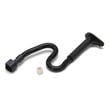
If the drain keeps re-freezing, replacing the drain tube can permanently restore proper drainage on many bottom-mount designs; see refrigerator drain tube W10619951.
Quick checks to prevent it from coming back
- Keep freezer temperature near 0°F and fresh food near 37°F
- Avoid overpacking the back wall; keep air vents clear
- Make sure the drawer closes fully and seals evenly
- Clean spills promptly so they do not wash into the drain
Parts that are commonly involved
| Symptom | Most likely area | Example part for MBF1958XES4 |
|---|---|---|
| Ice sheet on freezer floor | Defrost drain path | Refrigerator drain tube W10619951 |
| Frost buildup plus warm spots | Airflow/evaporator area | Refrigerator evaporator fan blade WP2169142 |
| Temps swing, odd defrost behavior | Controls/sensors | Refrigerator electronic control board WPW10503278 |
Why it matters
A clogged drain does more than make a mess; it can force the freezer to work harder, cause odors, and lead to water leaking into the fresh food section or onto the kitchen floor.
For model-specific access steps and panel removal details, use the owner's manual.
Last updated: February 2026