Owner’s manual
 Error Codes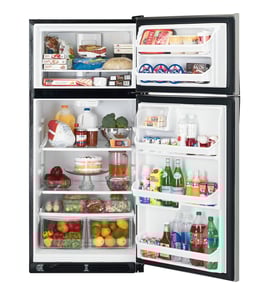




Can I adjust the height of my refrigerator?
Yes. On Kenmore Elite refrigerator model 10674209402, you can adjust the front height and tilt by turning the two front leveling screws (one on each side) after removing the base grille; raising the front slightly also helps the doors close more easily. See the 10674209402 owner's manual.
- Move the refrigerator into its final location.
- Remove the base grille (kick plate) to access the front roller assemblies.
- Use a screwdriver on the leveling screws:
- Turn right to raise that side.
- Turn left to lower that side.
- Have someone push gently against the top front of the refrigerator while you turn the screws; this reduces weight on the rollers and makes adjustment easier.
- Reinstall the base grille.
- Keep the refrigerator plugged in only if you are not moving it away from the wall.
- Adjust both sides in small, equal turns to avoid twisting the cabinet.
- Aim for a slight tilt back so the doors close on their own.
- Recheck door alignment after leveling.
| What you notice | What to do | Result |
|---|---|---|
| Refrigerator feels unsteady | Raise the low side using the front leveling screw | Cabinet stops rocking |
| Doors do not close easily | Raise both front leveling screws equally (tilt slightly to the rear) | Doors close more reliably |
| Door gaps look uneven | Level first, then adjust hinges if needed | More even door spacing |
Proper leveling reduces door-slam issues, helps the door gaskets seal consistently, and can prevent warm air leaks that lead to temperature swings, frost, and extra compressor run time.
Last updated: January 2026
What are the common problems with Kenmore Elite refrigerators?
Common problems on the Kenmore Elite 10674209402 top-mount refrigerator include warm temperatures from blocked airflow or control settings, frost or moisture from door seal and defrost-related issues, and unusual noises during normal operation. Many fixes start with cleaning, airflow checks, and basic part inspections using the 10674209402 owner's manual.
- Not cooling or weak cooling: blocked air vents, frequent door openings, warm food loads, or a failed evaporator fan motor
- Frost buildup or interior moisture: door left ajar, dirty or sticky door gaskets, or airflow restrictions
- Doors not closing or hard to open: food packages blocking the door, refrigerator not level, or gaskets sticking
- No ice or slow ice production (if equipped): ice maker issue, water supply problem, or inlet valve problem
- Buzzing, clicking, or humming: normal operating sounds, or a failing fan motor or compressor start component
- Confirm airflow: keep items from blocking interior vents (good air circulation is required for even cooling).
- Check control settings: verify the refrigerator and freezer controls are set appropriately for room conditions.
- Inspect door sealing: clean gaskets and the surfaces they touch; if gaskets stick, apply a thin coat of paraffin wax after cleaning.
- Level the refrigerator: an unlevel cabinet can cause door-closing problems.
- Reset (digital control models): turn cooling off and back on to reset if the unit is not cooling.
| Symptom | Part to check | Example part for model 10674209402 |
|---|---|---|
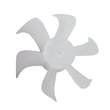
| Warm fridge/freezer, poor airflow | Evaporator fan system | Evaporator motor WP2315539, fan blade WP2163777 |
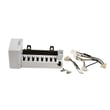
| No ice (if equipped) | Ice maker | Ice maker assembly - refrigerator ice maker by whirlpool 4317943 |
| Water not filling ice maker | Water supply valve/tubing | Refrigerator water inlet valve WP2188808, water tube 8201597 |
| Door not sealing, moisture | Door gasket | Gasket panel 2159061 (white) or 2177311 (black) |
Cooling complaints and frost issues often start as simple airflow or door-seal problems. Fixing those early helps protect food temperatures, reduces compressor run time, and prevents repeat icing and moisture buildup.
Last updated: January 2026
Why is the top part of my refrigerator not cooling?
If the refrigerator section (top) on your Kenmore Elite 10674209402 is warm, the most common cause is restricted airflow between the freezer and fresh-food sections (blocked vents or an airflow control issue). Start by clearing vents and confirming the controls are set correctly per the 10674209402 owner's manual.
- Make sure no food packages are blocking the air vents in either compartment (blocked vents stop cold air movement).
- Keep the doors closed as much as possible; frequent opening quickly warms the refrigerator section.
- If you just loaded groceries, allow several hours for temperatures to recover.
- Confirm the refrigerator and freezer controls are at the recommended “set point” and wait 24 hours after changes.
- For models with digital controls, power the refrigerator off and back on to reset the controls (per the manual).
Cold air is produced in the freezer and then routed into the refrigerator section through vents. When vents are blocked, the refrigerator section often warms while the freezer may still seem “okay.”
| Symptom | Most likely area to check | What to do first |
|---|---|---|
| Freezer cold, refrigerator warm | Blocked vents or air distribution | Clear vents; reorganize food away from vent openings |
| Both sections warm | Cooling system or airflow plus heat load | Check door closing, coil cleanliness, and listen for fans |
| Refrigerator warm, freezer frosting up | Defrost/airflow restriction | Check for heavy frost and reduced airflow |
If vents are clear and settings are correct but the refrigerator section still will not cool, a failed fan or airflow component is a common next step.
- If you do not hear airflow and temperatures drift warm, the evaporator fan motor can be the issue; see evaporator motor WP2315539.
- If the fan runs but airflow into the refrigerator is weak, the air control/baffle can stick or fail; see refrigerator air baffle WP2315515.
- If temperatures swing or seem inaccurate, a sensor issue is possible; see refrigerator temperature sensor WP2188819.
Poor airflow and warm refrigerator temperatures can lead to food spoilage and moisture problems. Clearing vents and using the correct control settings restores normal circulation between compartments and is the fastest, no-parts first step.
Last updated: January 2026