 Owner’s manual
 Error Codes


Is it worth replacing the heating element in a dryer?
Yes; for a Kenmore electric dryer model 11062212101, replacing the heating element is usually worth it when the dryer still tumbles normally and the cabinet, drum, and controls are in good shape. Before replacing parts, we confirm airflow and power because a tripped breaker or blocked vent can mimic a bad element.
Quick decision checklist
- The drum turns and the timer advances, but there is no heat
- You have good airflow at the outside vent hood after 5 to 10 minutes of running
- You verified both dryer breakers or fuses are on (many electric dryers use two)
- The dryer is not overheating or shutting down from restricted venting
- The repair cost is far less than replacing the dryer
What to check first (often fixes “no heat”)
The manual notes that the dryer can appear to run but not heat if one fuse is blown or one breaker is tripped, and that restricted air movement from lint buildup can cause poor drying. Use the troubleshooting steps in the 11062212101 owner's manual.
- Clean the lint screen and confirm it is seated correctly
- Check the vent path for crushing, kinks, or lint blockage
- Run the dryer and feel for strong exhaust outside
- Verify both legs of power are present (reset both breakers fully OFF then ON)
Parts that commonly get replaced together
If the element failed due to overheating or age, we often replace related safety and temperature-control parts at the same time.
| Symptom | Common related part to consider | Example part for this model |
|---|---|---|
| No heat, dryer runs | Heating circuit component | Dryer element 279838 |
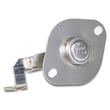
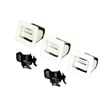
| No heat after overheating/blocked vent | Safety cut-off | Dryer thermal cut-off fuse kit 279816 |
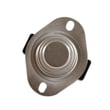
| Overheats or cycles heat oddly | Temperature control | Dryer operating thermostat WP3387134 |
Why it matters
A new heating element will not solve slow drying if airflow is restricted. Good venting protects the new element and helps prevent repeated thermal cut-off trips.
Last updated: January 2026
What are the most common issues with 11062212101?
For the Kenmore 11062212101 electric dryer, the most common problems are no heat or weak heat, long dry times from restricted airflow, drum not turning due to a worn belt or idler, and the dryer not starting because of a door switch or blown thermal fuse. Use the 11062212101 owner's manual for model-specific checks and safety steps.
Common symptoms and what usually causes them
- No heat: failed heating element, high-limit thermostat, operating thermostat, or thermal cut-off
- Long dry times: clogged lint screen, blocked venting, lint buildup in the lint chute or blower area
- Drum not turning: broken belt, worn idler pulley, worn drum support components (often serviced as a kit)
- Won’t start: door switch not closing, push-to-start switch issue, thermal fuse open
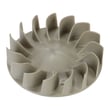
- Loud squealing or thumping: worn drum support parts, idler pulley, or blower wheel damage
Parts that commonly fix these issues (when testing confirms failure)
If your troubleshooting points to a failed component, these are frequently replaced on this model:
- Dryer thermal fuse WP3392519 (no-start protection device)
- Dryer element 279838 (no-heat)
- Dryer thermal cut-off fuse kit 279816 (overheat-related no-heat)
- Dryer drum belt 341241 (drum not turning)
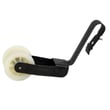
- Idler pulley WP691366 (squeal, belt issues)
Quick checks we recommend before replacing parts
- Clean the lint screen and confirm strong airflow at the outside vent.
- Verify the dryer is on a heat cycle and not “air fluff” or “no heat.”
- Check the door closes firmly; a weak latch can mimic a bad switch.
- If the dryer runs but won’t heat, inspect venting first; overheating can open safety fuses.
- If you use a meter, unplug the dryer before testing components.
Symptom-to-part guide
| Symptom | Most common area | Example part on this model |
|---|---|---|
| Runs, no heat | Heating circuit | Dryer element, thermostats, thermal cut-off |
| Won’t start | Safety/start circuit | Thermal fuse, door switch, start switch |
| Drum won’t turn | Drive system | Belt, idler pulley, repair kit |
| Loud noise | Drum support/airflow | Repair kit, blower wheel |
Why it matters
Dryer heating and safety parts (like a thermal fuse or thermal cut-off) often fail because of overheating from poor airflow. Fixing vent restrictions helps prevent repeat failures and improves drying performance.
Last updated: March 2026
Will a dryer still run if the thermal fuse is blown?
On the Kenmore 11062212101 electric dryer, a blown thermal fuse typically stops the dryer from running because it opens the safety circuit after overheating. If your dryer still tumbles but has no heat, that points more often to a power-supply issue (one house fuse tripped) or a heating circuit problem, not a “running” thermal fuse.
What you’ll usually see when a safety device opens
- Dryer will not start at all (common when a thermal fuse opens)
- Dryer starts but there’s no heat (commonly caused by one of the two house fuses or breakers tripping)
- Dryer shuts off mid-cycle (overheating or airflow restriction)
- Burning smell at first use can be normal for a new element, but persistent overheating symptoms are not
For model-specific operating and troubleshooting checks, follow the steps in the 11062212101 owner’s manual.
Quick checks before replacing parts
- Confirm power: Many electric dryers use two fuses/breakers; if one trips, the dryer can run but not heat.
- Check airflow: Make sure the vent is not crushed or kinked; restricted airflow is a common overheating cause.
- Clean lint path: Clean the lint screen and inspect the exhaust hood outside for strong airflow.
- Verify settings: Make sure you are not on an Air (no-heat) cycle.
Common “runs but won’t heat” causes (comparison)
| Symptom | Most common cause | What to do next |
|---|---|---|
| Tumbles, no heat | One house fuse/breaker tripped | Reset/replace both as needed |
| Poor drying, long times | Restricted venting or clogged lint screen | Clean lint screen and exhaust system |
| No heat after airflow is good | Heating circuit component issue | Test heater and thermostats |
If testing shows the heater is open, the correct replacement heater for this model is the dryer element 279838. If overheating damaged safety controls, the dryer thermal cut-off fuse kit 279816 is a common repair set used in the heating circuit.
Why it matters
A blown thermal fuse or thermal cut-off is a safety response to overheating. Restoring heat without fixing the underlying airflow restriction (lint buildup, crushed vent, blocked exhaust hood) can cause repeat failures and poor drying performance.
Last updated: January 2026








