Owner’s manual


How to reset a Samsung Moisture Sensor dryer?
To reset the moisture-sensing (Sensor Dry) function on your Samsung DV448AGP dryer, we recommend a simple power reset: turn the dryer off, unplug it for 5 minutes, then plug it back in and run a Sensor Dry cycle. If drying is still inconsistent, cleaning the moisture sensor bars and checking airflow fixes the root cause more often than repeated resets.
Quick reset steps (power cycle)
- Press Power to turn the dryer off.
- Unplug the dryer (or switch the breaker off) for 5 minutes.
- Restore power.
- Select a Sensor Dry cycle (Normal, Heavy Duty, Towels, Perm Press, or Delicates) and press Start/Pause.
- If the display shows END, open and close the door or press Power to clear it, then restart the cycle.
If buttons do not respond, check Child Lock
Your DV448AGP can ignore most buttons when Child Lock is on. To toggle it, press Time + Signal together for 3 seconds (the manual notes only Power responds while Child Lock is active). See the DV448AGP owner's manual.
Clean the moisture sensor (most common “sensor problem”)
On Sensor Dry cycles, the dryer uses metal sensor bars inside the drum area to detect moisture and stop at the selected Dry Level.
- Wipe the sensor bars with rubbing alcohol and a soft cloth (remove dryer sheet residue).
- Clean the lint screen before every load.
- Avoid overloading; bulky loads can confuse sensing and extend dry time.
- Use the correct Dry Level setting (Very Dry, More Dry, Normal Dry, Less Dry, Damp Dry).
- If loads still come out damp, improve venting and airflow.
What to try next (symptom-based)
| Symptom | Most likely cause | Best next step |
|---|---|---|
| Stops too soon, clothes damp | Dirty sensor bars or low airflow | Clean sensor bars; check venting |
| Runs too long | Restricted vent or overloaded drum | Clear vent path; reduce load size |
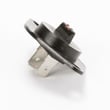
| Heat seems erratic | Temperature sensing issue | Test/replace the dryer thermistor DC32-00007A |
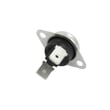
| Shuts down from overheating | Airflow restriction or safety thermostat opening | Clean venting; inspect the dryer thermal cut-off thermostat DC47-00016A |
Why it matters
A “reset” only clears the control’s temporary state. Sensor Dry performance depends on clean sensor bars, correct cycle selection, and strong airflow, so addressing residue and vent restrictions prevents long dry times, damp loads, and overheating shutoffs.
Last updated: February 2026
How to tell if a Samsung dryer heating element is bad?
If your Samsung DV448AGP dryer runs but produces little or no heat, the heating element circuit is a top suspect. We confirm a bad element by checking for a broken coil (visual) and by testing continuity and a ground fault with a multimeter, following the access and safety steps in the DV448AGP manual.
Quick signs the heating element is failing
- Dryer tumbles normally but clothes stay cold or damp
- Heat cuts in and out during a cycle (more than normal cycling)
- Burning smell or scorching (stop using the dryer and inspect airflow)
- Longer dry times even with a clean lint screen and good venting
- Breaks or hot spots visible on the element coil (if accessible)
How we test it (safe, reliable checks)
- Unplug the dryer (and shut off gas if you have a gas model).
- Access the heater area using the disassembly steps in the DV448AGP manual.
- Set a multimeter to ohms (Ω) or continuity.
- Element continuity test: probe the two element terminals.
- Ground fault test: probe from each terminal to bare metal cabinet ground.
What the meter results mean
| Test | Normal result | Bad result | What it points to |
|---|---|---|---|
| Terminal-to-terminal continuity | Continuity present (finite resistance) | No continuity (open circuit) | Heating element coil is broken |
| Terminal-to-cabinet ground | No continuity | Continuity to ground | Element is shorted to ground |
Don’t miss these common “no heat” causes
Your DV448AGP manual troubleshooting also calls out airflow and settings issues that can mimic a bad heater. Check these first because restricted venting can overheat the dryer and trip safety thermostats.
- Select a heated cycle (not Air Fluff)
- Clean the lint screen before or after each load
- Inspect and clean the exhaust duct; use 4-inch rigid metal ducting
- Make sure the outside exhaust hood opens freely
- If gas: confirm the gas supply is on
Why it matters
A failed heating element (or a grounded element) stops proper heating, but a clogged vent can cause overheating that trips the high-limit thermostat or thermal cut-off. Fixing airflow first helps prevent repeat failures and improves dry time.
Last updated: February 2026
What is the average lifespan of a Samsung dryer?
A Samsung dryer typically lasts 10 to 15 years. For your Samsung DV448AGP, consistent airflow and heat control are what most often determine whether it lands closer to 10 years or closer to 15; our DV448AGP owner's manual covers the care and safe venting practices that support long service life.
What affects dryer lifespan the most
- Vent restriction and lint buildup (overheats components and slows drying)
- Overloading (stresses the drum, belt, rollers, and motor)
- Heat cycling and sensor accuracy (affects run time and wear)
- Installation quality (duct type, length, and crushing/kinks)
- Routine cleaning (lint screen every load; periodic vent cleaning)
Maintenance checklist that extends life
- Clean the lint screen every load.
- Inspect and clean the vent path (dryer outlet to exterior hood) on a regular schedule.
- Keep loads to a reasonable size so the drum can tumble freely.
- Stop using the dryer if you notice burning smells, repeated overheating, or very long dry times.
- Follow the venting and safety guidance in the DV448AGP owner's manual (rigid or approved metal ducting is preferred over crush-prone materials).
Common wear items and what symptoms look like
| Symptom | Most common wear area | What it usually means |
|---|---|---|
| Thumping, rumbling, squealing | Drum support system | Roller wear or flat spots; increased friction |
| Drum not turning, motor runs | Drive system | Belt slipping or broken |
| Long dry times, hot cabinet | Airflow/heat management | Vent restriction or overheating protection cycling |
| No heat or heat cuts out | Temperature safety parts | Thermostat/thermal cut-off opening due to heat issues |
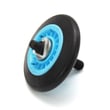
If you’re chasing a noise complaint, a common wear part is the Samsung dryer drum support roller DC97-16782A.
Why it matters
A dryer that dries efficiently runs fewer minutes per load, which reduces heat stress on the motor, drum support rollers, belt, and safety thermostats. Good venting and lint control are the biggest factors we see behind longer dryer life.
Last updated: February 2026