 Installation guide
 Owner’s manual


Does an admiral dryer have a reset button?
Admiral dryer model AED4475TQ1 does not use a dedicated reset button. When it stops running, the “reset” is usually restoring power, correcting airflow or heat issues, or replacing a safety device such as a thermal cut-off fuse that opened during an overheat.
- Make sure the dryer door is fully closed and latched.
- Confirm the controls are set to a running cycle and the Start button is pressed firmly.
- Verify the dryer has power; many electric dryers use two household fuses or breakers, so check both.
- Unplug the dryer (or switch off the breaker) for 1 minute, then restore power and try again.
- Check the vent path for restrictions; poor airflow can cause overheating and shutdown.
A dryer that will not start often has an open safety circuit or a failed start circuit component.
| Symptom | Most likely area | What it means |
|---|---|---|
| Dead, no response | Power supply | One breaker or fuse is open, or outlet issue |
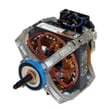
| Clicks but won’t run | Start circuit | Door switch, push-to-start switch, or motor issue |
| Ran, then stopped and won’t restart | Overheat protection | Thermal cut-off opened due to heat or airflow problem |
If overheating occurred, the safety devices do not reset; they are replaced after fixing the airflow cause.
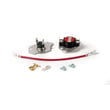
- Dryer thermal cut-off fuse kit 279816 (overheat protection)
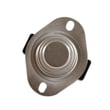
- Dryer operating thermostat WP3387134 (regulates drum temperature)
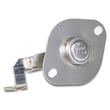
- Dryer high-limit thermostat WP3977767 (backup overheat protection)
A “no reset button” design is intentional: it helps prevent repeated overheating. Restoring airflow (lint screen, lint chute, vent duct, outside hood) protects the heating element, motor, and wiring and helps drying times return to normal.
For model-specific electrical and startup checks, follow the AED4475TQ1 installation guide.
Last updated: February 2026
What is the capacity of admiral dryer AED4475TQ1?
The Admiral dryer model AED4475TQ1 has a 7.0 cu. ft. drum capacity, which is a full-size capacity designed for typical family loads like towels, jeans, and bedding. For cycle and load guidance, use the AED4475TQ1 owner's manual.
A 7.0 cu. ft. electric dryer performs best when air can move through the load. We recommend:
- Fill the drum about 1/2 to 2/3 full for most mixed loads
- Dry bulky items (comforters, jackets) one at a time when possible
- Avoid packing items tightly; it increases dry time and heat stress
- Clean the lint screen before every load to maintain airflow
- Use timed dry for very small loads to prevent overdrying
| Load type | Typical example | Notes |
|---|---|---|
| Small | A few shirts, light delicates | Use lower heat when needed |
| Medium | Mixed everyday laundry | Best performance range |
| Large | Towels or jeans | Don’t compress the load |
| Bulky | Comforter, sleeping bag | Dry alone; check dryness mid-cycle |
Capacity affects drying performance: overloading reduces airflow, which can cause longer dry times, higher energy use, and overheating symptoms that may lead to heat-related part failures (such as a thermal cut-off opening). If drying times are long, follow the venting and airflow checks in the AED4475TQ1 installation guide.
Last updated: February 2026
Where is the thermal fuse on an admiral dryer?
On the Admiral AED4475TQ1 dryer, the thermal fuse is typically mounted on the blower housing, usually behind the rear panel near where the vent duct connects. You can confirm the exact access steps and panel removal details in the AED4475TQ1 installation guide.
- Unplug the dryer (or switch off the breaker) before removing any panels.
- Pull the dryer away from the wall so you can reach the rear panel and vent.
- Remove the rear access panel screws and lift the panel off.
- Locate the blower housing near the exhaust outlet; the thermal fuse is usually a small, flat device with 2 wires.
- Take a photo of the wire positions before disconnecting anything.
- If you are replacing the fuse, correct the airflow problem first (vent restriction) so the new fuse does not blow again.
| Item | Typical location | What it does |
|---|---|---|
| Thermal fuse | On blower housing | Opens if overheating occurs; dryer may not run or may not heat |
| High-limit thermostat | On heater housing or heater box | Limits heater temperature |
| Operating thermostat | On blower housing or air duct | Regulates normal cycling temperature |
- Clean the lint screen and wash off any fabric softener residue.
- Check the vent hose for kinks, crushing, or heavy lint buildup.
- Make sure the outside vent hood opens freely and is not blocked.
- If the dryer runs but has poor airflow, inspect the blower wheel for damage or looseness.
- Dryer blower wheel WP694089 (damaged or loose wheel reduces airflow)
- Dryer high-limit thermostat WP3977767 (can trip if temperatures spike)
- Dryer operating thermostat WP3387134 (controls normal heat cycling)
The thermal fuse is a one-time safety device. When airflow is restricted, heat builds up in the blower area and the fuse opens to protect the dryer. Fixing venting and airflow is the key step that prevents repeat failures.
Last updated: February 2026
Who is the admiral dryer made by?
Admiral is a U.S. appliance brand that’s manufactured by Whirlpool Corporation; your Admiral AED4475TQ1 dryer is part of that Whirlpool-built platform. This matters because many Admiral dryer parts and service procedures cross-reference common Whirlpool-style components and wiring practices.
Knowing Whirlpool manufactures Admiral helps us match the right replacement parts and troubleshooting steps for AED4475TQ1.
- Use the full model number AED4475TQ1 when searching parts (not just “Admiral dryer”).
- Confirm whether your dryer is electric or gas before ordering heating parts.
- Follow the wiring and grounding instructions exactly during installation.
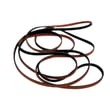
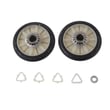
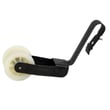
- When replacing wear items, consider common maintenance parts like a belt, idler pulley, or blower wheel.
- Keep your venting system clean to prevent overheating and repeat thermal fuse failures.
The installation instructions for this model describe a 29-inch electric dryer and outline standard U.S. electrical requirements, including proper grounding and approved power-cord connections. For the exact electrical connection steps and spacing requirements, use the AED4475TQ1 installation guide.
| What you’re fixing | Typical symptom | Example part for AED4475TQ1 |
|---|---|---|
| Drum won’t tumble | Dryer runs but drum doesn’t turn | Belt 341241 |
| Long dry times, poor airflow | Clothes take too long to dry | Dryer blower wheel WP694089 |
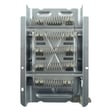
| No heat (electric) | Runs but doesn’t heat | Dryer element 279838 |
Manufacturer lineage affects parts compatibility, wiring conventions, and repair approach. With Whirlpool-built Admiral dryers like AED4475TQ1, using the correct installation and grounding method is especially important for safe, reliable operation.
Last updated: February 2026
Why is my admiral dryer heating but not drying?
If your Admiral AED4475TQ1 dryer heats but clothes stay damp, the problem is almost always poor airflow (a crushed or clogged vent, lint buildup, or a blocked blower path). Less often, the drum is not tumbling correctly because of a worn belt or idler pulley.
- Clean the lint screen completely (wash off any fabric softener film and dry it).
- Inspect the vent hose behind the dryer; make sure it is not crushed or kinked (most installs need about 5 inches of clearance behind the dryer for the vent elbow).
- Run a timed dry, high heat cycle and confirm strong airflow at the outside vent hood.
- Clear lint from the lint chute and blower area if airflow is weak.
- Verify the dryer is level; poor tumbling can increase dry time.
For model-specific venting and setup requirements, follow the AED4475TQ1 installation guide.
| What you notice | Most likely cause | What to do first |
|---|---|---|
| Dryer is hot inside but airflow at vent hood is weak | Clogged vent duct or crushed flex vent | Disconnect vent and test airflow; clean/shorten vent run |
| Clothes are warm but still wet, cycle seems to run “normally” | Restricted airflow causing moisture to stay in drum | Clean lint screen, lint chute, blower housing, and venting |
| Drum turns slowly, squeals, or stops | Belt or idler issue | Inspect and replace wear parts such as the belt 341241 or idler pulley |
| Drying takes much longer than it used to | Partial vent restriction or lint buildup inside cabinet | Deep-clean venting and internal lint paths |
Airflow problems are the top cause, but if the dryer is not tumbling correctly, these parts are common fixes:
- Belt 341241 (drum not turning or slipping)
- Dryer blower wheel WP694089 (weak airflow, rattling, or stripped hub)
- Dryer operating thermostat WP3387134 and dryer high-limit thermostat WP3977767 (overheating from restricted airflow can stress these)
A dryer can still produce heat even when it cannot move enough air to carry moisture out. Restoring proper exhaust airflow usually brings drying performance back to normal and helps prevent overheating.
Last updated: February 2026








