Owner’s manual
 Error Codes



What is the disadvantage of a side-by-side fridge?
A side-by-side refrigerator like the Whirlpool GSF26C4EXY00 trades wide, open storage for easy access to both fresh food and frozen items. The biggest disadvantage is narrower shelf space, which makes it harder to store wide platters, pizza boxes, and large trays compared to many top-freezer or French door designs.
Common disadvantages (and what you can do about them)
- Narrow compartments and shelves: Large, wide items often will not fit without rearranging.
- Less “full-width” fresh-food space: The refrigerator side can feel tighter for party trays and meal prep.
- More bending for everyday items: Many frequently used shelves and bins sit lower in both compartments.
- Door storage can be limited by dispenser hardware: Some models lose usable bin space on the refrigerator door.
- Ice and water features add complexity: Dispensers and ice makers add more parts that can need maintenance.
Quick comparison: side-by-side vs other common layouts
| Layout | Biggest downside | Best for |
|---|---|---|
| Side-by-side | Narrow shelf width | Balanced freezer and fridge access |
| French door | Freezer items can be harder to see | Wide fresh-food storage |
| Top freezer | Fresh-food section can require more bending | Simple, efficient storage |
Why it matters
If you regularly store wide items (sheet pans, large leftovers, party platters), shelf width is the deciding factor. If you use frozen foods often, side-by-side designs keep freezer items at eye level, which many households prefer.
Helpful resources for your Whirlpool GSF26C4EXY00
For layout details, shelf/bin adjustments, and care tips specific to your refrigerator, use the GSF26C4EXY00 owner's manual.
Last updated: February 2026
How can I tell how many cubic feet my Whirlpool refrigerator is?
For your Whirlpool GSF26C4EXY00 side-by-side refrigerator, the most reliable way to confirm cubic feet (total capacity) is to look up the model specifications in the GSF26C4EXY00 owner's manual. If you need a quick estimate, you can calculate capacity from interior measurements.
Best ways to find cubic feet
- Check the specs in the manual: This gives the official total capacity for the exact model.
- Look for a rating label: Many refrigerators have a model/serial tag inside the fresh food section; it may list capacity or other key specs.
- Estimate by measuring the interior: Useful if the label is missing or unreadable.
How to estimate cubic feet (quick math)
- Measure the usable interior of the fresh food section (height, width, depth in inches).
- Do the same for the freezer section.
- Convert each section to cubic feet:
cubic feet = (height × width × depth) ÷ 1728
- Add the two results for an estimated total.
Measurement tips (so the estimate is closer)
- Measure inside wall to inside wall, not the outside cabinet.
- Subtract space taken by thick door bins, ice maker housing, and shelves if you want “usable” space.
- Use the widest and deepest flat areas; curved liners can throw off measurements.
Typical capacity ranges (for context)
| Refrigerator type | Typical total capacity |
|---|---|
| Side-by-side (full size) | 20 to 28 cu. ft. |
| Counter-depth side-by-side | 20 to 24 cu. ft. |
Why it matters
Knowing cubic feet helps us match the right replacement parts and maintenance items (like a refrigerator water filter or air filter) and it also helps when comparing storage needs, shelf layouts, and door bin capacity.
Last updated: February 2026
What are the most reliable side-by-side refrigerators?
The most reliable side-by-side refrigerators are typically the ones with simpler designs (fewer electronic features and dispenser components) and strong parts availability. For Whirlpool side-by-side models like GSF26C4EXY00, reliability improves most when you keep the water and air filtration systems maintained and address cooling or ice-maker symptoms early using the owner's manual.
What “reliable” usually means for side-by-side refrigerators
When customers ask about reliability, we focus on these real-world factors:
- Consistent temperatures in both compartments (stable cooling)
- Fewer ice maker and water dispenser failures
- Good door sealing (less frost, less compressor run time)
- Easy access to common replacement parts (filters, valves, fans)
- Straightforward diagnostics and serviceability
Practical reliability checklist (works for most brands)
These steps reduce the most common side-by-side breakdowns:
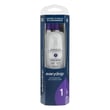
- Replace the water filter on schedule; a restricted filter can stress the water system and reduce ice production (use refrigerator water filter EDR1RXD1).
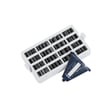
- Change the air filter regularly to help control odors and airflow (use refrigerator air filter W10311524).
- Keep condenser coils clean (better efficiency, less compressor strain).
- Confirm doors close and seal fully; warm air leaks cause frost and long run times.
- If the ice maker is slow or the dispenser is weak, test water supply and the inlet valve before replacing multiple parts.
Common “high-failure” areas in side-by-sides (and what to watch for)
| Symptom | Most common cause | What we check first |
|---|---|---|
| Warm refrigerator, freezer OK | Airflow issue | Evaporator fan operation, frost buildup |
| Frost buildup, noisy fan | Defrost problem | Defrost heater, defrost bi-metal |
| No ice or small cubes | Water supply restriction | Filter condition, inlet valve |
| Bad odors | Air circulation and food spills | Air filter, cleaning, airflow |
Why it matters
Side-by-side refrigerators depend heavily on airflow and the dispenser system. Staying ahead of filter changes and airflow issues helps prevent secondary failures (like icing, fan damage, and longer compressor run time) that make a refrigerator feel “unreliable.”
Last updated: February 2026
What is the biggest problem in a Whirlpool refrigerator?
The biggest problem we see in Whirlpool refrigerators like model GSF26C4EXY00 is cooling trouble (warm fridge, thawing freezer, or temperature swings). The most common root causes are restricted airflow from dirty condenser coils, a failing evaporator fan, or a defrost system issue that lets frost build up.
Most common “big” problems (and what they look like)
- Not cooling enough: food spoils, freezer softens, compressor seems to run a lot
- Temperature swings: items freeze in the fresh food section or thaw intermittently
- Ice maker or dispenser issues: no ice, small cubes, slow water flow
- Unusual noises: buzzing, clicking, or a loud fan sound
- Water leaks/puddles: water under the refrigerator or inside the fresh food section
Quick checks we recommend first
- Confirm settings: set the refrigerator to about 37°F and freezer to about 0°F (typical targets).
- Clean condenser coils: dust buildup reduces cooling and increases run time.
- Listen for the evaporator fan: in many side-by-side units, you should hear a steady fan sound when the door switch is held closed.
- Check for frost on the freezer back wall: heavy frost points to a defrost problem.
- Check water flow (if dispenser is slow): a clogged filter or weak inlet valve can restrict flow.
Parts that commonly solve the underlying issue
If symptoms match, these model-compatible parts are common fixes:
| Symptom | Likely area | Example part for GSF26C4EXY00 |
|---|---|---|
| Slow water, poor ice | Filtration or supply | Refrigerator water filter EDR1RXD1 |
| Warm temps, noisy airflow | Evaporator fan system | Evaporator motor 4389144 or refrigerator evaporator fan blade WP2169142 |
| Frost buildup, warm fridge | Defrost system | Refrigerator defrost bi-metal WPW10225581 or refrigerator heater WPW10495967 |
| No ice production | Ice maker | Refrigerator ice maker assembly WPW10251076 |
| No water to dispenser/ice | Water valve | Refrigerator water inlet valve WPW10238100 |
Why it matters
Cooling problems are the fastest way to lose food and overwork the compressor. Catching airflow, defrost, or water-supply issues early often prevents bigger repairs and keeps temperatures stable.
Helpful model-specific resources
- Use the GSF26C4EXY00 owner's manual for temperature recommendations, control locations, and maintenance steps.
- If you’re seeing a fault code or unusual behavior, our Whirlpool refrigerator error codes guide helps you narrow down the system involved.
Last updated: February 2026