Owner’s manual
 Error Codes


What size is Kenmore refrigerator model 79574053411?
For Kenmore Elite refrigerator model 79574053411, the exact exterior dimensions (width, depth, height) depend on the specific 795.7403_/7405 configuration and door/handle setup; we use the 79574053411 owner's manual to confirm the correct measurements for your unit before ordering parts or planning a fit.
How to get the correct dimensions (the reliable way)
Use these steps so you measure the same way the manufacturer specifies:
- Measure width at the widest point (often the door edges, not the cabinet).
- Measure height from floor to top of hinge cover (leveling legs affect this).
- Measure depth in two ways: cabinet only and with doors/handles.
- Confirm whether you need clearance for a convenience door or full door swing.
- Allow installation clearance: at least 2 inches behind the refrigerator and 24 inches in front for door opening.
Typical size range for this style (planning guidance)
Most Kenmore Elite bottom-mount refrigerators in the 795 family are approximately:
| Measurement | Typical range (approx.) | What changes it most |
|---|---|---|
| Width | 32 to 36 in. | Door style and trim |
| Height | 67 to 71 in. | Leveling legs, hinge cover |
| Depth | 30 to 35 in. | Handles, door thickness |
Why it matters
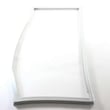
Accurate dimensions prevent delivery and installation problems, and they help you avoid ordering parts that do not match your exact door configuration (for example, a right-side gasket like refrigerator door gasket, right ADX72930461 must match the correct door style).
Last updated: January 2026
What does DH mean on Kenmore Elite refrigerator?
On Kenmore Elite refrigerator model 79574053411, dH typically indicates a defrost heating problem (the refrigerator is not warming the evaporator enough during the defrost cycle). This often points to a failed defrost heater circuit, a sensor issue, or a control problem that prevents proper defrosting.
What to check first (fast, safe checks)
- Power reset: unplug the refrigerator for 5 minutes, then restore power and watch for the code returning.
- Door sealing: make sure doors close fully; warm air leaks can increase frost and trigger defrost-related issues.
- Heavy frost symptoms: poor cooling, weak airflow, or a noisy fan can indicate an iced-over evaporator.
- Confirm the code meaning for your exact display: use the 79574053411 owner's manual.
- If the unit is not cooling and the code persists, stop repeated resets and move to component checks.
Common causes and related parts
A dH condition is usually tied to the defrost system. On this model family, the most common culprits are the defrost sensor/thermistor, wiring/connectors, or the electronic control.
| Likely cause | What you may notice | What to do next |
|---|---|---|
| Defrost sensor out of range | Frost buildup returns quickly | Test/replace the sensor |
| Control not driving defrost | Code returns after reset | Check for output during defrost |
| Airflow restricted by ice | Warm fridge section, fan noise | Defrost and diagnose root cause |
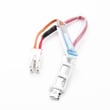
If you are troubleshooting parts, the refrigerator defrost sensor assembly 6615JB2005R is a common defrost-system component to inspect for damage, loose connection, or failure.
Why it matters
When defrost heat is not working, frost can block airflow across the evaporator. That reduces cooling performance, can cause temperature swings, and can lead to ice maker and dispenser complaints because the refrigerator cannot maintain stable temperatures.
Helpful reference
For model-family code definitions and troubleshooting flow, use our Kenmore 795 model bottom freezer refrigerator error codes guide.
Last updated: January 2026
Why is my Kenmore Elite refrigerator leaking water out of the bottom?
Water leaking from the bottom of your Kenmore Elite refrigerator model 79574053411 is usually caused by a defrost drain that is clogged and overflowing into the base, or a water supply leak from the dispenser/ice maker tubing or fittings. Use the steps in the 79574053411 owner's manual to pinpoint the source safely.
Most common causes (and what to check first)
- Clogged defrost drain: Water from normal defrosting cannot drain to the pan and spills into the cabinet, then out the bottom.
- Loose or damaged water line connection: The manual notes the door water tube uses a collet fitting; if the tube is not fully seated, it can leak.
- Cracked dispenser tubing: Small splits can drip and run down to the bottom.
- Ice maker fill leak: A slow seep at the inlet or fill tube can pool and migrate.
- Drain pan issue: A shifted or cracked pan can let water escape instead of evaporating.
Quick troubleshooting steps (10 to 20 minutes)
- Unplug the refrigerator and protect the floor with towels.
- Check where the water appears:
- Front center: often defrost drain or drain pan.
- Left door hinge area: often the door water tube/connector.
- Inspect the door water tube connection (top hinge area). Reseat the tube firmly in the connector; the manual describes the release ring (collet) used to disconnect and reconnect.
- Look for ice or debris in the freezer drain area (common after a door left ajar).
- If the leak happens only when dispensing water or making ice, replace the water filter and recheck for drips.
What the symptoms usually mean
| Symptom | Most likely cause | Best next step |
|---|---|---|
| Water appears after defrost cycles | Clogged defrost drain | Clear drain path and check drain pan |
| Leak only when dispensing water | Filter housing/tubing leak | Reseat lines; replace filter if overdue |
| Leak near left hinge/top of door | Door water tube not seated | Reseat tube at collet fitting |
| Ice clumps, then water later | Ice maker fill seep/freezing | Inspect fill tube and connections |
Parts that commonly relate to leaks on this model
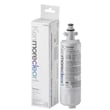
- If you suspect a filter or filter seating issue, use the correct filter: genuine Kenmore refrigerator water filter 9690 AGF80300801.
Why it matters
A small leak can quickly damage flooring and can also lead to ice buildup, fan noise, and poor cooling if the defrost drain keeps freezing over. Fixing the source early helps protect the sealed system and keeps temperatures stable.
Last updated: January 2026
What are the common problems with Kenmore Elite refrigerators?
Common problems on a Kenmore Elite refrigerator like model 79574053411 are cooling issues, ice maker or water dispenser failures, frost buildup from defrost or door-seal problems, and unusual noises from fans or the sealed system. We start with airflow, filters, and basic checks from the 79574053411 owner's manual.
Most common symptoms and what usually causes them
- Not cooling or warm temperatures: dirty condenser area, blocked vents, evaporator fan issue, or sealed-system trouble
- Frost buildup or ice on the back wall: defrost system problem or air leak at the door gasket
- Water leaking or puddles: clogged defrost drain, mis-seated water filter, or water line connection issue
- Ice maker not making ice: low water supply, frozen fill tube, failed ice maker, or dispenser/auger issue
- Noisy operation (buzzing, clicking, rattling): fan blade hitting ice, failing fan motor, or compressor/start components
Quick checks we recommend before replacing parts
- Confirm settings: freezer near 0°F and fresh food near 37°F.
- Make sure vents are not blocked by food packages.
- Replace overdue filters (water and air) and reset any filter indicator if your model has one.
- Inspect door sealing: close a sheet of paper in the gasket; it should resist being pulled out.
- If the unit has power but acts “glitchy” after an outage, follow the power interruption guidance in the manual.
Parts that commonly solve these problems (when symptoms match)
| Symptom | Common part involved | Example for this model |
|---|---|---|
| Bad-tasting water, slow dispensing | Water filter | Genuine Kenmore refrigerator water filter 9690 AGF80300801 |
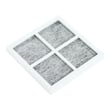
| Odors in fresh food section | Air filter | Lg refrigerator air filter ADQ73214408 |
| Frost issues, erratic defrost | Defrost sensor | Refrigerator defrost sensor assembly 6615JB2005R |
| Door not sealing, moisture/frost | Door gasket | Refrigerator door gasket, right ADX72930461 |
Why it matters
Small airflow and sealing problems can look like major failures. Keeping filters fresh, doors sealing, and airflow clear helps stabilize temperatures, reduce frost, and prevent ice maker and dispenser problems.
Last updated: January 2026