 Installation guide


How to put feet on a whirlpool dryer?
To put feet (leveling legs) on your Whirlpool CSP2761TQ0 commercial dryer, thread each leg into the base corner, stand the dryer upright, then level it side-to-side and front-to-back by turning the legs up or down until the cabinet sits solid with no rocking. See the CSP2761TQ0 installation guide for the leveling step.
Step-by-step: installing and leveling the feet
- Unplug the dryer (and shut off gas if you have a gas model) before moving it.
- Carefully tip the dryer back and support it securely.
- Thread a leveling leg into each corner of the base by hand to avoid cross-threading.
- Stand the dryer upright and move it close to its final position.
- Place a level on top of the dryer:
- Check side-to-side first.
- Check front-to-back next.
- Turn the legs:
- Clockwise typically lowers that corner (threads in).
- Counterclockwise typically raises that corner (threads out).
Quick checks after leveling
A properly leveled dryer runs quieter and reduces wear on the drum support and belt system.
- Push on opposite top corners; the dryer should not rock.
- Confirm the vent is not crushed or kinked after repositioning.
- Recheck level after the dryer is fully in place.
- Run a short heated cycle and listen for thumping or squealing.
Common symptoms and what they point to
| What you notice | Most likely cause | What to do next |
|---|---|---|
| Dryer rocks on the floor | Legs not adjusted evenly | Re-level using a bubble level |
| Loud thump after moving dryer | Dryer not sitting flat, or load hitting drum | Re-level; verify load size |
| Squeal or rumble that persists | Worn support or belt components | Inspect drum support and belt path |
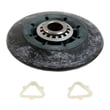
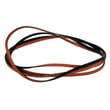
If you level the dryer and still hear a steady rumble, check wear items such as the support WPW10314173 and the dryer drive belt 661570V.
Why it matters
On the CSP2761TQ0, leveling is part of correct installation: it helps the drum track properly, keeps the cabinet stable, and prevents vibration that can shorten the life of parts like the drive belt, idler pulley, and drum support.
Last updated: February 2026
How to remove dryer panel whirlpool?
On the Whirlpool CSP2761TQ0 commercial dryer, removing the control panel and top panel starts with disconnecting power, releasing the control panel fasteners, then removing the screws that secure the main top so you can slide the top off and access the front-panel clips. See the CSP2761TQ0 installation guide for safe access and reassembly basics.
Before you start (safety and access)
- Unplug the dryer or switch off the breaker before removing any panels.
- If it is a hardwired installation, shut off power at the disconnect and confirm power is off.
- For gas models, shut off the gas supply valve before opening the cabinet.
- Use gloves; cabinet edges can be sharp.
- Keep screws grouped by location so reassembly is straightforward.
Typical control panel and top removal steps
These steps match the common Whirlpool-built commercial dryer cabinet design used on CSP2761TQ0.
- Disconnect power.
- Remove the screws securing the control panel (often at the back of the console or inside the end caps, depending on configuration).
- Rotate the control panel up and back to expose the main top fasteners.
- Remove the screws securing the main top.
- Slide the top panel back and lift it off.
- To release the upper front panel clips, insert a flat-blade screwdriver between the upper and lower front panels and gently pry to pop the clips.
If the panel will not come off
- Stuck clips: Pry near the clip locations, not in the middle of the seam.
- Hidden screws: Check the rear edge of the top and inside the control console area.
- Door switch wiring: If you remove the front panel, support it so wiring is not strained; the door switch is commonly mounted to the front panel area.
Quick reference: what you are removing
| Panel/area | What usually holds it | What it gives access to |
|---|---|---|
| Control panel (console) | Rear/side console screws | Timer, wiring, switches |
| Main top | Screws under console; rear/top screws | Drum, belt, idler, bulkhead |
| Upper front panel clips | Spring clips at seam | Front panel removal path |
Why it matters
Removing panels the right way prevents bent cabinet metal, broken clips, and pinched wiring. It also makes it easier to reach common wear items like the dryer drive belt 661570V and idler components during a noise, no-heat, or no-tumble repair.
Last updated: February 2026
What are the common problems with whirlpool dryers?
Common problems on Whirlpool dryers (including the commercial Whirlpool CSP2761TQ0) are no-start issues, no heat or poor drying, drum not turning, and loud squealing or thumping. Many of these trace back to power supply, airflow restrictions, or wear parts in the belt and drum support system.
Most common symptoms and what they usually mean
- Dryer will not start: power supply issue, door switch, timer/control, or a blown fuse/tripped breaker
- Drum not spinning: worn/broken belt, failed idler pulley, or motor problem
- No heat or weak heat (gas models): igniter or gas valve coil issues, or restricted venting
- Long dry times: lint buildup, crushed/long vent run, or poor make-up air in the room
- Noise (squeal, rumble, thump): worn drum rollers/supports, idler pulley, or belt wear
Quick checks we recommend first
- Confirm power is correct: check the breaker/fuse; the installation instructions recommend a separate circuit for the dryer and proper grounding. See the CSP2761TQ0 installation guide.
- Check airflow: clean the lint screen area and verify the vent is not kinked or blocked.
- Match vent length to the chart: too many elbows or long flexible venting causes back pressure and poor drying.
- Listen for clues: a motor hum with no drum movement often points to belt/idler problems.
Common wear parts for “won’t tumble” or noise
If the drum is not turning or the dryer is noisy, these model-matched parts are frequent fixes:
| Symptom | Likely wear area | Example model-matched part |
|---|---|---|
| Drum not turning | Belt drive | Dryer drive belt 661570V |
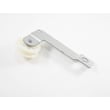
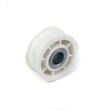
| Squealing or chirping | Idler pulley | Dryer idler pulley 279640 |
| Thumping/rumbling | Drum support rollers | Support WPW10314173 |
Why it matters
On a commercial dryer like the Whirlpool CSP2761TQ0, airflow and grounding are not just performance items; they directly affect drying time, operating temperature, and safe, reliable starts. Keeping venting within the recommended limits and replacing worn belt-drive parts prevents repeat breakdowns.
Last updated: February 2026
How much to replace a whirlpool dryer motor?
Replacing the drive motor in a Whirlpool commercial dryer like model CSP2761TQ0 typically runs $200 to $600+ total (parts plus labor). If you do the repair yourself, you usually pay mainly for the motor and any worn drive parts you replace at the same time; use the CSP2761TQ0 installation guide for safety and access basics.
Typical cost breakdown
Costs vary by location, service rates, and what else is worn (belt, rollers, idler).
- Motor part: commonly $150 to $300+
- Labor: commonly $150 to $350+ (service call plus installation)
- Optional “while you’re in there” parts: $20 to $80 in many cases
- Downtime cost (commercial use): often matters more than the parts price
| Scenario | What you pay for | Typical total |
|---|---|---|
| DIY motor swap | Motor plus any worn drive parts | $150 to $400+ |
| Pro repair | Motor plus labor | $300 to $600+ |
| Pro repair with drive refresh | Motor, labor, belt, rollers, idler | $350 to $700+ |
Parts that commonly get replaced with the motor
If the motor failed due to drag or a seized support, replacing only the motor can lead to repeat problems.
- Dryer drive belt 661570V (stretched, cracked, glazed)
- Support WPW10314173 (flat spots, squeal, rumble)
- Dryer idler pulley 279640 (chirping, wobble, poor belt tension)
- Check drum seals and the blower area for lint buildup and rubbing
Why it matters (especially on a commercial dryer)
A weak motor can cause slow starts, overheating, or repeated shutdowns. On stacked commercial units, extra friction from worn rollers or a tight belt can overload the motor, so pairing the motor repair with a quick drive-system inspection helps protect the new part.
Quick decision guide
- Replace the motor when the drum will not turn, the motor hums but will not start, or it trips a breaker after confirming the drum spins freely by hand.
- Add a belt, idler, or rollers if you hear squealing/rumbling or see belt wear.
- Prioritize venting and airflow checks after repair; restricted venting can increase heat and stress components (see venting requirements in the CSP2761TQ0 installation guide).
Last updated: February 2026








