Owner’s manual
 Error Codes


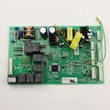
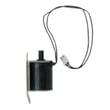
How to defrost a GE side-by-side?
To defrost your GE BSS25JSRFSS side-by-side refrigerator, we recommend using a simple manual defrost: move food to a cooler, turn the temperature controls to OFF, and let the unit sit with doors open until the frost melts. Most defrost cycles (if it enters one automatically) finish in about 30 minutes.
Quick steps (safe manual defrost)
- Move perishable food to a cooler.
- Turn the temperature controls to the OFF (0) position.
- Unplug the refrigerator if you will be working near wiring or using any tools.
- Open both doors to speed melting.
- Place towels at the bottom to catch water.
- After ice is gone, wipe everything dry and restart cooling.
What to expect during defrost
During a normal defrost cycle, it is common to hear sizzling, popping, or dripping sounds as water hits the defrost heater and melts off the evaporator. This is normal operation.
If the refrigerator seems “off” but comes back on
Sometimes the refrigerator is simply in a defrost cycle. In that case:
- Wait about 30 minutes for the defrost cycle to end.
- Confirm the freezer control is not set to OFF (0).
When defrosting points to a repair
If you repeatedly need to manually defrost because the freezer keeps frosting up, the automatic defrost system likely needs attention.
| Symptom | Most common area to check | Example part for this model |
|---|---|---|
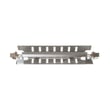
| Heavy frost on freezer back wall | Defrost heater circuit | Refrigerator defrost heater WR51X10055 |
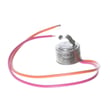
| Frost returns quickly after defrost | Defrost thermostat or sensor | Refrigerator defrost thermostat WR50X10068 |
| Warm temps plus frost buildup | Airflow/evaporator fan issues | Dc evaporator motor WR60X10185 |
Why it matters
Defrosting clears ice that blocks airflow across the evaporator coils. When airflow is restricted, the freezer warms up, the refrigerator section can get too warm, and the compressor may run longer than normal.
For model-specific control details and care steps, follow the defrost and cleaning guidance in the owner's manual.
Last updated: February 2026
What is the average lifespan of a GE refrigerator?
A GE refrigerator typically lasts 12 to 15 years. With steady maintenance on a side-by-side like GE BSS25JSRFSS, it commonly reaches the upper end of that range by keeping airflow strong, temperatures stable, and wear items (like filters and bulbs) replaced on time; see the BSS25JSRFSS owner's manual for care and operating details.
Typical lifespan and what affects it
Most GE refrigerators fall into a predictable lifespan range, and the biggest difference is how hard the sealed system and fans have to work.
- 12 to 15 years is the typical average lifespan
- Heavy door openings and warm kitchens shorten life by increasing run time
- Dirty condenser coils raise compressor load and heat
- Weak door sealing causes longer run cycles and temperature swings
- Water quality and pressure affect dispenser and icemaker performance
Maintenance that helps you reach the high end of the range
These are the highest-impact, low-cost habits for a GE side-by-side.
- Clean condenser area regularly so heat can leave the cabinet efficiently
- Keep door gaskets clean and sealing evenly
- Replace the water filter on schedule; use the refrigerator water filter MWFP
- Confirm freezer and fresh food temps stay consistent after loading groceries
- Replace failed interior bulbs promptly; use the refrigerator light bulb 40A15
Common “wear items” vs. major repairs
This table helps separate routine upkeep from bigger, less frequent repairs.
| Category | Examples on BSS25JSRFSS | What you usually notice |
|---|---|---|
| Routine maintenance | Water filter, light bulb | Slow water flow, dim/no light |
| Cooling/airflow parts | Evaporator fan motor, temperature sensor | Warm sections, uneven temps |
| Defrost system parts | Defrost heater, defrost thermostat | Frost buildup, poor airflow |
| Major sealed system | Compressor, evaporator, condenser coil | Not cooling, loud running, long run time |
Why it matters
Knowing the typical lifespan helps you decide when maintenance makes sense versus when repeated cooling or defrost failures point to end-of-life. It also helps you plan ahead for parts that commonly need replacement during normal ownership.
Last updated: February 2026
What is the most common problem with a GE refrigerator?
The most common issue we see with GE refrigerators like model BSS25JSRFSS is not cooling properly (fresh food warm, freezer warming, or temperatures swinging). In many cases, the root cause is airflow, a defrost problem, or a temperature-sensing/control issue; our BSS25JSRFSS owner's manual troubleshooting section walks you through the first checks.
Quick checks we recommend first
- Confirm the unit has power and is fully plugged in.
- Give it time after plugging in; many refrigerators need up to 24 hours to reach stable temperatures.
- Make sure doors close fully and nothing is holding them open.
- Set controls off the coldest setting and recheck temps after several hours.
- Listen for normal operating sounds; newer high-efficiency compressors can run longer and sound different.
Most common symptoms and what they usually point to
| Symptom | Most likely area to check | Common next step |
|---|---|---|
| Fresh food warm, freezer OK | Airflow from freezer to fridge | Clear vents, check evaporator fan operation |
| Freezer warming too | Sealed system, condenser airflow, controls | Clean condenser area, verify fans, check temps |
| Frost buildup, weak airflow | Defrost system | Inspect defrost heater/thermostat |
| Ice maker slow, small/hollow cubes | Water supply or filter restriction | Replace water filter, verify water pressure |
| Clicking, humming, whooshing | Normal operation in many cases | Compare to “normal sounds” section in manual |
Parts that commonly relate to these problems (when diagnosis confirms)
We match parts to the symptom and test results, not guesses. For this model, common “cooling complaint” parts include:
- Refrigerator temperature sensor WR55X10025 if temperatures are inaccurate or unstable.
- Refrigerator defrost heater WR51X10055 if frost buildup is blocking airflow.
- Refrigerator defrost thermostat WR50X10068 if the defrost cycle is not terminating correctly.
- Dc evaporator motor WR60X10185 if the freezer fan is not moving air.
- Refrigerator condenser motor WR60X10220 if the condenser fan is not running and the unit overheats.
Why it matters
A “not cooling” complaint is often a chain reaction: restricted airflow or a failed defrost component can warm the fresh food section first, then strain the compressor and extend run times. Catching it early helps protect food and reduces wear on major components.
Last updated: February 2026
Are GE side-by-side refrigerators good?
Yes. GE side-by-side refrigerators like model BSS25JSRFSS are a solid choice for everyday use because they typically offer easy organization (door bins and adjustable shelving), consistent cooling, and convenient ice and water dispensing when maintained per the owner's manual.
What “good” usually means for a side-by-side refrigerator
A “good” refrigerator keeps stable temperatures, seals tightly, and circulates air well so food stays fresh across shelves and bins.
Common strengths customers value
- Spacious, easy-to-sort layout with separate fresh food and freezer columns
- Adjustable door bins and shelves for flexible storage
- Convenient in-door ice and water dispenser
- Bright interior lighting that makes items easier to see
What to watch for (and how to prevent issues)
Side-by-side models can develop performance complaints when airflow, defrosting, or water filtration is neglected.
- Slow or noisy ice production: confirm the unit is connected to a cold water line and the shutoff valve is fully open
- Water taste or flow issues: replace the filter on schedule and reset the filter indicator if your model has it
- Warm spots or temperature swings: avoid blocking vents; keep door bins and shelves seated correctly
- Frost buildup: defrost system problems can affect airflow and cooling
Quick maintenance checklist
- Replace the refrigerator water filter MWFP on schedule
- Keep door gaskets clean so doors seal tightly
- Maintain clearances for airflow (sides, top, and back)
- Don’t overload shelves in a way that blocks air movement
- Level the refrigerator so doors close easily
Parts that commonly affect “how good it runs”
| Symptom | Common system involved | Example part for BSS25JSRFSS |
|---|---|---|
| Warm refrigerator section | Temperature sensing or airflow | Refrigerator temperature sensor WR55X10025 |
| Frost buildup, poor airflow | Defrost system | Refrigerator defrost heater WR51X10055 |
| No water/ice dispensing | Water supply/valve/filter | Refrigerator water valve WR57X33326 |
Why it matters
A side-by-side refrigerator can feel “bad” even when it is fundamentally a good design if the water filter is overdue, airflow clearances are tight, or a defrost component is failing. Basic upkeep and timely part replacement keep performance consistent.
Last updated: February 2026