Installation guide
 Owner’s manual


What is the most common problem with Maytag washer top loader?
For the Maytag MVWC300VW1 top-load washer, the most common service-type complaints we see are “won’t spin/drain” or “won’t agitate,” often tied to lid-safety sensing, draining restrictions, or normal drive-train wear. Start with the troubleshooting steps in the MVWC300VW1 washer user manual before replacing parts.
Most common symptoms and what they usually point to
- Won’t spin or stops mid-cycle: lid not fully closed, lid switch issue, or timer/cycle control problem
- Won’t drain or leaves clothes wet: drain hose restriction, pump obstruction, or pump failure
- No/weak agitation: worn agitator components (dogs/cam) or gear case wear
- Excessive shaking/banging: unbalanced load, washer not level, suspension wear
- Slow fill or no fill: clogged inlet screens or inlet valve issue
Quick checks we recommend first (no parts needed)
- Confirm the lid is fully closed; this model won’t agitate or spin with the lid open.
- Reduce the load size and redistribute items evenly.
- Check the drain hose for kinks and confirm it is not pushed too far down into the standpipe.
- Turn off water, remove hoses, and clean inlet screens if fill is slow.
- Verify the washer is level and all feet are firmly on the floor.
Common parts that solve these problems most often
If the basic checks don’t help, these are frequent fixes for MVWC300VW1:
| Symptom | Likely part to inspect | Example compatible part for this model |
|---|---|---|
| Won’t spin/agitate with lid closed | Lid switch assembly | Washer lid switch assembly WP8318084 |
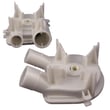
| Won’t drain or drains slowly | Drain pump | Washer drain pump WP3363394 |
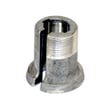
| Agitator slips or only moves one way | Agitator dog | Agitator dog 80040 |
Why it matters
On a top-load washer like the Maytag MVWC300VW1, “no spin” and “no drain” can look the same (wet clothes), but the fix is different. Checking lid operation, drain flow, and leveling first helps avoid replacing the wrong part.
Last updated: January 2026
What is the capacity of the mvwc300vw1?
We can’t confirm an official cubic-foot capacity for the Maytag MVWC300VW1 washer from the model-specific documents available for this unit; the MVWC300VW1 washer user instructions manual focuses on safe operation and proper loading rather than listing a tub volume specification.
What we can confirm for MVWC300VW1
The MVWC300VW1 guidance is practical: load for good movement and balance, not to a published cu. ft. number.
- Load items loosely so they can move freely
- Mix large and small items to help balance the basket
- Don’t overload; overloading can reduce cleaning and increase vibration
- Choose the correct load size or water level setting for the load
- Keep the lid closed during operation (the washer won’t agitate or spin with the lid open)
How to estimate the right load size (general guidance)
If you don’t have a spec label with cu. ft. capacity, use these visual cues for a top-load agitator washer like MVWC300VW1.
| Load type | Typical fill level | What to watch for |
|---|---|---|
| Light/small | Around 1/3 full | Items should circulate easily |
| Medium | Around 1/2 full | No tight packing around the agitator |
| Large | Around 2/3 full | Basket still has space for turnover |
Why it matters
Loading by “room to move” helps MVWC300VW1 clean better, rinse detergent out more completely, and reduces out-of-balance spinning that can stress drive and suspension components.
Last updated: January 2026
What is the average lifespan of a Maytag washing machine?
For the Maytag MVWC300VW1 washer, the manufacturer documentation does not list an “average lifespan” in years. In real-world household use, many washers run for roughly a decade or longer, but the biggest driver is maintenance and how quickly you correct issues using the guidance in the MVWC300VW1 washer use & care manual.
What we can confirm for MVWC300VW1
The MVWC300VW1 manual focuses on safe operation, care, and troubleshooting rather than a guaranteed service life. It does, however, call out maintenance items that directly affect longevity.
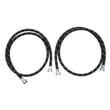
- Replace water inlet hoses after about 5 years to reduce hose failure risk
- Keep loads balanced and avoid overloading to reduce vibration and wear
- Clean the washer interior periodically to reduce residue and odor
- Address draining problems early to prevent strain on the drive system
Typical lifespan range (general guidance)
These are common expectations across many top-load washers (not a model-specific spec):
| Household use level | Common expectation | Notes |
|---|---|---|
| Light (few loads/week) | Often 10+ years | Lower wear on motor, suspension, and drive parts |
| Average family use | Around a decade | Most common scenario |
| Heavy use (daily loads) | Can be less | Wear items may need earlier replacement |
When repairs start to make sense
If MVWC300VW1 stops draining, won’t spin, or leaves clothes very wet, fixing it early can extend life and prevent secondary damage. A common wear item in drain complaints is the pump; see washer drain pump WP3363394.
- Loud grinding or humming during drain
- Slow drain, standing water, or repeated drain issues
- Burning smell or the motor struggling during drain/spin
Why it matters
Because MVWC300VW1 doesn’t have a published “lifespan,” using care guidance and replacing predictable wear items (like hoses) is the most practical way to maximize years of service and avoid preventable failures.
Last updated: January 2026