Owner’s manual
 Error Codes


How big is the GE AutoFill pitcher?
The exact AutoFill pitcher size cannot be identified for GE model PSHS6PGZBESS based on the model-specific information we have for this refrigerator. Some GE refrigerators use an AutoFill pitcher that holds about 60 ounces, but that capacity is not confirmed for PSHS6PGZBESS. See the PSHS6PGZBESS manual for any dispenser or accessory details tied to your exact model.
How to confirm the pitcher size on your PSHS6PGZBESS
- Check the refrigerator’s feature list and dispenser section in the PSHS6PGZBESS manual.
- Look for a capacity marking molded into the pitcher (often on the bottom or near the handle).
- If your pitcher has a label or part marking, match it to the compatible parts list for PSHS6PGZBESS.
- If the pitcher is missing, confirm your refrigerator’s exact model number from the rating label before ordering any dispenser accessories.
If you are troubleshooting slow fill or no fill
Pitcher capacity and fill performance are different issues. If the pitcher is not filling correctly, these model-compatible parts are commonly involved:
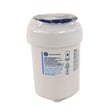
- GE refrigerator water filter MWFP (restricted filter can reduce flow)
- Refrigerator water valve WR57X33326 (controls water flow to the dispenser)
- Refrigerator water filter bypass WR17X22070 (helps isolate whether the filter is the restriction)
Quick checks (safe, no tools)
- Dispense water without the pitcher installed (if your setup allows) to compare flow.
- Replace the water filter if it is overdue.
- Verify the household shutoff valve is fully open.
Typical capacities you may see (general reference)
| Pitcher type | Common capacity range | What it means |
|---|---|---|
| AutoFill pitcher (varies by model) | 48 to 60 oz | Designed for quick bottle refills and countertop pouring |
| Standard in-door dispenser (no pitcher) | Not applicable | Water dispenses directly into a cup |
Why it matters
Knowing the correct pitcher capacity helps you set expectations for how many bottles you can fill per cycle and helps avoid ordering a look-alike accessory that does not fit your PSHS6PGZBESS dispenser system.
Last updated: January 2026
What is the most common problem with a GE refrigerator?
For the GE PSHS6PGZBESS side-by-side refrigerator, the most common service issues we see are cooling problems (warm fridge or freezer) and ice maker or water dispenser problems. These are often tied to airflow restrictions, frost buildup from a defrost issue, or water supply and filtration restrictions.
Most common symptoms and what usually causes them
- Not cooling or weak cooling: dirty condenser coils, failed condenser fan, failed evaporator fan, or a temperature sensing/control issue
- Frost buildup on the freezer back wall: defrost heater or defrost thermostat problem
- Ice maker not making ice: restricted water flow, frozen fill tube, or ice maker failure
- Water dispenser slow or not dispensing: clogged filter, filter head issue, or inlet valve problem
- Runs a lot or seems loud: dirty coils, fan motor issues, or poor airflow around the cabinet
For model-specific component locations and access panels, we follow the diagrams and procedures in the PSHS6PGZBESS manual.
Quick checks we recommend first (no parts needed)
- Make sure both doors seal tightly and are not held open by bins or food packages.
- Set temperatures to normal settings and allow 24 hours for stabilization after changes.
- Clean condenser coils and confirm the condenser fan runs when the compressor is running.
- Confirm vents inside the refrigerator and freezer are not blocked by food.
- If you have an ice maker, verify the shutoff arm is down (or the ice maker is switched on).
Parts that commonly solve these problems on PSHS6PGZBESS
If troubleshooting points to a failed component, these model-matched parts are common fixes:
| Symptom | Part to check | Why it matters |
|---|---|---|
| Slow/no water at dispenser | GE refrigerator water filter MWFP | A clogged filter restricts flow and can affect ice production |
| Frost buildup, warm temps | Refrigerator defrost heater WR51X10055 | Heater melts frost so air can move across the evaporator |
| Frost buildup, defrost not cycling | Refrigerator defrost thermostat WR50X10068 | Senses evaporator temperature to control defrost operation |
| Warm temps, poor airflow | Refrigerator evaporator fan motor WR60X10318 | Circulates cold air through freezer and fresh food sections |
| No water to ice maker/dispenser | Refrigerator water valve WR57X33326 | Opens to supply water when dispenser or ice maker calls for it |
Why it matters
Cooling and ice maker complaints often share the same root causes: restricted airflow (dusty coils, failed fan, frost buildup) or restricted water flow (filter or valve). Fixing the underlying cause protects food temperatures and helps the compressor avoid unnecessary run time.
Last updated: January 2026
How to reset GE side by side refrigerator not cooling?
For a GE PSHS6PGZBESS side-by-side refrigerator that is not cooling, the most reliable “reset” is a power reset: unplug the refrigerator (or switch off the breaker) for 1 full minute, then restore power and allow several hours for temperatures to stabilize. For model-specific control and diagnostic steps, use the PSHS6PGZBESS manual.
Reset steps we recommend first
- Make sure the refrigerator is plugged in firmly and the outlet has power.
- Unplug the unit for 60 seconds (do not just open the doors).
- Plug it back in and confirm the interior lights and display come on.
- Set temperatures to normal settings (freezer and fresh food).
- Wait 24 hours for full temperature recovery after any reset.
If it still is not cooling after the reset
A reset will not fix a failed cooling component. On PSHS6PGZBESS, the most common no-cool causes are airflow problems, a defrost failure, or a control or sensor issue.
Check these items in order:
- Condenser area: clean dust buildup so heat can dissipate.
- Evaporator fan: listen for the fan running when the freezer door switch is pressed.
- Frost pattern: heavy frost on the freezer back wall points to a defrost problem.
- Door seals: warm air leaks can mimic a cooling failure.
- Temperature sensing: a bad sensor can misread cabinet temperature.
Parts that commonly relate to “not cooling” symptoms
If troubleshooting points to a specific failure, these are model-compatible parts often involved:
| Symptom clue | Likely system | Example compatible part |
|---|---|---|
| Heavy frost, weak airflow | Defrost system | Refrigerator defrost heater WR51X10055 |
| Heavy frost returns quickly | Defrost sensing | Refrigerator defrost thermostat WR50X10068 |
| Temps erratic or incorrect | Temperature sensing | GE profile refrigerator temperature sensor WR55X10025 |
| Fan not running, warm freezer | Air circulation | Refrigerator evaporator fan motor WR60X10318 |
Why it matters
A “reset” only clears temporary control glitches. If the compressor, fans, defrost system, or sensors are not operating correctly, food temperatures can rise quickly and the real fix is diagnosing the failed component.
Last updated: January 2026