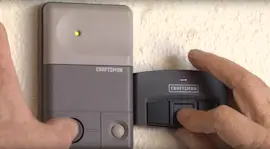
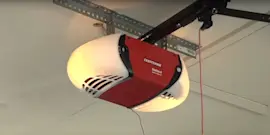
Owner’s manual
 Error Codes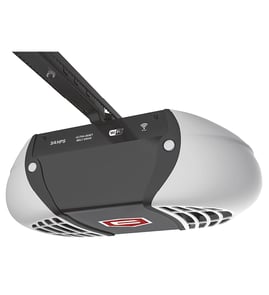

What's the average lifespan of a Genie garage door opener?
A Genie garage door opener typically lasts 10 to 15 years with normal residential use. Many units run longer when the door is properly balanced and the safety and force settings are kept in spec; those basics reduce strain on the motor, carriage, and drive system (see the owner's manual).
Typical lifespan ranges (what to expect)
Most openers fall into these real-world ranges:
- 10 to 15 years: common average for a well-used opener
- 15 to 20 years: lighter use, good door balance, consistent maintenance
- Under 10 years: heavy cycles, harsh garage conditions, or a door that is out of balance
Quick guide: usage vs. lifespan
| Daily cycles (open + close) | Wear level | Typical outcome |
|---|---|---|
| 2 to 4 | Low | Often reaches the upper end of the range |
| 5 to 10 | Medium | Usually lands near the average |
| 10+ | High | More frequent repairs and earlier replacement |
What matters most for the Genie H6000
Your Genie H6000 is an AC screw drive garage door opener; the opener lasts longer when the door system is safe and balanced.
- Test the safety reverse monthly: the door must reverse when it contacts a 1-1/2 inch object (a 2x4 laid flat) at the center of the doorway
- Keep the door balanced: an unbalanced door overloads the opener
- Lubricate door hardware: rollers, bearings, and hinges (silicone lubricant or light oil)
- Keep controls out of children’s reach: wall control should be at least 5 feet high
- Recheck after adjustments: after changing force or travel limits, retest the opener
Signs it’s nearing end of life
These symptoms usually mean the opener is wearing out or the door needs service:
- Door reverses unexpectedly or will not reverse during the 1-1/2 inch test
- Opener strains, stalls, or moves the door inconsistently
- Carriage disengages or the door will not stay put when tested for balance
- You need repeated force/limit adjustments to get normal travel
Why it matters
A garage door opener’s lifespan is closely tied to safety and load. A properly balanced door and a correctly working reverse system reduce wear and help prevent unsafe door movement.
Last updated: February 2026
What causes Genie garage door opener to stop working?
On the Genie H6000 AC screw drive garage door opener, the most common reasons it stops working are a door that is out of balance (binding or too heavy), travel limits or force settings that are out of adjustment, or a control issue such as a dead remote battery or a locked wall console. Use the owner's manual to follow the correct test and adjustment steps.
Quick checks we recommend first
- Make sure the opener has power and the wall control LED (if equipped) indicates normal operation.
- If the wall console has a Vacation Lock switch, confirm it is set to unlock.
- Replace the remote battery and try again.
- Check the door for binding: rollers, hinges, and tracks should move smoothly.
- Pull the emergency release and test the door by hand; it should stay about 3 feet off the floor.
- If the opener stops or reverses unexpectedly, plan to recheck limits and force settings.
Door balance and hardware problems (most common)
A garage door that is not properly balanced can make the opener stop, reverse, or struggle. The manual’s balance test is simple: disconnect the carriage using the emergency release, lift the door about 3 feet, and confirm it stays in place.
Why it matters
An unbalanced door overloads the motor, coupler, and drive system; it also makes force and travel settings impossible to dial in reliably.
Force and limit settings: what to look for
The H6000 uses limit and force adjustments to control how far the door travels and how much resistance it tolerates.
| Symptom | Likely cause | What to do next |
|---|---|---|
| Door closes then reverses | Closing force too high or travel/limit issue | Adjust close force in small increments; retest |
| Door stops before fully open | Open limit set short | Adjust open limit toward full open |
| Door fails the 2x4 test | Force/limit not set safely | Adjust, then retest contact reverse |
After any force or limit change, we retest the contact reverse using a 2" x 4" laid flat (or a 1-1/2" high object) in the center of the opening.
When to stop and switch to a pro
- The door will not move smoothly by hand, drops, or will not stay partially open.
- Springs, cables, or bottom brackets look damaged or loose.
- The opener runs but the door does not move (possible coupler/drive issue).
Last updated: February 2026
How do I know which garage door opener is compatible?
For your Genie H6000 AC screw drive garage door opener, “compatible” usually means the accessory (remote, keypad, wall control, or vehicle button) uses the same radio/security system as the opener. Use the opener’s model label plus the programming steps in the H6000 owner's manual to match the correct control type.
What to check first on a Genie H6000
- Confirm the opener model number on the power head label: H6000.
- Identify whether your opener uses INTELLICODE (rolling code security).
- Decide what you are trying to make compatible: remote, wall control, wireless keypad, or in-vehicle system.
- Check whether you are adding a new control or replacing an existing one (matching what already works is the fastest path).
- Follow the exact learn/program steps for your opener and accessory.
What the H6000 manual confirms about compatibility
The H6000 documentation describes INTELLICODE Access Security System as a changing access code system, and it lists common compatible control types such as:
- INTELLICODE 1-button remote control
- INTELLICODE multi-button remote control (for multiple INTELLICODE-equipped openers)
- Wall control options (varies by configuration)
- HomeLink as an in-vehicle transmitter option (programmed to the opener)
Compatibility guide (what “must match”)
| What you’re adding | What must match on the opener | What to use to confirm |
|---|---|---|
| Remote control | Genie system type (INTELLICODE vs fixed-code) | Existing remote label and H6000 owner's manual programming section |
| Wall control | Correct wiring/control style for the opener | Terminal connections and wiring diagram in the manual |
| Vehicle button (HomeLink) | Must be programmable to the opener’s radio system | HomeLink programming steps referenced in the manual |
Why it matters
Using a control that does not match the opener’s radio/security system leads to failed programming and unreliable operation. Matching the correct INTELLICODE-style accessory keeps your H6000 secure and operating consistently.
Last updated: February 2026