Owner’s manual
 Error Codes



What is the most common problem with a whirlpool refrigerator?
The most common Whirlpool refrigerator problem is a cooling complaint: the fresh food section gets warm, the freezer temperature drifts, or the unit runs too long. On the Whirlpool GB2FHDXWS09, the most frequent root causes are airflow issues (fans or damper), defrost problems, or heat not being removed at the condenser. See the GB2FHDXWS09 owner's manual for model-specific checks and settings.
- Dirty condenser coils: warm temperatures, long run times, hot cabinet sides.
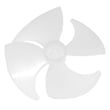
- Evaporator fan issue: freezer may still be cold but fresh food warms; weak airflow.
- Damper stuck or failing: freezer OK, refrigerator section warm or too cold.
- Defrost system problem: frost buildup on the back freezer wall; reduced airflow.
- Temperature sensor (thermistor) drift: inconsistent temps, cycling issues.
- Confirm controls are set to normal (not “max cool” for days at a time).
- Clean condenser coils and make sure the grille area is not blocked.
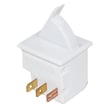
- Listen for the evaporator fan when the door switch is pressed.
- Look for heavy frost on the freezer back panel (points to defrost trouble).
- Check door seals for gaps and make sure doors close fully.
| Symptom | Likely system | Example part for this model |
|---|---|---|
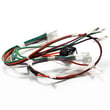
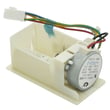
| Fresh food warm, freezer OK | Airflow | Refrigerator damper control assembly WPW10196393 |
| Warm temps, weak airflow | Evaporator fan | Refrigerator evaporator fan motor WPW10128551 |
| Frost buildup, airflow blocked | Defrost | Refrigerator defrost heater WP12729128 |
| Temps swing up and down | Sensing/control | Refrigerator thermistor 12002355 |
Cooling problems usually start as an airflow or heat-transfer issue, not a sealed-system failure. Catching it early helps prevent food spoilage, reduces compressor run time, and can avoid secondary issues like ice buildup and noisy fan operation.
Last updated: January 2026
How do I remove the base grille on my Whirlpool refrigerator?
On the Whirlpool GB2FHDXWS09 bottom-mount refrigerator, the base grille (kickplate) typically pulls off from the front after you release the retaining clips or tabs. We recommend unplugging the refrigerator first, then pulling the grille straight out so you can access and clean the condenser area.
- Unplug the refrigerator (or switch off power at the breaker).
- Open both fresh food doors for better access.
- Look along the top edge and both ends of the grille for retaining clips, tabs, or screws.
- If there are screws, remove them first.
- Grip the grille near both ends and pull the top edge forward to release the clips.
- Pull the grille straight out and set it aside.
- Line up the bottom tabs (if present) with the slots in the cabinet.
- Push the grille in evenly from left to right until it snaps into place.
- Reinstall any screws you removed.
Cleaning behind the grille helps airflow and cooling performance.
- Vacuum dust from the condenser coil area and floor.
- Check that the grille is not cracked or warped.
- Make sure nothing is blocking the front air intake.
- Confirm the refrigerator is level and stable after you finish.
| What you see | What it usually means | What to do |
|---|---|---|
| Grille will not budge | Clips still engaged or hidden screws | Recheck both ends and the top edge for fasteners |
| Grille pops loose later | Tabs not seated evenly | Reinstall and press firmly across the full length |
| Excess dust buildup | Normal over time | Clean every 6 to 12 months (more with pets) |
The base grille is the main access point for cleaning the condenser area. Keeping that area clear helps the compressor and condenser run more efficiently and can reduce warm temperatures and longer run times.
For model-specific illustrations and any fastener locations, use the GB2FHDXWS09 owner’s manual.
Last updated: January 2026
How do you remove the bottom freezer drawer on a Whirlpool refrigerator?
On the Whirlpool GB2FHDXWS09 bottom-mount refrigerator, you typically remove the bottom freezer drawer by pulling it fully open, lifting the drawer front up and off the slide-rail hooks, then separating the basket from the rails. Use the steps in the GB2FHDXWS09 owner’s manual for your exact drawer style.
- Unplug the refrigerator or switch off power at the breaker (drawer removal can expose wiring for the door switch or icemaker harness on some setups).
- Remove food and ice bins so the drawer is lighter and easier to control.
- Protect the floor with a towel or cardboard in front of the freezer.
- Have a #2 Phillips screwdriver and a small flat screwdriver available.
- If the drawer feels stuck, stop and check for ice buildup along the rails.
- Open the drawer fully until it stops.
- Lift the drawer front straight up to unhook it from the slide rails (many Whirlpool designs use hooks or tabs at the rail ends).
- Disconnect any fasteners (some versions use screws on the inside of the drawer front or side brackets).
- Remove the upper basket, then lift out the lower basket.
- Slide the rails back in carefully to avoid bending them.
| Drawer design detail | What it means for removal | What to do |
|---|---|---|
| Hook-and-slot drawer front | Drawer front lifts off rails | Lift up firmly, then pull forward |
| Screws at side brackets | Drawer front is secured | Remove screws first, then lift off |
| Ice buildup on rails | Drawer won’t lift or slide smoothly | Defrost and clear ice before forcing |
Removing the freezer drawer the right way prevents bent slide rails, cracked basket frames, and air leaks that can cause frost buildup and temperature swings.
Last updated: January 2026
Why is my Whirlpool bottom freezer frosting up?
Frost buildup in the bottom freezer on Whirlpool model GB2FHDXWS09 almost always happens when warm, moist air is getting into the freezer or when airflow is restricted, so moisture freezes on surfaces. Start by checking door sealing, vent blockage, and the defrost system steps in the GB2FHDXWS09 owner's manual.
- Make sure the freezer drawer closes fully and nothing is pinched in the gasket.
- Inspect the door gasket for gaps, tears, or hardened sections.
- Confirm air vents are not blocked by food packages or ice.
- Look for heavy frost on the back wall (often points to a defrost issue).
- Verify the refrigerator is level so the drawer naturally seals when closed.
| What you notice | Likely cause | What we do next |
|---|---|---|
| Frost mainly near the door edge | Door not sealing | Clean gasket and mating surface; warm and reshape gasket if warped |
| Frost on back wall, weak cooling | Defrost system problem | Manually defrost, then troubleshoot heater, sensor, and controls |
| Frost plus “whooshing” or poor airflow | Vent blockage or fan issue | Clear vents; check evaporator fan operation |
| Frost returns quickly after defrost | Air leak or defrost failure | Recheck gasket and run defrost diagnostics per manual |
If you find a defrost failure or airflow problem, these model-matched parts are common suspects:
- Refrigerator defrost heater WP12729128 (heater that melts frost off the evaporator)
- Refrigerator thermistor 12002355 (temperature sensor that helps control defrost timing)
- Refrigerator electronic control board WPW10503278 (controls cooling and defrost functions)
- Refrigerator evaporator fan motor WPW10128551 (moves cold air through the freezer and fresh food section)
Excess frost reduces airflow, makes the compressor run longer, and can cause warm temperatures in the refrigerator section. Fixing the air leak or defrost problem early helps protect food and prevents ice from damaging drawers, rails, and vents.
Last updated: January 2026