Error Codes

How to determine the value of an old sewing machine?
The value of an older sewing machine (including the Kenmore 15813200) is set by what similar machines actually sell for in your area, plus condition and completeness. Most common vintage machines sell for under $100 to a few hundred; rare, highly collectible models can sell for much more.
What to check on your machine first
- Exact model identification: confirm the badge and model markings match Kenmore 15813200.
- Operating condition: does it sew a balanced stitch, feed fabric smoothly, and run at multiple speeds.
- Completeness: original foot pedal, power cord, case/cabinet, manual, and attachments.
- Cosmetic condition: paint, decals, corrosion, cracks, missing knobs.
- Service history: recently cleaned and oiled machines typically sell faster.
Quick pricing method (practical and accurate)
- Search sold listings (not asking prices) for “Kenmore 158.13200” and close variants.
- Compare only listings with similar condition and accessories.
- Adjust for local pickup vs. shipping (shipping often lowers net value for heavy machines).
Condition adjustment guide
| Condition level | What it usually means | Typical impact on value |
|---|---|---|
| As-is / not sewing | Needs repair or unknown issues | Lowest |
| Sewing but rough | Works, but noisy, stiff, or inconsistent | Low to mid |
| Serviced and sewing well | Cleaned, oiled, stitches correctly | Mid to higher |
| Collector-grade | Excellent cosmetics, complete accessories | Highest |
Why attachments and parts matter
For many vintage machines, the accessories (presser feet, bobbins, needle plates, buttonholer, case) can influence value as much as the machine itself. If you plan to keep and use the machine, replacing worn items like belts, cords, or a foot control can also improve usability and resale.
Why it matters
A realistic value helps you decide whether to sell as-is, invest in a tune-up, or keep it as a dependable mechanical sewing machine for everyday repairs and projects.
For help confirming you have the correct model number before you price or shop parts, use how to find your appliance model number (and what it means for parts).
Last updated: February 2026
Is it worth repairing an old sewing machine?
Yes, a Kenmore 15813200 mechanical sewing machine is usually worth repairing when it’s sewing well overall and the issue is a wear item (belt, motor brushes, wiring, tension parts) rather than major internal damage. If the repair cost is under about half the price of a comparable replacement machine, repair is the better value.
Quick way to decide
- Repair it if it’s mostly metal, runs smoothly, and you like the stitch quality and feel.
- Repair it if the problem is isolated (power cord, foot pedal, light, belt, tension, timing adjustment).
- Repair it if you can get parts and service locally and the machine meets your needs.
- Replace it if the machine has severe shaft/bearing damage, cracked castings, or repeated electrical failures.
- Replace it if you need features this mechanical head cannot provide (built-in specialty stitches, automatic functions).
Cost and value checklist
Use this as a practical rule-of-thumb for the 15813200 and similar vintage mechanical heads:
| What you’re paying for | Typical outcome | Usually worth it? |
|---|---|---|
| Cleaning, oiling, adjustment (tune-up) | Restores stitch quality and smoothness | Yes |
| One or two small parts plus labor | Fixes a specific symptom | Yes |
| Major internal mechanical rebuild | High cost, longer downtime | Sometimes |
| Multiple electrical issues at once | Can become a recurring repair cycle | No |
Why it matters
A well-built mechanical sewing machine head can run for decades with basic maintenance. Repairing a solid older Kenmore often gives you better durability and stitch consistency than many low-cost modern machines.
What to do next
- Confirm the exact model number (15813200) on the ID plate before shopping.
- Price out the likely fix (labor plus any parts) and compare it to a replacement budget.
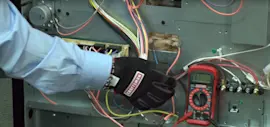
- If you’re troubleshooting power problems, use a safe test approach with a meter and visual inspection; see how to use a multimeter to test electrical parts video.
Last updated: February 2026
What is the most sought after vintage sewing machine?
The most sought-after vintage sewing machines are usually all-metal, high-precision models with strong parts availability and a reputation for smooth stitching. For collectors and everyday sewists alike, certain Singer, Pfaff, and Bernina machines consistently rank at the top for durability, stitch quality, and long-term serviceability.
Most sought-after vintage models (and why)
- Singer Featherweight 221/222: prized for portability, smooth straight stitch, and collector demand.
- Singer 201 (often called the “Rolls-Royce” straight-stitch machine): known for exceptionally smooth, powerful straight stitching.
- Singer 401/403: popular for strong build quality plus more stitch options than earlier straight-stitch-only machines.
- Bernina 830 Record: sought after for precision, strong feeding, and long-lasting mechanical design.
- Pfaff mechanical classics (varies by model): valued for consistent feeding and robust engineering.
What makes a vintage machine “sought after”
- All-metal drive and internal frame (less flex, long service life)
- Stitch quality (especially straight stitch consistency)
- Ease of maintenance (simple mechanical timing and accessible lubrication points)
- Accessory ecosystem (presser feet, bobbins, cases, attachments)
- Parts and service support (belts, motors, wiring, foot controllers)
Quick comparison: what to look for
| If you want... | Best vintage “type” to shop | What to check before buying |
|---|---|---|
| Collectibility | Iconic, limited-run models | Serial/model ID, originality, cosmetics |
| Everyday reliability | All-metal mechanical workhorse | Motor strength, wiring condition, smooth handwheel |
| More stitch options | Mechanical zigzag-era machines | Cam/selector function, feed dogs, reverse |
Why it matters
A “sought-after” vintage machine is usually one you can keep running for decades with basic upkeep. If you are comparing options to your Kenmore 15813200 sewing machine head, focus on mechanical condition first; a clean, correctly timed machine with solid wiring outperforms a “famous” model that needs major repair.
Helpful DIY reference
For safe inspection of cords, plugs, and internal wiring on older machines, use our guide: how to repair broken or damaged wires video.
Last updated: February 2026
When was the Kenmore 15813200 sewing machine made?
The Kenmore 15813200 mechanical sewing machine head was produced during the era when many Kenmore 158-series machines were manufactured for Sears by Japanese makers; most machines in this family date to the 1960s through early 1970s. For the exact year, use the machine’s identification plate and compare its serial format to Kenmore 158-series dating references.
How to narrow down the exact year
Use these quick checks on your Kenmore 15813200:
- Look for the model and serial plate (commonly on the back, underside, or near the handwheel area).
- Write down the full serial number exactly as shown (letters, dashes, and spacing matter).
- Note whether the machine says “Made in Japan” (common for many 158-series units).
- Check if the machine is a free-arm or flatbed style; that often aligns with certain production periods.
- Compare your machine’s external features (stitch selector style, light housing, tension assembly) to dated 158-series examples.
What “158” means (and why it matters)
Kenmore model numbers that start with 158 identify a large family of mechanical sewing machines that share many design traits and service approaches. Knowing the approximate production window helps you:
- Choose compatible needles, bobbins, and presser feet
- Use the right oil points and lubrication routine
- Set realistic expectations for motor, wiring, and foot pedal wear
- Decide whether to service or replace common wear items (belt, brushes, wiring)
Quick dating guide (practical ranges)
These ranges are the most useful way to date a Kenmore 158-series machine when you do not have original paperwork.
| What you find on the machine | What it usually indicates | What to do next |
|---|---|---|
| 158-series mechanical controls, mostly metal internals | Commonly 1960s to early 1970s | Use serial format and feature match to refine |
| Brittle wiring, intermittent power, hot-running motor | Age-related electrical wear (any older unit) | Inspect cord/foot control; test safely |
| Heavy, smooth handwheel but stiff motion | Old oil and dried grease | Clean and re-lubricate before running |
Why it matters
Dating your Kenmore 15813200 is less about collecting and more about getting the right parts and safe operation. Older mechanical machines often run for decades, but cords, pedals, and internal lubrication need attention.
Helpful DIY reference
For safe electrical checks while troubleshooting power issues on older machines, use our guide: how to use a multimeter to test electrical parts video.
Last updated: February 2026