 Owner’s manual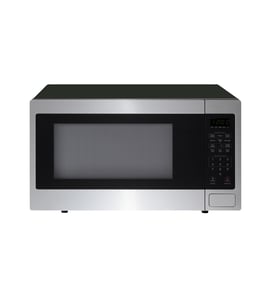




What is the standard countertop microwave size?
There is no single “standard” countertop microwave size, but most 1.0 to 2.2 cubic foot models fall in a common range. For your KitchenAid KCMS1555SSS2 (1.5 cubic foot), plan for typical countertop clearances and confirm exact dimensions in the KCMS1555SSS2 owner's manual.
Typical countertop microwave size ranges
Most countertop microwaves in this capacity class measure approximately:
- Width: 21 to 25 inches
- Height: 12 to 15 inches
- Depth: 16 to 20 inches (including the door)
- Capacity: 1.0 to 2.2 cubic feet
Space and placement guidelines that matter
Even if the exterior dimensions fit, the microwave still needs airflow and a stable surface.
- Set it on a counter, cart, table, or shelf strong enough to support the microwave plus food and cookware
- Keep the control side in mind; it is typically the heavier side on this model
- Leave a few inches of open space at the back and sides so vents and air intakes are not blocked
- Use a location where the microwave is operated above about 50°F (10°C)
Quick fit checklist (measure before you buy or move)
Use this checklist to avoid common fit problems:
- Measure the opening width and compare to the microwave’s overall width
- Measure depth to the wall, then add room for the cord and rear airflow
- Confirm overhead clearance so the door opens fully
- Verify the surface is level so the turntable runs smoothly
Common sizes at a glance
| Capacity class | Typical width | Typical height |
|---|---|---|
| Compact (0.7 to 1.1 cu ft) | 17 to 20 in | 10 to 12 in |
| Mid-size (1.1 to 1.7 cu ft) | 21 to 25 in | 12 to 15 in |
| Large (1.7 to 2.2 cu ft) | 24 to 30 in | 13 to 17 in |
Why it matters
Correct sizing prevents blocked vents, door clearance issues, and unstable placement. It also helps avoid overheating and performance problems caused by restricted airflow.
Last updated: February 2026
What is the average life of a countertop microwave?
Most countertop microwaves, including the KitchenAid KCMS1555SSS2, typically last 7 to 10 years with normal household use. Heavy daily use, poor ventilation, and slamming the door can shorten lifespan, while regular cleaning and proper airflow help the magnetron and controls last longer (see the owner's manual).
Typical lifespan and what changes it
- Light to normal use: 7 to 10 years
- Heavy use (multiple cycles daily): often 4 to 7 years
- Good care and ventilation: can push beyond 10 years
Key factors that shorten life:
- Running the microwave empty (overheats internal components)
- Blocking vents or tight placement that traps heat
- Frequent power surges (can damage the control board)
- Door abuse (can affect latch alignment and safety interlocks)
Signs it is near end of life
- Food heats unevenly or takes much longer than it used to
- Loud humming, buzzing, or burning smell during operation
- Display or keypad becomes intermittent
- Unit goes dead or blows the house breaker repeatedly
If the microwave is completely dead, a common first check is the internal fuse, such as the fuse WP8183507 used on this model.
Quick care steps that extend lifespan
- Keep the door and frame contact area clean so it seals properly.
- Clean the cavity with mild soap and water; avoid abrasives on stainless steel.
- For odors and baked-on soil, heat a cup of water to create steam, then wipe.
- Leave a few inches of space around the back and side for exhaust airflow.
| Habit | Why it matters | What to do instead |
|---|---|---|
| Blocking vents | Traps heat, stresses electronics | Maintain clearance around vents |
| Slamming the door | Can damage latches and switches | Close gently until it latches |
| Infrequent cleaning | Causes odors, arcing risk at inlet cover | Wipe cavity and inlet cover regularly |
Why it matters
Microwaves often fail from heat stress, door-interlock wear, or electrical issues. Basic cleaning and airflow (both covered in the owner's manual) reduce strain on parts like the control panel, switches, and fuse.
Last updated: February 2026
Can you use an over the range microwave as a countertop?
No. An over-the-range microwave is designed to be mounted to cabinetry and vented as part of an above-range installation, not set on a counter. For safe operation, use a true countertop model like KitchenAid KCMS1555SSS2 and follow the placement and clearance guidance in the owner's manual.
Why over-the-range models are not good countertop substitutes
Over-the-range (OTR) microwaves are built around a mounting bracket, upper cabinet bolts, and specific airflow paths. When you place an OTR unit on a countertop, you can create stability and ventilation problems that lead to overheating or poor performance.
Common issues when an OTR microwave is used on a counter
- Ventilation can be blocked, especially if the rear or side exhaust is too close to a wall.
- The unit can be unstable because the base and weight distribution assume wall and cabinet support.
- Cord routing can be unsafe if it drapes near heat sources or over the counter edge.
- Clearances are different than a countertop microwave, so heat and steam management is worse.
What we recommend instead (countertop setup basics)
For a countertop microwave like KitchenAid KCMS1555SSS2, set it up the way the manufacturer intends:
- Place it on a flat, sturdy surface that can support the microwave plus food and cookware.
- Keep a few inches of space at the back and sides so exhaust vents can breathe.
- Do not cover or block openings (air intake and exhaust vents).
- Keep the power cord away from heated surfaces and do not let it hang over the counter edge.
Quick comparison: OTR vs countertop microwaves
| Feature | Over-the-range microwave | Countertop microwave (KCMS1555SSS2) |
|---|---|---|
| Primary support | Wall bracket + upper cabinet bolts | Counter, table, shelf |
| Venting design | Integrated venting path | Requires open space around vents |
| Best use case | Installed above a range | Freestanding on a counter |
Why it matters
Microwaves rely on correct airflow to protect internal components like the control area and wiring. Proper placement helps prevent nuisance shutdowns, heat damage, and premature failures.
Last updated: February 2026
What is the best countertop microwave to buy?
If you already own the KitchenAid KCMS1555SSS2 (a 1.5 cubic foot countertop microwave), the “best” choice is usually keeping it and replacing any failed parts so it heats evenly, runs quietly, and the door closes safely. If you are shopping new, the best countertop microwave is the one that matches your space, power needs, and features you will actually use.
What to look for when buying a countertop microwave
- Capacity: 0.7 to 1.1 cu. ft. for tight counters; 1.4 to 2.2 cu. ft. for families and larger dishes.
- Cooking performance: sensor cooking, consistent heating, and multiple power levels.
- Controls: easy-to-read display, quick-start keys, and a reliable control lock.
- Noise and ventilation: quieter fan and a solid door latch feel.
- Fit: measure width, depth, and door swing clearance before you buy.
Quick comparison: common “best for” picks
| Best for | What to prioritize | Typical tradeoff |
|---|---|---|
| Small kitchens | 0.7 to 1.1 cu. ft., compact footprint | Smaller turntable and dish size limits |
| Everyday family use | 1.4 to 1.7 cu. ft., sensor cook | Takes more counter space |
| Most even heating | inverter-style power delivery | Higher price |
| Multi-function cooking | convection or air-fry combo | Larger, heavier, more settings |
When it’s smarter to repair your KCMS1555SSS2 instead
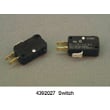
If your microwave is not powering on, stops mid-cycle, or the door does not reliably start the unit, repair is often the best value. Common service parts for this model include the microwave fuse WP8183507 and door-interlock related components like the switch 4392027. Use the wiring diagram and safety guidance in the KCMS1555SSS2 owner's manual to match symptoms to checks.
Why it matters
Microwaves rely on door interlocks and high-voltage components to operate safely. Choosing the right size and features prevents daily frustration, and repairing key electrical parts can restore normal heating and reliability without changing your kitchen setup.
Last updated: February 2026


