 Installation guide
 Owner’s manual


How can I tell what model washer I have?
Your washer’s model number is printed on a model and serial number plate. On Kenmore washer model 11022642100, you’ll typically find that plate on the main cabinet (often near the lid opening or on the back of the control panel), and you’ll use that exact number when ordering parts or looking up instructions in the 11022642100 owner’s manual.
Where to look for the model and serial plate
Check these common locations first:
- Under the lid, around the lid opening on the top cabinet rim
- On the back of the control panel
- On the side of the main cabinet near the bottom edge
- If your washer is front-load (some Kenmore models are), behind the door or on the door jamb
What to write down (and why)
Record both numbers exactly as shown on the plate:
- Model number (example for this page: 11022642100)
- Serial number (unique to your washer)
- Date of purchase (helpful for service history)
Why it matters
The model number ensures you get the correct Kenmore washer parts (like a lid switch, drain pump, or inlet valve) and the right procedures for installation, leveling, and operation.
Quick ID checklist
Use this to avoid mix-ups when shopping for parts:
| Item to match | What it affects | Example from this model page |
|---|---|---|
| Model number | Correct diagrams and part fit | 11022642100 |
| Serial number | Production variation details | From your washer’s plate |
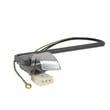
| Part ID | Exact replacement selection | Washer lid switch WP3949238 |
Tip for parts ordering
When you find the model plate, compare the model number character-for-character (including any extra digits). Then match the part by part ID and description, not just by appearance.
Last updated: February 2026
How many cubic feet is a Kenmore washer 110 series?
Most Kenmore 110-series top-load washers are about 3.2 cu. ft. of capacity; for your specific Kenmore compact washer 11022642100, confirm the exact tub capacity in the 11022642100 owner's manual.
How to confirm capacity for model 11022642100
We recommend checking the specifications section in the manual because “110 series” covers many designs and tub sizes.
- Look for “capacity,” “basket volume,” or “tub volume” in the specs
- If the manual lists basket dimensions (diameter and depth), use those to estimate volume
- Compare your washer type: compact washer models are often smaller than full-size 110 models
- If you are matching a replacement basket, use the model number 11022642100 when ordering
Typical capacity ranges (so you know what to expect)
| Washer type (common Kenmore 110 family) | Typical capacity range |
|---|---|
| Compact top-load washer | About 1.5 to 2.6 cu. ft. |
| Standard top-load washer | About 3.0 to 3.5 cu. ft. |
| Large-capacity top-load washer | About 3.6 to 4.5+ cu. ft. |
Why it matters
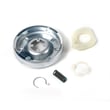
Capacity affects how much laundry you can wash per load, how well items circulate around the agitator, and whether bulky items overload the drive system. Overloading can contribute to poor agitation and extra wear on parts like the coupling 285753A and clutch 285785.
Last updated: February 2026
How to force a Kenmore Elite washer to drain?
On the Kenmore compact washer model 11022642100, the fastest way to “force drain” is to stop the cycle, unplug power, then drain the tub by lowering the drain hose into a bucket or floor drain so gravity can empty the water; after that, correct any drain-hose kinks or standpipe issues shown in the 11022642100 installation guide.
Safe ways to drain the water now
- Unplug the washer before handling hoses or moving the unit.
- Gravity drain: pull the washer forward, place towels, then lower the drain hose end into a shallow pan or bucket (below tub level) until water stops flowing.
- Check the standpipe/laundry tub: the hose should be secure but still have an air gap; do not force extra hose down into the standpipe.
- Eliminate kinks: rotate the hooked end to remove bends that restrict flow.
- If the washer will not pump out during spin: inspect for a clogged or failed drain pump.
What to check if it will not drain during a spin cycle
A washer that will not pump out usually has a restriction (hose/standpipe) or a pump problem.
| Symptom | Most likely cause | What we recommend |
|---|---|---|
| Water drains slowly | Kinked hose or restricted standpipe | Reposition hose, keep the hooked end shape, maintain an air gap |
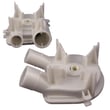
| No draining sound, tub stays full | Failed pump or blockage at pump | Inspect/replace the washer drain pump WP3363394 |
| Washer will not spin to drain | Lid switch not sensing closed lid | Test/replace the washer lid switch WP3949238 |
Why it matters
Proper drain-hose routing prevents backflow and leaks, and it also helps the pump move water efficiently. If the hose is shoved too far into a standpipe or kinked, the washer can stall full of water or leave water in the tub.
Helpful reference
For the correct drain-hose setup (hook position, clamp placement, and air-gap guidance), follow the steps in the 11022642100 owner’s manual.
Last updated: February 2026
What is the life expectancy of a Kenmore washer?
A Kenmore washer typically lasts 10 to 12 years with normal household use and basic maintenance. For Kenmore model 11022642100, following the care, loading, and installation requirements in the 11022642100 owner's manual helps you get the longest service life.
What affects washer lifespan most
- Load size and balance: frequent overloading or unbalanced loads increase wear on the suspension and drive system.
- Water quality: hard water can speed up valve and pump wear and leave residue.
- Drain performance: slow draining strains the pump and can leave standing water.
- Agitation wear: worn agitator components reduce cleaning and can cause noise.
- Lid switch operation: a failing safety switch can stop spin and shorten component life from repeated restarts.
Quick maintenance checklist (high impact)
- Keep loads evenly distributed; wash bulky items in pairs when possible.
- Use the right detergent amount; excess suds can cause poor rinsing and extra mechanical stress.
- Inspect fill hoses periodically and keep inlet screens clear.
- If draining slows, check the drain hose for kinks and consider replacing the washer drain pump WP3363394 if the pump is noisy or weak.
- If the washer will not spin or stops mid-cycle, test the washer lid switch WP3949238.
Common “wear items” and what they usually cause
| Symptom | Common wear item | What you notice |
|---|---|---|
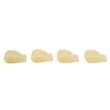
| Agitator moves poorly | Agitator dog 80040 | Clothes do not roll over well, clicking in agitator |
| Won’t spin or intermittent operation | Lid switch | Stops when lid is closed, no spin |
| Leaks or slow fill | Inlet valve | Drips, slow water flow, temperature issues |
| Won’t drain or drains slowly | Drain pump | Humming, water left in tub |
Why it matters
Washer lifespan is mostly about reducing strain on the drive, pump, and suspension. Small habits (proper loading, good draining, correct detergent) prevent the repeated stress that shortens the life of a compact washer.
Last updated: February 2026





