Error Codes



How do I reset my Maytag LAT3910AAW washer?
To reset your Maytag LAT3910AAW washer, we recommend doing a simple power reset: turn the washer off, unplug it (or switch the breaker off) for 1 minute, then restore power and start a new cycle. If it still will not run, the lid switch circuit is the next thing to check.
Quick reset steps (works for most Maytag top-loaders)
- Turn the cycle knob to Off.
- Unplug the washer or turn off the circuit breaker.
- Wait 60 seconds.
- Restore power.
- Lift and close the lid once, then select a cycle and press Start.
If the washer still will not start or spin
A “reset” will not fix a failed safety switch or a broken drive component. On the LAT3910AAW, these checks usually find the problem:
- Confirm lid closure: the washer must sense the lid closed to agitate or spin.
- Listen for a click at the lid: no click often points to a lid switch issue.
- Check for drain first: if it will not drain, it often will not advance to spin.
- Look for belt symptoms: burning rubber smell, weak spin, or no agitation.
- Inspect wiring at the lid switch: loose or damaged wires can mimic a bad switch.
Common parts related to “won’t run” after a reset
| Symptom | Most common cause | Part to consider |
|---|---|---|
| Fills but will not agitate or spin | Lid not being detected as closed | Lid switch W10820036 |
| Starts, then stops when lid is moved | Intermittent lid switch | Washer lid switch WP207166 |
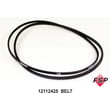
| Motor runs but tub does not move well | Worn or slipping belt | Washer drive belt 12112425 |
Why it matters
Resetting clears a temporary control or power interruption, but the washer still has to pass basic safety checks (especially the lid switch) before it will spin. Verifying the lid switch and drive belt saves time and prevents repeat no-start issues.
If you need to order parts for your Maytag LAT3910AAW, use the parts list for this model or search by model number on Sears PartsDirect.
Last updated: February 2026
What does F3 E1 mean on a Maytag washer?
On a Maytag washer, the F3 E1 error means the control is not getting a correct water-level signal (a pressure system problem). On the Maytag LAT3910AAW, this usually points to the water-level pressure hose/air dome being blocked, leaking, or off, or a failed water-level (pressure) switch.
What to check first (fast, no parts)
- Unplug the washer for 1 minute, then restore power and try a rinse and spin.
- Make sure the tub is empty and the drain hose is not shoved too far down the standpipe (can cause siphoning).
- Check for oversudsing; run a rinse cycle with no detergent if you used too much HE soap.
- Verify both hot and cold supply valves are fully open and inlet screens are not clogged.
- Listen during fill: if water trickles or stops early, the washer can misread the water level.
Inspect the pressure system (most common cause)
The F3 E1 code is commonly triggered when the pressure hose or air dome cannot transmit air pressure changes as the tub fills.
- Unplug the washer.
- Locate the small rubber/vinyl pressure hose from the tub/air dome to the pressure switch.
- Check for cracks, pinholes, kinks, or a loose fit at either end.
- Blow gently through the hose (removed from the switch) to confirm it is clear.
- If the hose connection needs resealing after inspection, use silastic,adh W10841140 sparingly to prevent air leaks.
When a part is likely needed
If the pressure hose and air dome are clear and sealed, the next most common causes are a failing inlet valve (fills incorrectly) or an electrical issue.
| Symptom you notice | Most likely area | What to do |
|---|---|---|
| Fills briefly then stops, code returns | Water inlet valve or supply restriction | Clean inlet screens; consider replacing the inlet valve |
| Won’t advance past fill, water level seems wrong | Pressure switch system | Recheck hose/air dome for leaks or blockage |
| Intermittent operation, stops when lid is moved | Lid switch circuit | Test/replace lid switch |
Why it matters
The washer uses the water-level signal to prevent overfilling and to time agitation and drain. When that signal is wrong, the control stops the cycle and posts F3 E1 to protect the washer and your laundry area.
Ordering the right parts
We list model-matched replacement parts for LAT3910AAW on this page. If you need to search beyond the parts shown, use Sears PartsDirect and enter your full model number.
Last updated: February 2026
What is the average lifespan of LAT3910AAW?
A Maytag top-load washer like model LAT3910AAW typically lasts about 10 to 14 years with normal household use and basic maintenance. Keeping the drive system, lid safety switch, and water inlet components in good shape helps you reach the high end of that range.
Typical lifespan and what affects it
- Load size and frequency: frequent heavy loads shorten life.
- Water quality: hard water speeds up valve and hose wear.
- Drain and spin health: repeated off-balance loads stress bearings and belt.
- Preventive care: cleaning lint and checking hoses prevents secondary damage.
- Timely part replacement: small fixes prevent bigger failures.
Common wear items on LAT3910AAW
These parts often drive “end of life” symptoms (no spin, no start, leaks, poor fill):
| Symptom | Common culprit | Example part for this model |
|---|---|---|
| Won’t start or won’t spin with lid closed | Lid safety switch | Lid switch W10820036 |
| Slow fill, no fill, or wrong temperature | Water inlet valve | Washer water inlet valve 205613 |
| Burning rubber smell, weak agitation/spin | Drive belt slipping or worn | Washer drive belt 12112425 |
Maintenance that extends washer life
- Keep loads balanced; avoid washing single heavy items.
- Replace fill hoses if they show bulges, cracking, or seepage.
- Level the washer to reduce vibration and tub stress.
- Use the right detergent amount to reduce residue and drag.
- Address new noises early (squeal, grinding, thumping) before they damage the tub bearing.
Why it matters
Knowing the expected lifespan helps you decide whether to repair or replace. On LAT3910AAW, replacing a belt, lid switch, or inlet valve is often a practical way to restore reliable operation and extend service life.
Last updated: March 2026