Installation guide
 Owner’s manual


What is the most common problem with Maytag dryers?
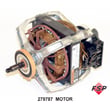
For Maytag electric dryers like model MEDE200XW1, the most common problems are no heat or won’t start, usually tied to airflow restrictions (lint buildup or a clogged vent) that overheat the dryer and can open a safety fuse, plus normal wear on drum support and drive components.
Most common issues we see (and what they look like)
- Dryer won’t run at all: door not fully closed, Start not held long enough, or a house fuse/breaker issue (many electric dryers use two fuses/breakers).
- Drum turns but no heat: one side of the 240V supply is missing (one breaker tripped), or a heat circuit safety device has opened.
- Long dry times: restricted exhaust venting, crushed flex duct, or lint buildup in the blower housing.
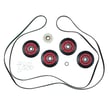
- Squealing, thumping, grinding: worn rollers or idler pulley.
- Error indication: if the WET indicator is flashing with pauses, the control has detected a condition that requires service.
Quick checks first (MEDE200XW1)
Use the troubleshooting steps in the MEDE200XW1 owner’s manual.
- Confirm the door is firmly closed.
- Press and hold Start for 2 to 5 seconds (large loads may need a longer press).
- Check both household fuses or circuit breakers (electric dryers require 240V).
- Inspect the vent path for restrictions (lint screen, duct, outside hood).
- Check for small objects caught between the drum and front or rear seals.
Parts that commonly fix the “usual suspects”
If airflow is good and power is correct, these are frequent wear or heat-related replacements:
| Symptom | Common part to check/replace | Example for MEDE200XW1 |
|---|---|---|
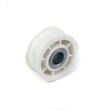
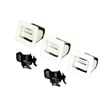
| Loud squeal or rumble | Drum support roller, idler pulley | Dryer drum support roller WPW10314173, dryer idler pulley 279640 |
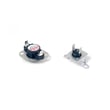
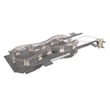
| No heat or overheating damage | Heating circuit components | Dryer heating element WP8544771, dryer thermal cut-off fuse kit 279973 |
Why it matters
Restricted airflow makes an electric dryer run hotter than designed. That increases dry times, wastes energy, and can trigger safety devices that stop heat or stop the dryer from running.
Last updated: January 2026
What is the capacity of Maytag MEDE200XW1?
The Maytag MEDE200XW1 27-inch electric dryer has a 7.0 cu. ft. capacity, which is considered a full-size drum for everyday family loads. For cycle details and loading guidance, use the MEDE200XW1 owner's manual.
What 7.0 cu. ft. means in real use
A 7.0 cu. ft. drum is designed to handle larger, bulkier loads while still allowing proper tumbling for airflow and even drying.
- Fits most everyday loads (mixed fabrics, towels, jeans)
- Handles bulk items better when loaded loosely (comforters, blankets)
- Dries more evenly when you avoid packing the drum tight
- Works best when the lint screen and exhaust venting are kept clear
Loading tips for best drying performance
Overloading reduces airflow and can cause long dry times, overheating, or damp spots.
| Load type | Recommended fill level | What to watch for |
|---|---|---|
| Mixed everyday laundry | About 1/2 to 2/3 full | Items should tumble freely |
| Towels/denim | About 1/2 full | Heavy fabrics need more space |
| Bulky items | About 1/3 to 1/2 full | Avoid wrapping into a tight ball |
Why it matters
Capacity affects drying results, energy use, and wear on key moving parts like the drum support rollers and idler pulley. If the dryer is consistently overloaded and starts squealing or thumping, inspecting wear items such as the dryer drum support roller WPW10314173 is a smart next step.
Last updated: January 2026
What is the average lifespan of a Maytag dryer?
Most Maytag dryers last 10 to 15 years with normal household use and basic maintenance. For your Maytag MEDE200XW1 27-inch electric dryer, keeping airflow strong and addressing wear parts early is what most often determines whether it lands closer to 10 years or pushes past 15.
What affects dryer lifespan the most
- Vent restriction (long runs, crushed duct, lint buildup) that overheats the heater and safety devices
- Overloading that strains the drive motor and drum support system
- Worn drum support parts that create squealing, thumping, or drag
- Heat control issues (cycling problems) that cause overheating or long dry times
- Skipped maintenance (lint screen, exhaust path, interior lint)
Maintenance that helps you reach the high end (15 years)
- Clean the lint screen every load; replace a damaged screen such as screen W10120998.
- Inspect and clean the venting path regularly; confirm the installation meets the airflow guidance in the MEDE200XW1 installation guide.
- If you hear squealing or rumbling, service the drum support and belt path early; common wear items include dryer drum support roller WPW10314173 and dryer idler pulley 279640.
- If the dryer runs but heat is inconsistent or shuts off, test heat-safety parts and temperature sensing; examples include dryer thermistor WP8577274 and dryer thermal cut-off fuse kit 279973.
Typical lifespan expectations (quick reference)
| Usage pattern | Typical lifespan | What usually shortens it |
|---|---|---|
| Light use (1 to 3 loads/week) | 12 to 15 years | Neglected vent cleaning |
| Average use (4 to 7 loads/week) | 10 to 15 years | Overloading, restricted airflow |
| Heavy use (multiple loads/day) | 8 to 12 years | Heat stress, faster roller/belt wear |
Why it matters
A dryer that is overheating or struggling to move air often dries slower and wears out key parts sooner (heating element, thermal cut-offs, motor, rollers). Keeping airflow correct and replacing wear parts before they fail is the most cost-effective way to extend service life.
Last updated: January 2026
What size is a Maytag MEDE200XW1?
The Maytag MEDE200XW1 is a 27-inch electric dryer (a standard full-size width). For exact cabinet height, depth, and clearance requirements for your installation, we recommend confirming the measurements in the MEDE200XW1 owner's manual and the MEDE200XW1 installation guide.
What “27-inch dryer” means
A 27-inch dryer refers to the approximate cabinet width of the appliance. This is the key sizing spec for:
- Fitting between laundry room walls or cabinets
- Matching a 27-inch washer for a side-by-side setup
- Choosing a pedestal or stacking/space-saving layout (when applicable)
- Planning vent routing and electrical cord reach
Typical overall dimensions (what to expect)
Most 27-inch electric dryers are close to these ranges (your exact MEDE200XW1 measurements can vary by handle, console, and door style):
- Width: about 27 inches
- Height: about 38 to 39 inches
- Depth: about 30 to 32 inches (often more with the door open)
| Measurement | What it affects | What to check |
|---|---|---|
| Width | Fit between walls/cabinets | Cabinet opening width |
| Height | Under-counter or shelf clearance | Overhead shelving height |
| Depth | Door swing and walkway space | Door clearance and vent path |
Clearances and hookups to plan for
Even when the cabinet fits, installation space can be tight if clearances are ignored:
- Leave room behind the dryer for the exhaust vent and bend radius
- Allow space for the power cord and strain relief
- Confirm the door swing does not hit a wall, washer, or cabinet
- Keep the vent run as short and straight as possible for best drying
Why it matters
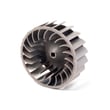
Correct sizing prevents installation headaches and helps airflow stay strong. Good airflow reduces dry times and helps protect key parts like the dryer heating element WP8544771 and dryer blower wheel WP697772 from overheating conditions caused by restricted venting.
Last updated: January 2026