 Error Codes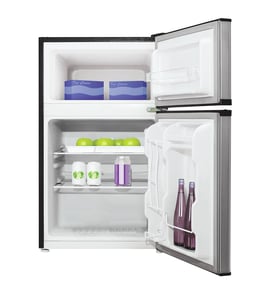

How much does a 3.3 mini fridge weigh?
Most 3.3 cu. ft. mini fridges weigh about 45 to 60 lb. For a Sanyo SR-366S compact refrigerator, the exact weight depends on the cabinet insulation, compressor size, and whether it has a small freezer compartment, so we use that typical range when planning moving or installation.
Typical weight range (what to expect)
Most 3.3 cu. ft. compact refrigerators fall into these ranges:
| Mini fridge type | Typical weight | Notes |
|---|---|---|
| Basic 3.3 cu. ft. (no freezer) | 40 to 55 lb | Lightest style |
| 3.3 cu. ft. with chiller/freezer box | 45 to 65 lb | Most common |
| 3.3 cu. ft. with heavier shelving/trim | 50 to 70 lb | Glass shelves add weight |
How to estimate your SR-366S weight more accurately
Use these quick checks to narrow the range:
- Glass shelves usually add a few pounds compared to wire shelves.
- A freezer/chiller compartment typically adds weight (extra liner and insulation).
- A larger compressor and condenser coil layout can add weight.
- Door storage bins and thicker door insulation add some weight.
- If the unit has been in use, water in the drip pan can add a small amount.
Why it matters
Weight affects whether one person can safely move the refrigerator, what floor surfaces can handle, and whether you should use a dolly or get help to avoid damaging the sealed system (compressor and refrigerant lines).
Safe handling tips
- Keep the refrigerator upright during transport.
- Use a hand truck/dolly and secure it with straps.
- Protect the floor with cardboard or a moving blanket.
- If it was laid on its side, let it stand upright for several hours before plugging it in.
For general DIY safety and prep, we recommend reviewing are diy appliance repairs safe.
Last updated: January 2026
Is Sanyo fridge a good brand?
Sanyo refrigerators, including the Sanyo SR-366S compact refrigerator, are generally a solid, dependable choice for everyday cooling when they’re properly leveled, kept clean, and not overloaded. For most owners, “good” comes down to condition, age, and whether the fridge is holding safe temperatures consistently.
What “good” means for a compact refrigerator
A compact refrigerator brand is doing its job when it reliably cools, runs quietly enough for the space, and holds temperature without constant icing or water leaks.
- Fresh food section should stay around 37°F to 40°F
- Freezer (if equipped) should be around 0°F
- Compressor should cycle on and off; it should not run nonstop in normal room temps
- Door should seal tightly; no gaps or torn gasket
- Interior should stay dry except for normal light condensation in humid conditions
Quick checks to judge your SR-366S right now
Use these practical checks to decide if your Sanyo fridge is performing like a “good” one.
- Put a fridge thermometer inside for 24 hours and confirm stable temps
- Check the door gasket for cracks, flattening, or sticky residue
- Make sure the cabinet is level so the door closes on its own
- Clean dust from the condenser area (where accessible) to improve cooling
- Listen for unusual clicking, buzzing, or grinding that repeats often
Common pros and tradeoffs (compact fridges)
| What you want | What to expect | What to do |
|---|---|---|
| Strong cooling | Usually good when airflow is clear | Avoid blocking vents; do not overpack |
| Low noise | Varies by room and load | Keep it level; allow clearance around the cabinet |
| Minimal frost | Manual-defrost units can frost up | Defrost when ice buildup reaches about 1/4 inch |
Why it matters
A “good” compact refrigerator is one that protects food safety and avoids premature wear on the compressor. Keeping the SR-366S at the right temperature and maintaining airflow reduces run time, energy use, and cooling complaints.
Helpful next step
If you’re comparing models or ordering parts, confirm the exact model from the tag first; use how to find your appliance model number (and what it means for parts).
Last updated: January 2026
What is the smallest size of a refrigerator?
The smallest refrigerators are ultra-compact “mini fridges” designed for a single person or tight spaces; most start around 1.7 to 2.5 cubic feet. Your Sanyo SR-366S is a compact refrigerator, which typically falls in the 3 to 4.5 cubic feet range.
Typical smallest refrigerator sizes (what you’ll see in stores)
Most shoppers mean one of these three categories:
- Ultra-compact mini fridge: about 1.7 to 2.5 cu. ft.
- Compact refrigerator: about 3.0 to 4.5 cu. ft.
- Apartment-size top-freezer: about 7 to 11 cu. ft.
| Type | Typical capacity | Common use | Typical width |
|---|---|---|---|
| Ultra-compact mini fridge | 1.7 to 2.5 cu. ft. | Dorm, office, bedside | 17 to 19 in. |
| Compact refrigerator | 3.0 to 4.5 cu. ft. | Small kitchen, garage, bar | 19 to 22 in. |
| Apartment-size | 7 to 11 cu. ft. | Small apartments | 21 to 24 in. |
How to choose the “smallest” that still works
Capacity is only part of the story; door swing and ventilation clearance often decide whether it fits.
- Measure the opening width, height, and depth (include baseboards)
- Plan for door swing and handle clearance
- Leave airflow space behind and above the cabinet (typical: 1 to 2 inches)
- Decide if you need a true freezer compartment or just a chiller
- Check the shelf layout for tall bottles and meal-prep containers
Why it matters
Going too small usually causes temperature swings, cramped airflow around food, and poor real-world storage. Choosing the smallest size that still allows proper clearance and organization helps a compact refrigerator like the Sanyo SR-366S cool more consistently and run more efficiently.
For help confirming you have the right model when comparing sizes or ordering parts, use how to find your appliance model number (and what it means for parts).
Last updated: January 2026





