Installation guide
 Owner’s manual
 Error Codes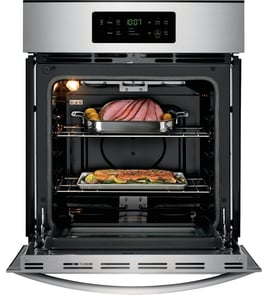


How do I clean my Kenmore Elite oven?
For your Kenmore Elite 79048123800 electric wall oven, let the oven cool completely first, then use the self-clean cycle for heavy soil and wipe out the remaining ash with a damp cloth. Hand-clean the door and frame, but do not clean the door gasket (it can be damaged). See the 79048123800 owner's manual for the exact do’s and don’ts.
Safe cleaning basics (what we recommend)
- Let the oven, bake element, and broil element cool fully before touching anything.
- Wear rubber gloves when hand-cleaning exterior surfaces.
- Hand-clean the oven frame and the oven door surfaces.
- Do not hand-clean or apply cleaners to the oven door gasket.
- Remove items that cannot handle self-clean heat (for example: meat probe, broiler pan/insert, utensils, and any aluminum foil).
Cleaning the oven door glass and exterior
Use mild soap and water to clean the top, sides, and front of the oven door; rinse well and dry.
- Glass cleaner is OK on the outside door glass.
- Do not spray cleaner or water into the door vents.
- Do not use harsh abrasives, cleaning powders, or oven cleaners on the outside of the door.
Self-clean cycle: what to expect
A self-cleaning oven uses very high temperatures to reduce baked-on soil to a fine ash that you wipe away after the cycle.
| Cleaning method | Best for | What you do after |
|---|---|---|
| Self-clean cycle | Heavy baked-on grease and soil | Wipe out ash with a damp cloth |
| Hand-cleaning | Door exterior, frame, light soil | Rinse and dry surfaces |
Oven racks: important note
Your oven uses lubricated porcelain racks that can stay in during self-clean. Keep a light coating of vegetable oil on the rack sides; re-apply a thin layer after each self-clean cycle or anytime racks start sticking.
Why it matters
Using the wrong cleaner or scrubbing the door gasket can cause sealing problems, longer preheat times, and uneven baking. Cleaning the right areas the right way keeps temperatures stable and protects key parts like the temperature sensor and control board.
Last updated: February 2026
Is Kenmore Elite high end?
Yes. Kenmore Elite is Kenmore’s higher-end line, and for the Kenmore Elite wall oven model 79048123800, that typically means more premium styling and feature sets than standard Kenmore models, while still aiming for practical value compared with true luxury brands.
What “high end” usually means for Kenmore Elite
Kenmore Elite products are positioned above the core Kenmore lineup. In real-world terms, “high end” often shows up as a mix of performance features, convenience, and design upgrades.
Common Kenmore Elite differentiators include:
- More cooking modes and tighter temperature control (varies by model)
- Upgraded finishes and trim details
- More robust electronics and user interface features
- Better insulation and cooling airflow design (important for built-in wall ovens)
- More emphasis on fit and finish compared with entry-level models
How to judge “high end” for your specific wall oven
The most accurate way to decide if 79048123800 is “high end” for your kitchen is to compare its features and installation requirements to other 27-inch or 30-inch built-in electric wall ovens.
Use these checkpoints from your documentation:
- Confirm cutout and support requirements in the installation guide
- Review cooking features, cleaning guidance, and care recommendations in the 79048123800 owner’s manual
- Compare replacement-part costs for key components (control board, elements, sensor) to similar ovens
Quick comparison guide
| Category | Kenmore (standard) | Kenmore Elite (typical) |
|---|---|---|
| Features | Core bake/broil | More feature-rich, model-dependent |
| Design | Basic trim/controls | More premium look and interface |
| Service parts | Often lower-cost | Often higher-cost electronics |
Why it matters
“High end” affects expectations for cooking performance, long-term maintenance, and repair cost. For example, higher-end wall ovens often rely more on electronic controls and sensors, which can be more expensive to replace.
If you are troubleshooting performance issues (temperature swings, uneven baking), these parts are commonly involved:
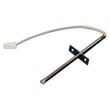
- Frigidaire range oven temperature sensor 316217002 (sensor feedback)
- Frigidaire wall oven relay control board 316443910 (power switching to heating circuits)
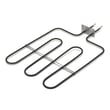
- Frigidaire range bake element 318254902 (primary bake heat source)
Last updated: February 2026
What is the capacity of my Kenmore Elite dryer?
The model number on this page (Kenmore ELITE 79048123800) is an electric wall oven, not a dryer, so “dryer capacity” in cubic feet does not apply. For oven capacity and cooking features, use the specs section in the 79048123800 owner's manual.
Confirm you have the right appliance
We see this question most often when a home has multiple Kenmore Elite appliances. Before you shop parts or compare specs, match the model number on the rating plate to the appliance type.
- Wall oven model tags are typically found along the oven frame (visible when the door is open) or on the side trim.
- Dryer model tags are typically found inside the door opening or on the door frame.
- The correct model number ensures you get the right parts, wiring info, and dimensions.
- If your model number is different than 79048123800, use that exact number when searching.
What “capacity” means for a wall oven
Wall oven capacity is the interior oven volume (usually measured in cubic feet). It affects pan fit, rack positions, and how evenly the oven bakes when fully loaded.
| Appliance type | Capacity is measured as | Why it matters |
|---|---|---|
| Dryer | Drum volume (cu. ft.) | Load size, drying time |
| Wall oven | Oven cavity volume (cu. ft.) | Pan size, roasting space |
Why it matters
Using the correct capacity spec helps you choose the right cookware size and set realistic expectations for cooking performance. It also prevents ordering the wrong parts for the wrong appliance.
If you are actually asking about a dryer, the fastest fix is to locate the dryer’s model number and then look up its drum capacity in that dryer’s manual.
Last updated: February 2026
Why is my Kenmore Elite oven not heating up?
If your Kenmore Elite wall oven model 79048123800 is not heating, the most common causes are a power supply problem, incorrect control settings, or a failed heating component such as the bake element, broil element, or oven temperature sensor. Start with the quick checks in the 79048123800 owner's manual.
Quick checks first (fastest fixes)
- Confirm the display is on and the clock is set; after a power interruption the display can flash and the oven will not program until the clock is set.
- Verify you selected a cooking mode (Bake or Broil) and set a temperature.
- Check your home breaker or fuses; a tripped breaker can leave the oven with partial power.
- If the control is beeping with an error code (example: F11), press STOP to clear it, then reprogram the oven.
- Make sure the door is fully closed; some functions will not run with the door open.
Parts that commonly cause “no heat”
When the oven powers on but will not heat, these parts are the usual suspects.
| Symptom | Most likely part | What you can check |
|---|---|---|
| No bake heat (broil may still work) | Bake element | Look for blisters, cracks, or a break in the element loop |
| No broil heat | Broil element | Look for visible damage; test for continuity if accessible |
| Temperature is way off or heating is erratic | Oven temperature sensor | Sensor resistance/continuity test (power off) |
| Oven shuts down or overheats | High-limit thermostat | If open, it can stop heating to protect the oven |
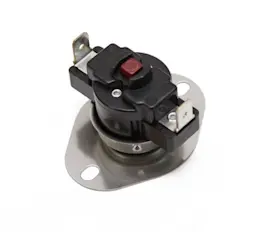
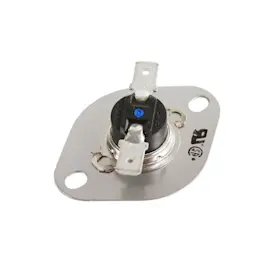
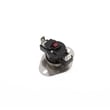
Model-matched parts we commonly use for this symptom include the frigidaire range bake element 318254902, frigidaire range broil element 318255606, frigidaire range oven temperature sensor 316217002, and range high-limit thermostat 318004902.
Safe troubleshooting steps (power off)
- Turn off the breaker before removing panels or touching wiring.
- Inspect wiring connections for heat damage at the terminal block and element terminals.
- Use a multimeter to check continuity on the bake element, broil element, sensor, and high-limit thermostat.
- If the control shows a recurring fault after pressing STOP and reprogramming, service is needed.
Why it matters
A wall oven can appear “on” with lights and a display even when a heating circuit is open or the unit has lost one leg of 240V power. Checking power and the primary heating parts first prevents unnecessary control board replacement.
Last updated: February 2026
Why is my Kenmore oven fan not spinning?
If the fan in your Kenmore Elite wall oven model 79048123800 is not spinning, the most common causes are normal fan behavior (it only runs in certain modes), a door switch stopping the convection fan when the door is open, or a failed fan motor or wiring issue. Confirm the mode and door position first using the 79048123800 owner’s manual.
Quick checks (most fixes start here)
- Convection only: On many ovens, the convection fan runs during convection bake or roast, not during standard bake.
- Door open stops the fan: The convection fan typically stops when the oven door is opened.
- Cooling fan behavior: A cooling fan can cycle on and off to protect internal components and may run after the oven is turned off.
- Listen for humming: A hum with no blade movement often points to a seized motor, stuck blade, or obstruction.
- Check for error symptoms: No heat plus no fan can indicate a power or control problem.
What to test if the fan should be running
Before servicing, shut off power at the breaker (wall ovens use high voltage).
- Inspect the fan area for grease buildup or debris that can bind the blade.
- Check wiring connections to the fan motor for looseness or heat damage.
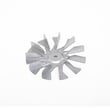
- If the fan blade is damaged or stripped, replace the fan blade 318398302.
- If the motor is getting power but not turning, replace the motor (common on convection systems).
Common causes and what they look like
| Symptom | Likely cause | What we recommend |
|---|---|---|
| Fan stops when door opens | Normal door switch operation | Test with door closed in convection mode |
| Fan never runs in convection | Failed motor, wiring, or control | Inspect wiring; test motor circuit |
| Fan runs after oven is off | Normal cooling fan operation | Let it run; it shuts off when cooled |
| Fan hums but won’t spin | Obstruction or failing motor | Clear obstruction; replace motor if needed |
Why it matters
A non-spinning convection fan can cause uneven baking and longer cook times. A cooling fan that does not run when needed can lead to overheating of electronic controls and temperature-related shutdowns.
Last updated: February 2026