Owner’s manual
 Error Codes


How to identify a Kenmore washer model?
Your Kenmore washer model number is printed on the model and serial number label. On Kenmore model 11028622701, that label is located under the washer lid; the model number typically starts with 110. and is used to match the correct parts and instructions in the 11028622701 owner's manual.
Where to look on Kenmore washers
Most Kenmore washers place the model/serial label in one of these spots:
- Top-load washers: under the lid (often along the rim of the opening)
- Front-load washers: inside the door opening (around the door frame)
- Some models: on the back panel near the power cord or control console
What the model number looks like (and why it matters)
Kenmore model numbers are usually 11 characters or more and often begin with 110. Using the exact model number helps us match the right diagrams and replacement parts (like a lid switch, drain pump, or motor coupling) for your washer.
| What you find | What it’s used for | Example for this washer |
|---|---|---|
| Model number | Identifies the exact washer design | 11028622701 |
| Serial number | Identifies the production unit | Varies by unit |
| Purchase date | Helpful for records and maintenance timing | Your receipt/date noted |
Quick tips to record it correctly
To avoid ordering the wrong part, we recommend:
- Write the model number exactly as shown (include all digits)
- Take a clear photo of the label under the lid
- Keep the model and serial number with your appliance records
- Use the model number when looking up common repairs (drain, spin, agitation)
Why it matters
Many Kenmore washers look similar, but parts can differ by model series. The correct model number ensures the right fit for items like the washer lid switch assembly WP8318084 or washer drain pump WP3363394.
Last updated: February 2026
What is the average lifespan of a Kenmore washer?
Most Kenmore washers last 10 to 15 years with normal household use. For your Kenmore 11028622701 top-load washer, consistent care (proper loading, leveling, and periodic inspections) helps you reach the high end of that range; heavy use shortens it.
Typical lifespan and what changes it
- Normal family use: 10 to 15 years
- Heavy or daily loads: closer to 8 to 12 years
- Good maintenance habits: pushes lifespan longer by reducing wear on the drive system, suspension, and pump
Quick guide: what to expect over time
| Washer age | What’s common | What we recommend |
|---|---|---|
| 0 to 5 years | Minor adjustments, occasional clogs | Keep it level; clean and inspect hoses |
| 6 to 10 years | More vibration, slower drain, wear parts | Check suspension and drain performance |
| 11 to 15 years | Higher chance of major mechanical wear | Evaluate repair vs. overall condition |
Maintenance that directly extends life
We focus on the items that prevent the most common failures in a top-load Kenmore like model 11028622701:
- Replace inlet hoses every 5 years; the owner's manual calls this out to reduce hose-failure risk.
- Do not overload; balanced loads reduce strain on the clutch, gear case, and suspension.
- Keep the washer level; leveling reduces out-of-balance spinning and cabinet wear.
- Watch for slow draining; a struggling pump can overheat and leave water in the tub.
- Address agitation issues early; worn agitator components can lead to poor cleaning and extra mechanical stress.
Parts that commonly wear on this model
If performance drops, these are frequent wear items for this Kenmore platform:
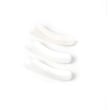
- Agitator dog 80040 (common cause of weak or slipping agitation)
- Coupling 285753A (common cause of no-agitate or no-spin symptoms)
- Washer drain pump WP3363394 (common cause of no-drain or slow-drain)
Why it matters
A washer usually fails from wear and stress, not age alone. Preventing overloads, keeping the tub balanced, and replacing hoses on schedule reduces the chance of sudden leaks and helps the drive system (motor, coupling, clutch, gear case) last longer.
Last updated: February 2026
How to replace Kenmore washer agitator dogs?
To replace agitator dogs on your Kenmore washer model 11028622701, we remove the fabric softener dispenser (if equipped), lift off the agitator’s upper section, swap in the new dogs, then reassemble and test agitation. Use the steps in the 11028622701 owner's manual for safe handling and reassembly details.
What you’ll need
- Replacement part: agitator dog 80040
- 7/16-in socket with extension (common for many Kenmore top-load agitators)
- Flat screwdriver (for caps or dispenser removal)
- Towel or small container (to hold screws and small parts)
Step-by-step: replace the agitator dogs
- Unplug the washer (safety first).
- Remove the dispenser or cap:
- If you have a fabric softener dispenser, remove it first. Many Kenmore agitators use a twist-and-lift style dispenser; rotate until it stops, then lift straight up.
- Remove the inner cap/dust cap (if present) to access the agitator bolt.
- Remove the agitator bolt using a 7/16-in socket and extension.
- Lift the agitator out of the basket.
- Separate the upper agitator (auger) from the lower agitator.
- Replace the dogs:
- Remove worn dogs (they are usually rounded off or broken).
- Install the new dogs in the same orientation so they “catch” in one direction.
- Reassemble the auger, reinstall the agitator, tighten the bolt snugly, then reinstall the cap/dispenser.
- Test with a small load on a normal/agitate cycle to confirm the auger now “ratchets” and pulls clothes through the wash.
Quick diagnosis: are the dogs really the problem?
| Symptom | Most likely cause | What to check next |
|---|---|---|
| Upper agitator doesn’t move, lower agitates | Worn agitator dogs | Replace dogs first |
| No agitation at all | Drive system issue | Consider coupling 285753A or clutch 285785 |
| Washer won’t spin and may not agitate | Lid switch issue | Check washer lid switch assembly WP8318084 |
Why it matters
Agitator dogs are small, inexpensive wear parts that let the upper agitator “grab” and move laundry. Replacing them restores proper rollover, improves cleaning, and can prevent overloading and strain on the drive system.
Last updated: February 2026
Is it worth repairing a Kenmore washing machine?
Yes; repairing a Kenmore washer is worth it when the fix restores reliable washing and spinning for less than the cost of replacing the machine. For Kenmore model 11028622701, many common failures are repairable with standard parts and straightforward troubleshooting in the 11028622701 owner's manual.
When repair is the smart choice
We typically recommend repair when the washer’s core structure is solid (cabinet, tub, basket) and the problem is isolated to a wear part or drive/drain component.
- The washer fills but will not drain or drains slowly
- The washer will not spin or agitates poorly
- The lid must be closed for the cycle to run (safety interlock issues)
- You hear grinding, slipping, or a burning-rubber smell during spin
- The machine is otherwise in good condition and not leaking from the tub area
Common repairs for this model (parts you can replace)
These are frequent, cost-effective repairs on direct-drive Kenmore top-load washers like 11028622701:
| Symptom | Likely area | Example part on this page |
|---|---|---|
| Won’t drain / water left in tub | Drain system | Washer drain pump WP3363394 |
| Won’t start or stops when lid opens | Lid safety circuit | Washer lid switch assembly WP8318084 |
| Won’t spin or agitates weakly | Drive coupling / clutch | Coupling 285753A, clutch 285785 |
| Agitator “ratchets” or won’t move clothes well | Agitator dogs | Agitator dog 80040 |
When replacement makes more sense
Replacement is the better value when the repair involves major teardown plus multiple high-cost parts.
- Repeated leaks from the tub or center seal area (often escalates into multiple parts)
- Loud gearcase noise plus poor agitation/spin (can point to a gearcase issue)
- Severe rusted-through cabinet or structural damage
- Multiple unrelated failures at the same time (for example, drain plus drive plus timer)
Why it matters
A targeted repair keeps a dependable washer running for years and avoids the downtime and fit issues that can come with replacing a machine. Using the correct troubleshooting steps and safety guidance in the 11028622701 owner's manual helps you confirm the failure before buying parts.
Last updated: February 2026