Owner’s manual
 Error Codes



How to clean the drip pan on a Kenmore refrigerator?
On Kenmore side-by-side refrigerator model 10655242400, we clean the drip (defrost) pan by safely unplugging the refrigerator, accessing the pan, emptying and washing it with mild detergent and warm water, then reinstalling it so it sits flat and drains properly. See the 10655242400 owner's manual for model-specific access details.
Safety first
- Unplug the refrigerator or disconnect power before you start.
- Use nonflammable cleaner only.
- Wear gloves; drip pans can contain dirty water and mold.
- Protect floors with towels; the pan can spill when moved.
Step-by-step: cleaning the drip (defrost) pan
- Disconnect power (unplug the cord or switch off the breaker).
- Locate the drip pan (most side-by-side units place it near the bottom, behind the front toe grille or at the rear near the compressor area).
- Slide the pan out carefully and keep it level.
- Empty the pan into a sink or drain.
- Wash with warm water and a mild dish detergent; use a soft cloth or sponge.
- Rinse and dry thoroughly.
- Reinstall the pan fully so it sits straight and does not interfere with the condenser fan or airflow.
- Restore power.
What to use (and what to avoid)
| Use | Avoid | Why |
|---|---|---|
| Mild detergent + warm water | Abrasive pads, scouring cleansers | Prevents scratching plastic surfaces |
| Soft cloth or sponge | Harsh solvents, petroleum-based cleaners | Protects liners, gaskets, and plastics |
| Baking soda solution (light deodorizing) | Flammable fluids | Reduces odor risk and improves safety |
Why it matters
A dirty drip pan can cause odors, attract pests, and contribute to moisture problems. Keeping it clean supports normal automatic defrost drainage and helps your Kenmore refrigerator run cleaner overall.
Last updated: February 2026
How to tell if a Kenmore refrigerator compressor is bad?
If your Kenmore 10655242400 side-by-side refrigerator is not cooling and the compressor runs hot, runs almost constantly, or makes abnormal noises, the compressor or the sealed refrigeration system is failing. Confirm airflow and defrost operation first because those problems can mimic a bad compressor.
What you should check first (fast, no parts swapping)
- Verify the freezer is cold; the refrigerator section depends on freezer cooling.
- Listen for normal operating sounds; a high-pitched or pulsating compressor sound can be normal on efficient units.
- Check for evaporator fan airflow in the freezer; weak or no airflow points to a fan or frost blockage.
- Look for heavy frost on the freezer back panel; that suggests a defrost problem, not a compressor.
- Make sure the condenser area is clean and the unit has airflow around it.
Symptoms that strongly point to a compressor or sealed-system problem
These signs together usually indicate a compressor issue (or a refrigerant restriction/leak in the sealed system):
| What you notice | What it usually means |
|---|---|
| Freezer and fresh food both warm, compressor runs a lot | Cooling system not moving heat effectively |
| Compressor is very hot and cooling is poor | Compressor struggling or failing |
| Clicking every few minutes (start attempt, then stop) | Start device/capacitor issue or locked compressor |
| Breaker trips when compressor tries to start | Electrical overload, often compressor related |
Parts that are commonly involved
We recommend diagnosing before replacing parts, but these are the most common compressor-related items on this style of Kenmore:
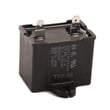
- Run capacitor WPW10662129 (helps the compressor start and run)
- Refrigerator compressor W10309990 (the pump that circulates refrigerant)
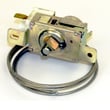
- Refrigerator thermostat WP2198202 (can cause long run times if controls are off)
Why it matters
A compressor diagnosis affects cost and repair approach. Airflow, frost buildup, and normal operating sounds can look like “compressor failure,” so ruling out fans and defrost issues first prevents unnecessary sealed-system work.
Model-specific tip
Use the troubleshooting and sound descriptions in the 10655242400 owner's manual to compare what you hear (buzzing at the water valve, gurgling refrigerant flow, and some compressor pitch changes can be normal).
Last updated: February 2026
What are the most common problems with Kenmore refrigerators?
The most common issues we see on Kenmore refrigerators like model 10655242400 are cooling problems, ice maker or water dispenser failures, leaks, unusual noise, and frost or moisture buildup. Many of these start with airflow restrictions, door sealing issues, or a water supply problem; use the 10655242400 owner's manual troubleshooting section to narrow it down.
Most common problems (and what to check first)
- Not cooling or warm temperatures: blocked air vents, frequent door openings, controls set incorrectly, or a heavy load of warm food.
- Ice maker not working: shutoff arm position, frozen fill tube, low water pressure, or a failed ice maker.
- Water dispenser slow or not dispensing: clogged filter, kinked water line, or a weak inlet valve.
- Water leaking: loose water tube connections, cracked tubing, or defrost drain issues.
- Noisy operation: fan blade hitting ice, worn fan motor, or items vibrating against the cabinet.
- Frost or interior moisture buildup: doors not closing fully, humid room air, or blocked vents.
Quick troubleshooting steps for model 10655242400
- Confirm doors close fully and seals are clean; sticky gaskets can make doors hard to open and can cause moisture issues.
- Check that air vents are not blocked by food packages (airflow problems commonly look like “not cooling”).
- If your model has digital controls, cycle the unit OFF then ON to reset (a common manual-recommended step).
- For ice and water issues, verify the household shutoff valve is fully open and the supply line is not kinked.
Parts that commonly solve these symptoms
| Symptom | Common part to inspect | Example part for this model |
|---|---|---|
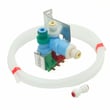
| No ice, small cubes, no water fill | Water inlet valve | Refrigerator water inlet valve W10408179 |
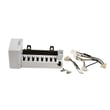
| Ice maker dead or inconsistent harvest | Ice maker assembly | Ice maker assembly - refrigerator ice maker by whirlpool 4317943 |
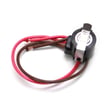
| Frost buildup, warm freezer, intermittent cooling | Defrost safety device | Refrigerator defrost bi-metal WPW10225581 |
Why it matters
Catching airflow, door seal, and water supply problems early helps prevent food spoilage, reduces frost buildup, and avoids strain on the sealed refrigeration system.
Last updated: February 2026
What is the average lifespan of a Kenmore refrigerator?
Most Kenmore refrigerators average 10 to 15 years of service life; for a Kenmore 10655242400 side-by-side refrigerator, consistent cleaning and quick fixes (like sealing air leaks and keeping airflow clear) are what most often push it toward the longer end of that range. See the 10655242400 owner's manual for the care steps that protect long-term reliability.
Typical lifespan ranges (what we see most often)
| Refrigerator type | Typical lifespan | What shortens life fastest |
|---|---|---|
| Side-by-side (like model 10655242400) | 10 to 15 years | Dirty condenser area, poor door seal, overheating |
| Top freezer | 12 to 18 years | Poor ventilation, heavy frost from air leaks |
| French door | 10 to 15 years | Ice and water system issues, airflow restrictions |
Maintenance that extends lifespan
These are the highest-impact habits for a Kenmore side-by-side:
- Clean the refrigerator regularly (spills, sticky door gaskets, and odors); the manual’s “Refrigerator care” section covers cleaning basics.
- Keep door gaskets clean so doors close easily and seal tightly; sticky gaskets can make doors hard to open and can lead to air leaks.
- Replace failed cooling/defrost parts promptly to prevent heavy frost and warm temperatures.
- Address water and ice issues early (slow fill, no ice, leaking) to avoid secondary damage.
- Use vacation and moving care steps when the refrigerator will be off or relocated.
If you are troubleshooting ice production as the unit ages, the ice maker assembly 4317943 is a common replacement on this model family.
Why it matters
A refrigerator usually does not “wear out” all at once; it loses efficiency first. Small issues like a weak door seal, poor airflow, or a defrost problem can force longer run times, raise temperatures, and shorten the life of major components like the compressor.
Quick signs your refrigerator is nearing end-of-life
- Food temperatures drift even after adjusting controls
- Excess frost in the freezer or repeated defrost problems
- Loud or frequent running with poor cooling
- Water leaks that keep returning after basic fixes
Last updated: February 2026
What is the cubic foot of my Kenmore refrigerator model 10655242400?
The exact cubic-foot capacity for Kenmore side-by-side refrigerator model 10655242400 is listed in the product specifications section of the 10655242400 owner's manual. As a practical comparison point, most Kenmore 106 side-by-side refrigerators are in the 20 to 25 cu. ft. total-capacity range.
How to find the exact capacity for model 10655242400
Check the specifications pages in the 10655242400 owner's manual. Capacity is usually shown as total volume (refrigerator plus freezer) and may also be broken out by compartment.
- Look for headings such as “Product specifications,” “Capacity,” or “Refrigerator features/specs.”
- If the manual lists total and freezer capacity separately, add them only if the manual instructs you to.
- Use the model and serial tag inside the fresh-food compartment to confirm you are matching the correct model.
- If you have an in-door ice system, remember it reduces usable space even though total cubic feet stays the same.
Total capacity vs. usable storage
| Measurement | What it represents | What changes it most |
|---|---|---|
| Total capacity (cu. ft.) | Interior volume rating used for model comparisons | Fixed design of the cabinet |
| Usable storage | What you can actually load with food | Shelves, bins, ice bucket, air ducts |
Why it matters
Cubic feet helps you compare replacement refrigerators and estimate storage, but layout (shelf spacing, door bins, ice storage) often matters more day to day than the published volume.
Last updated: February 2026
What size is Kenmore refrigerator model 10655242400?
Kenmore side-by-side refrigerator model 10655242400 is a full-size, standard-width side-by-side; most units in this class measure about 33 to 36 inches wide, 30 to 34 inches deep, and 65 to 70 inches tall. For the exact cabinet and door-swing dimensions, use the 10655242400 owner's manual.
How to get the exact measurements for your space
We recommend measuring your opening first, then confirming the refrigerator’s published dimensions in the manual.
- Measure the opening width at the front and back (walls are often not perfectly square)
- Measure height to the lowest cabinet or soffit
- Measure depth from the back wall to the front edge of counters
- Plan for door swing clearance if the refrigerator sits next to a fixed wall
- Confirm you have room to pull the unit out for service and cleaning
Clearance guidance from the manual
The manual calls for ventilation and swing clearance that affects the real space you need.
| Location | Typical minimum clearance | Why it matters |
|---|---|---|
| Each side and top | 1/2 inch (1.25 cm) | Airflow and cooling efficiency |
| Next to a fixed wall | 2 inches (5.08 cm) minimum (varies by setup) | Door swing and bin access |
| Back (with ice maker) | Extra space for water line | Prevents kinks and leaks |
Why “depth” can be confusing (and what to measure)
Refrigerator depth can change depending on what you include.
- Cabinet depth: box only (no handles)
- Overall depth: includes doors and handles (often several inches more)
- Depth with doors open: needed to remove crisper bins and shelves
Why it matters
Correct sizing prevents installation headaches like doors that cannot open fully, poor ventilation that hurts cooling performance, and water line pinching behind the cabinet.
Last updated: February 2026
Why is the ice maker not working on my Kenmore side by side refrigerator?
If the ice maker on your Kenmore 10655242400 side-by-side refrigerator is not working, the most common causes are the ice maker being turned off (wire shutoff arm up), the water supply being off, or the freezer not being cold enough. Start with the on/off arm and water valve checks in the 10655242400 owner's manual.
Quick checks that fix most “no ice” problems
- Make sure the wire shutoff arm is down (ON); do not force it up or down.
- Confirm the household water shutoff valve to the refrigerator is fully open.
- Verify the freezer is cold enough; after adjustments, allow 24 hours to stabilize.
- If the ice maker was just installed or reconnected, allow up to 72 hours for full ice production.
- Check for a cube jammed in the ejector area; clear it with a plastic utensil.
What “normal” ice production looks like
Your ice maker is designed to make ice in batches. When everything is working correctly, production is typically:
| Situation | What to expect |
|---|---|
| Newly installed or after water hookup | Wait up to 72 hours for full production |
| Fully cooled and running normally | About 70 to 120 cubes per 24 hours |
| Need more ice | Turn the freezer control colder in small steps, then wait 24 hours |
When a part is likely involved
If the shutoff arm is down, the freezer is cold, and the water supply is on but the mold is dry (no water entering), the water fill system is the place to focus.
- If water is not entering the ice maker, a failed inlet valve is a common cause: refrigerator water inlet valve W10408179
- If the ice maker mechanism is not cycling or has internal failure, replacement is often the fastest fix: ice maker assembly - refrigerator ice maker by whirlpool 4317943
Why it matters
An ice maker depends on two basics: cold air (freezer temperature) and water flow (open supply and a working inlet valve). If either one is missing, the ice maker will stop producing or slow down dramatically.
Last updated: February 2026