Owner’s manual
 Error Codes
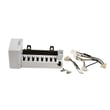


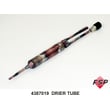


Is there a way to reset a Kenmore Elite refrigerator?
Yes. For Kenmore model 10673184302, the most reliable reset is a power reset: turn the temperature control(s) to OFF, disconnect power, then restore power and set the control(s) back to your normal setting. This clears many control and cooling glitches.
How to reset it (safe, model-appropriate steps)
- Turn the refrigerator control (thermostat or temperature control, depending on your unit) to OFF.
- Unplug the refrigerator (or switch off the dedicated circuit breaker).
- Wait 5 minutes.
- Plug the refrigerator back in (or turn the breaker back on).
- Set the control(s) back to the desired temperature setting.
- Give cooling time to stabilize; most refrigerators need 24 hours to fully return to normal temperatures.
For the control locations and exact wording used for your unit, use the 10673184302 owner's manual.
What a reset will and will not fix
| Symptom | Reset helps? | What to check next |
|---|---|---|
| Lights or controls acting “stuck” after a power event | Yes | Outlet, breaker, loose plug |
| Not cooling or weak cooling | Sometimes | Airflow, condenser cleanliness, evaporator fan |
| Ice maker not making ice | Sometimes | Water supply, shutoff arm position, inlet valve |
| Water leaks or puddles | No | Drain tube, water line connections |
Quick checks after resetting
- Confirm the outlet is not controlled by a wall switch.
- Make sure vents inside the fresh food and freezer sections are not blocked by food packages.
- If you have an ice maker, confirm the shutoff arm is in the ON (down) position and the water supply is on.
- Listen for the evaporator fan running when the compressor is on.
- If you recently moved the refrigerator, recheck leveling and door closing.
Why it matters
A reset restores normal operation after a brief power interruption and forces the refrigerator to restart its cooling cycle. If temperatures do not improve after a full day, the issue is usually airflow, a defrost problem, or a component such as the evaporator fan motor.
Last updated: January 2026
What water filter fits my Kenmore fridge?
For Kenmore model 10673184302, the correct water filter depends on whether your refrigerator is equipped with an interior water filtration system and the exact cartridge style it uses. The most reliable match comes from the filter section in the 10673184302 owner's manual, then confirming the cartridge shape and how it installs.
How we identify the right filter for 10673184302
Start by checking whether your refrigerator actually has a filter installed. The manual notes that water flow can drop when a filter is installed and becomes full, and it references the “Interior Water Filtration System” section for removing and replacing the cartridge.
Use these checks:
- Look for a filter housing inside the fresh food compartment (often upper right, upper left, or base grille area depending on configuration).
- If water flow from the dispenser has decreased noticeably, remove the cartridge and test flow; if flow improves, the filter is due for replacement.
- If you see gray or dark discoloration in ice or water after a new filter, flush the system thoroughly.
- If there is no filter housing, your setup may use an inline filter (installed in the water line behind the refrigerator) or no filter at all.
- Match the replacement by cartridge style (twist-in, push-in, or base grille style) and the part number listed in the manual.
Flushing after installing a new filter (important)
The manual guidance is to flush the filtration system by dispensing and discarding 2 to 3 gallons (8 to 12 liters) of water, which typically takes 6 to 7 minutes. This helps clear air and carbon fines that can discolor water or ice.
| What you notice | What it usually means | What to do |
|---|---|---|
| Slow dispenser flow | Filter is full or not seated | Reinstall filter; replace if flow improves with filter removed |
| Dripping after dispensing | Air in water lines | Flush; normal use clears air within 24 to 72 hours |
| Gray/dark ice | Filter needs more flushing | Flush 2 to 3 gallons; discard early ice batches |
Why it matters
Using the correct Kenmore refrigerator water filter for 10673184302 protects water taste, helps prevent dispenser flow problems, and reduces the chance of discolored ice caused by an unflushed filtration system.
For step-by-step filter selection and replacement tips, use how to replace the water filter in a Kenmore refrigerator.
Last updated: January 2026
What's the average lifespan of a Kenmore refrigerator?
Most Kenmore refrigerators average 12 to 15 years of service life with normal household use. For Kenmore model 10673184302, consistent preventive maintenance (especially keeping airflow clear and doors sealing tightly) is what most often determines whether you land near 12 years or push beyond it; see the 10673184302 owner's manual for care guidance.
Typical lifespan and what affects it
A refrigerator’s life is usually driven by compressor run time, heat removal, and how well the cabinet stays sealed.
- Maintenance habits: cleaning dust from condenser areas helps reduce strain
- Door seal condition: weak gaskets cause longer run times and temperature swings
- Room conditions: hot garages and tight enclosures shorten life
- Usage patterns: frequent door openings and overpacking increase workload
- Repairs over time: replacing wear items can extend service life
Maintenance that helps you reach (or beat) the average
These are the highest-impact steps for a top-mount refrigerator like the 10673184302.
| Maintenance task | How often | Why it matters |
|---|---|---|
| Clean condenser area and ensure airflow | Every 6 to 12 months | Reduces compressor heat and run time |
| Check door closing and seal contact | Monthly | Prevents warm air leaks and frost buildup |
| Keep vents inside compartments unblocked | Ongoing | Maintains even cooling and proper airflow |
| Set correct temperatures (fresh food and freezer) | Seasonally | Avoids overworking the sealed system |
If you’re fighting warm temps, heavy frost, or long run times, a failing door seal is a common cause; the gasket panel (white) 2159061 is one of the model-specific sealing parts that can restore proper closure when the existing gasket is torn or warped.
Why it matters
A refrigerator that runs longer to hold temperature wears the sealed refrigeration system faster. The manual for this model also highlights that the sealed system (refrigeration, connecting tubing, and compressor) is a key long-life component, so reducing heat load and air leaks directly supports longevity.
Last updated: January 2026