Installation guide
 Owner’s manual
 Error Codes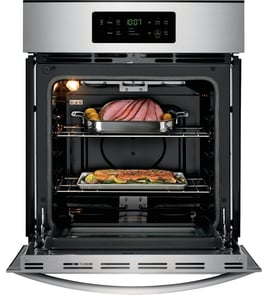



Are there any 36 wall ovens?
Yes, 36-inch wall ovens exist, but they are less common than 30-inch models. For Kenmore Pro model 79041003604, the installation guide shows a 30-inch (76.2 cm) wall oven cutout reference, so this specific model is not a 36-inch wall oven; confirm sizing in the 79041003604 installation guide.
A “36-inch” wall oven refers to the cabinet opening and trim width, not the interior cooking width. Most kitchens are built around 30-inch wall ovens, so 36-inch units are typically premium, specialty, or pro-style options.
Common 36-inch configurations:
- Single wall oven (extra-wide cavity or wide trim)
- Double wall oven (taller and wide, heavier install)
- Electric convection or gas (brand-dependent)
- Often requires upgraded cabinetry support and electrical planning
We recommend verifying three measurements before shopping:
- Cutout width (inside the cabinet opening)
- Cutout height (single vs. double oven)
- Cutout depth and rear clearance for wiring and junction box
The 79041003604 installation guide also calls out key install requirements that matter for any wall oven size, including a level cutout base and proper electrical supply.
| Feature | 30-inch wall oven | 36-inch wall oven |
|---|---|---|
| Availability | Most common | Less common |
| Cabinet cutout | Standard in many homes | Often requires cabinet changes |
| Install weight/support | Typical | Often heavier, more demanding |
| Replacement flexibility | High | Lower |
Wall ovens are sized to the cabinet cutout. Moving from a 30-inch model like 79041003604 to a 36-inch wall oven usually means modifying cabinetry, confirming electrical requirements (120/240 or 120/208 VAC), and ensuring the oven can be secured with mounting brackets to prevent tipping.
Last updated: February 2026
What kind of Kenmore range do I have?
If you have Kenmore model 790.41003604, you have a Kenmore Pro electric wall oven (not a freestanding range). The quickest way to confirm is to find the model and serial tag on the oven frame area; it lists the full model number used to match parts and the correct manual.
We use the model number to match the correct Kenmore Pro wall oven parts, wiring, and control settings.
- Open the oven door and look around the door frame/inner trim area
- Check for a serial plate label (the manual calls this the serial plate location)
- Look for wording such as “Model”, “Model No.”, “MOD”, “MO”, or similar
- Write down the full model number exactly as shown (for this unit it should read 790.41003604 or 79041003604)
- Record the serial number too; it helps when ordering parts and confirming revisions
For the exact label location and how the oven is identified, use the 79041003604 owner's manual.
A wall oven is built into cabinetry and typically has a separate cooktop, while a range combines an oven and cooktop in one appliance.
| Feature | Wall oven (like 79041003604) | Range |
|---|---|---|
| Cooktop attached | No | Yes |
| Installation | Built into cabinet cutout | Freestanding or slide-in |
| Common model tag spot | Door frame/inner trim | Oven frame or drawer area |
Using the correct model number prevents ordering the wrong parts (for example, an oven temperature sensor or control board that looks similar but does not fit). It also ensures you follow the right operating and safety instructions for your Kenmore Pro wall oven.
Last updated: February 2026
Where can I find my Kenmore Elite oven model number?
On the Kenmore Pro wall oven model 79041003604, the model and serial number are printed on the serial plate located along the interior side trim and are visible when you open the oven door. Confirm the full model number before ordering parts or scheduling service.
- Open the oven door fully.
- Look along the left and right interior side trim (the vertical trim area just inside the door opening).
- Find the serial plate label; it lists the model number and serial number.
- Write down the model number, serial number, and any lot number/letter shown.
- Use the exact characters as printed (numbers and punctuation).
The serial plate information is what we use to match the correct Kenmore Pro wall oven parts, wiring, and control components for your exact configuration.
| Label item | What it’s used for |
|---|---|
| Model number | Ensures correct part fit and diagrams |
| Serial number | Helps identify production range and revisions |
| Lot number/letter (if shown) | Helps narrow down compatible replacements |
- Match the model number exactly as printed (for example, 79041003604).
- If the label is hard to read, take a clear photo with the door open and the oven light on.
- Use the documentation to confirm label location and formatting: 79041003604 owner's manual.
Kenmore wall ovens often have multiple versions that look similar; using the serial plate model number prevents mismatched parts like an oven temperature sensor, control board, or door seal.
Last updated: February 2026
What are the parts of an electric oven?
An electric wall oven like Kenmore Pro model 79041003604 is built around heating elements, temperature sensing, airflow (venting and fans), lighting, and electronic controls that regulate bake, broil, convection, and self-clean cycles. For the exact feature layout on your oven, use the 79041003604 owner's manual.
- Broil element: top heating element for high-heat browning and broiling
- Bake element: bottom heating element for baking and roasting (sometimes hidden)
- Oven temperature sensor: tells the control board the actual oven temperature
- Electronic oven control and display: manages temperature, time, modes, and error detection
- Oven vent and blower/cooling fan: moves heat and protects internal electronics
- Convection fan and fan blade (on convection models): circulates hot air for even cooking
- Oven light(s) and lens/cover: illuminates the cavity
- Door gasket (oven seal): helps keep heat inside the cavity
- Racks and rack supports: hold cookware at different positions
Your manual highlights these features/components on this Kenmore Pro wall oven:
| Component | What it does | Where you notice it |
|---|---|---|
| Broil element | High heat at the top of the cavity | Broil mode, browning foods |
| Oven vent | Releases warm air for circulation | Warm air at the center trim area |
| Blower/cooling fan | Cools electrical and electronic components | Fan may run after the oven turns off |
| Halogen lights | Lights the oven cavity | Interior lighting during cooking |
If you are troubleshooting temperature issues, fan noise, or heat loss, these model-matched parts are commonly involved:
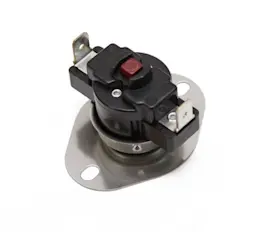
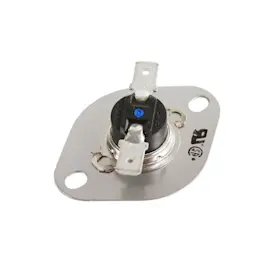
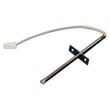
- Frigidaire range oven temperature sensor 316217002 (temperature accuracy and preheat problems)
- Range oven cooling fan assembly 318073028 (fan runs loud, squeals, or fails to run)
- Oven seal 318053120 (heat leaking, longer cook times, uneven baking)
- Wall oven relay control board 316443915 (heating functions not responding)
Knowing the main oven components helps you narrow symptoms fast. For example, inaccurate temperatures often point to the sensor or control, while a fan that keeps running after shutdown is typically normal because it is cooling the electronics.
Last updated: February 2026
How long do Kenmore electric ovens last?
Most Kenmore electric ovens, including the Kenmore Pro wall oven model 79041003604, last 13 to 15 years with normal use and basic maintenance (keeping vents clear, avoiding harsh cleaners on controls, and fixing heating issues early). Use the 79041003604 owner's manual for model-specific care and cleaning guidance.
A wall oven’s life is mostly determined by heat stress on electronics, door sealing, and how often high-heat modes (broil, self-clean) are used.
- Usage frequency: daily baking shortens life compared to occasional use
- Self-clean frequency: high heat accelerates wear on wiring and controls
- Ventilation and cooling: this model uses a blower to cool internal components
- Door seal condition: heat leaks make components work harder
- Power quality: repeated outages or loose connections stress control boards
If the oven is heating unevenly, not reaching temperature, or throwing temperature-related symptoms, we typically start by checking the sensor and control components.
| If you see this symptom | Common cause | Part to check first |
|---|---|---|
| Oven temperature swings, underbakes | Temperature sensing issue | Frigidaire range oven temperature sensor 316217002 |
| Dead display or erratic controls | Control/display issue | Wall oven display control board 316460300 |
| Oven shuts down, runs hot externally | Cooling/airflow issue | Range oven cooling fan assembly 318073028 |
These steps reduce heat buildup and prevent premature failures.
- Keep the oven vent area unobstructed during baking and self-clean
- Let the cooling blower finish running after you turn the oven off
- Replace a worn door gasket such as the oven seal 318053120 if you feel heat escaping
- Use gentle methods for stainless surfaces; follow the manual’s stainless steel care section
- If performance changes, test electrical parts correctly using a meter (do not guess)
A well-sealed, properly cooled wall oven holds temperature more accurately and puts less stress on expensive components like the relay/control boards and display, which helps you get the full 13 to 15 years.
Last updated: February 2026