 Installation guide
 Owner’s manual


How to do a hard reset on a Kenmore washer?
For the Kenmore Elite washer model 11016972500, a “hard reset” is a simple power reset: unplug the washer (or switch off the breaker) for 1 minute, then restore power and restart the cycle. This clears many temporary control and cycle issues without changing your wash settings.
- Turn the Cycle Selector (Timer) knob to Off.
- Unplug the washer (or turn off the breaker).
- Wait 60 seconds.
- Plug the washer back in (or turn the breaker on).
- Close the lid.
- Select a cycle and pull out the Cycle Selector (Timer) knob to start.
For normal start/stop operation details, follow the steps in the owner's manual.
These checks fix the most common “looks dead” or “won’t run” situations after a reset:
- Confirm the lid is fully closed (many cycles will not run with the lid open).
- Make sure both water faucets are fully on.
- Verify the drain hose is installed correctly in a standpipe or laundry tub (kinks or siphoning can stop a cycle).
- Reduce the load size and rebalance the load if the basket is crooked.
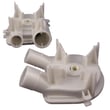
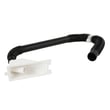
- If the washer will not drain, check for a clog or weak pump; the washer drain pump WP3363394 is the common replacement when the pump is seized or leaking.
A reset helps when the timer or cycle seems “stuck,” or after a power flicker. It will not correct a mechanical failure (like a broken coupling or a failed lid switch).
| Symptom | Reset likely helps? | Common next step |
|---|---|---|
| Timer seems stuck or cycle pauses | Yes | Power reset, then restart cycle |
| Won’t drain | Sometimes | Check drain hose, then pump/clog |
| Agitates but won’t spin | Sometimes | Check load balance, then drive components |
| Completely no response | Sometimes | Check power supply, then lid switch |
Resetting first prevents unnecessary part replacement and gets you back to washing quickly. If the issue repeats, it usually points to a consistent problem such as draining, load balance, or a failing component.
Last updated: February 2026
Is Kenmore Elite high end?
Yes. Kenmore Elite is Kenmore’s premium appliance line, and the Kenmore Elite washer model 11016972500 is built and warrantied like a higher-end machine (for example, the manual lists extended coverage on major components such as the wash basket, tub, and gearcase). For exact features and care details, use the owner's manual.
High-end in laundry usually comes down to durability, performance, and long-term serviceability.
- More robust core components (basket, tub, drive system)
- Better long-term value when you can repair instead of replace
- More refined wash action and cycle options than basic models
- Stronger focus on maintenance and preventive care
| Category | Standard Kenmore (typical) | Kenmore Elite (typical) |
|---|---|---|
| Build focus | Everyday use | Premium performance and durability |
| Serviceability | Varies by model | Designed to be maintained and repaired |
| Component coverage | Standard warranty | Often includes longer coverage on key parts |
| Ownership experience | Basic features | More features and refinement |
A “high-end” washer is worth repairing when common wear parts fail because the rest of the machine is usually built to last. On model 11016972500, issues like poor agitation, no spin, or draining problems are often solved with targeted part replacement instead of replacing the washer.
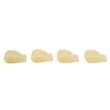
- Agitator dog 80040 (for weak or slipping agitation)
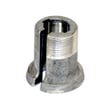
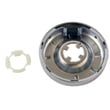
- Washer motor coupling 285753A (for no-agitate or no-spin symptoms)
- Washer drain pump WP3363394 (for drain or water-left-in-tub problems)
- Washer lid switch WP8054980 (for no-spin or intermittent operation)
- Use the correct load size and avoid overloading.
- Level the washer to reduce vibration and out-of-balance spinning.
- Inspect inlet hoses periodically and replace if cracked or bulging.
- Follow the cleaning and care steps in the manual to prevent odor and residue.
Last updated: February 2026
Does a Kenmore Elite washer have a filter?
Yes. Your Kenmore Elite washer model 11016972500 uses a drain system that can trap debris at the pump and hoses, so cleaning the drain path acts like servicing the washer’s “filter.” For exact access steps and safety notes, follow the owner's manual.
This style of Kenmore top-load washer typically does not have a small, front-access filter door like many front-load models. Instead, lint, coins, and small items collect in the drain pump area and drain hoses.
Common debris-collection points:
- The drain pump inlet (most common)
- The tub-to-pump hose
- The pump-to-drain hose
- The standpipe or laundry sink drain (external clog)
- Unplug the washer.
- Turn off both water supply valves.
- Bail out water if the tub is full (a shallow pan and towels help).
- Access the pump area and check for obstructions.
- Inspect hoses for socks, coins, lint clumps, or a kink.
- Reassemble, restore power, then run a rinse and spin to confirm draining.
If the washer still will not drain after clearing debris, the pump itself is a common failure item; the correct replacement for this model is the washer drain pump WP3363394.
| What you notice | More likely cause | What to check first |
|---|---|---|
| Hums but drains slowly | Partial clog | Pump inlet and hoses |
| Won’t drain at all, water remains | Clog or failed pump | Pump impeller area, then pump |
| Drains sometimes, sometimes not | Intermittent blockage | Hose routing, small items in pump |
| Spins poorly with water left | Drain issue causing no spin | Drain path before other parts |
A restricted drain path can stop the washer from spinning out water, leave clothes soaking wet, and strain the drive system. Keeping the pump and hoses clear helps your 11016972500 wash and spin normally and reduces repeat clogs.
Last updated: February 2026
How to force a Kenmore Elite washer to drain?
To force-drain a Kenmore Elite washer model 11016972500, we use the safest approach: stop the cycle, disconnect power, then drain the tub by lowering the drain hose into a shallow pan or floor drain. Follow the drain-hose routing rules in the installation guide.
- Unplug the washer (or switch off the breaker) before handling hoses.
- Bail out water first if the tub is very full (a small cup and bucket speeds this up).
- Gravity-drain using the drain hose: pull the corrugated drain hose out enough to work with it, then lower the hose end into a pan or floor drain below tub level.
- Check for a kinked or crushed hose behind the washer; straighten it and try draining again.
- If the washer hums but won’t drain, the drain pump is the most common suspect.
The drain hose needs an air gap so the washer can pump out properly and so water does not siphon back.
- Do not force excess drain hose down into the standpipe.
- Keep the hose secure but loose enough to leave a small air gap.
- Do not lay excess hose on the bottom of a laundry tub.
- If the standpipe is recessed, place the formed end into the standpipe and secure it.
If you can gravity-drain the tub but the washer still will not pump out during a cycle, the pump or a blockage at the pump is usually the cause.
| Symptom | Most common cause | What we do next |
|---|---|---|
| Hums, no water movement | Jammed pump or failed pump | Inspect/replace washer drain pump WP3363394 |
| Drains slowly | Partial clog or restricted hose | Clear hose path, then retest |
| Won’t spin and won’t drain | Drain issue stopping spin | Restore draining first, then test spin |
A washer that cannot drain will usually stop before spin, leaving clothes soaking wet and putting extra strain on the drive system. Correct drain-hose routing and a clear pump path prevent repeat no-drain problems.
Last updated: February 2026





