Installation guide
 Owner’s manual



Why is my Frigidaire washer leaking water from underneath?
A leak from underneath on your Frigidaire FFLG4033QW0 stacked laundry center is usually caused by a loose or damaged fill hose connection, a drain hose problem (kinked, clogged, or siphoning), or a leaking drain pump area. Start by checking hose connections and the drain setup described in the installation guide.
Quick checks we recommend first
- Unplug the laundry center before inspecting underneath to reduce shock risk.
- Check hot and cold fill hoses at the faucets and at the washer; tighten connections.
- Confirm the rubber sealing washers are installed in the hose couplings.
- Inspect the drain hose for kinks, cracks, or a loose connection at the standpipe.
- Make sure the standpipe height is at least 33 in. (84 cm) to help prevent siphoning.
- Look for water trails: front (fill/dispense), back (hoses/standpipe), or center (pump/tub).
Most common causes and what they look like
| What you notice | Most likely cause | What to do next |
|---|---|---|
| Water at the back near the wall | Loose fill hose connection | Tighten fittings; reseat hose washers |
| Water appears during drain/spin | Drain hose kink/clog or standpipe issue | Straighten/clean hose; verify standpipe height |
| Intermittent puddle under center | Drain pump or internal hose leak | Inspect pump area and clamps; replace worn parts |
Parts that are often involved
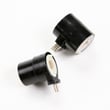
If the leak is coming from the pump area (typically during drain/spin), the drain pump is a common suspect on laundry centers. For this model, the matching pump is the laundry center washer drain pump 5304524452.
Why it matters
Bottom leaks can damage flooring and can also lead to poor draining or longer cycle times if the drain hose is restricted or siphoning. Correct hose sealing and proper standpipe height prevent repeat leaks.
Last updated: February 2026
Can I look up Frigidaire parts by model number?
Yes. For your Frigidaire stacked laundry center model FFLG4033QW0, looking up parts by the full model number is the most accurate way to match the correct replacement parts and diagrams for your exact configuration.
How to look up parts for model FFLG4033QW0
- Use the complete model number exactly as shown on the unit’s serial plate.
- Confirm you are shopping the laundry center parts list (not a standalone washer or dryer).
- Use the parts diagrams to identify the correct part by location and description.
- Match the part ID/part number before ordering.
- Keep your model and serial information recorded for future repairs (the serial plate is inside the dryer door opening).
Common parts customers replace on this model
If your issue matches one of these symptoms, these are common wear items we see replaced on FFLG4033QW0:
| Symptom | Likely area | Example part on this model |
|---|---|---|
| Dryer will not tumble | Drum drive system | Dryer drum belt 137292700 |
| Squealing or scraping noise | Drum support | Dryer drum bearing 131825900 |
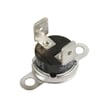
| Dryer overheats or shuts down | Safety temperature limiters | Dryer inlet thermal limiter 137032600 |
| Dryer heat is inconsistent | Temperature sensing | Dryer thermistor 134587700 |
Why it matters
Frigidaire laundry centers often share similar-looking parts across multiple models, but small design differences can change fit, wiring, or mounting. Using FFLG4033QW0 helps ensure the part you choose is actually compatible and prevents repeat repairs.
Helpful documents and troubleshooting
- Use the owner's manual to confirm where to find the model/serial plate, review operating basics, and follow safety guidance.
- If you are diagnosing a fault code, use Frigidaire laundry center -dryer error codes to narrow the problem to a specific circuit or component before ordering parts.
Last updated: February 2026
How to take off the front panel of a Frigidaire washer?
On the Frigidaire FFLG4033QW0 stacked laundry center, the removable front access panel is on the dryer section; you take it off by removing the two screws, lifting the panel up to disengage the tabs, then pulling it away. For the washer section, panel removal varies by design; follow the installation guide for the correct access points and fasteners.
Steps to remove the dryer front access panel (FFLG4033QW0)
- Unplug the laundry center (and shut off gas if you are working near the burner area).
- From the front of the dryer section, locate the two screws securing the front access panel.
- Remove both screws.
- Lift the panel upward until the tabs disengage from the cabinet.
- Pull the panel forward and set it aside.
- Reinstall by engaging the tabs first, then lowering the panel and reinstalling the screws.
If you meant the washer front panel
Most stacked laundry centers do not use a simple “two-screw” washer front access panel like the dryer does. Common access methods include lifting the washer top, removing a lower toe/kick panel, or accessing components from the rear.
What you can check before disassembly
- Confirm whether you need washer access (drain pump, motor control, tub) or dryer access (belt, idler, thermal limiter).
- Look for screws along the bottom edge, inside the lid opening, or at the rear corners.
- Verify the unit is stable and level before tipping or moving it.
Common reasons customers remove panels (and what parts relate)
| Symptom | Section | Common area to inspect | Example part on this model |
|---|---|---|---|
| Dryer will not tumble | Dryer | Belt and idler path | Dryer drum belt 137292700 |
| Loud squeal or scraping | Dryer | Drum support and glides | Dryer drum bearing 131825900 |
| Dryer overheats or shuts off | Dryer | Thermal limiter/airflow | Dryer inlet thermal limiter 137032600 |
Why it matters
Removing the correct panel prevents broken tabs, stripped screws, and wiring damage. On the FFLG4033QW0, the dryer access panel is specifically designed for venting and service access, so using the documented lift-and-tab method helps you avoid bending the cabinet.
Last updated: February 2026
Why is my Frigidaire dryer not drying clothes?
On the Frigidaire FFLG4033QW0 stacked laundry center, the most common reason clothes stay damp is restricted exhaust airflow (venting that is crushed, too long, or clogged with lint). Start by cleaning the lint screen and confirming the dryer is vented outdoors with the correct metal ducting per the installation guide.
Quick checks that fix most “not drying” problems
- Clean the lint screen before every load.
- Confirm the dryer exhausts outdoors (not into a wall, attic, crawl space, or other concealed area).
- Inspect the vent hose behind the unit for kinks, crushing, or loose connections.
- Check the outdoor vent hood: damper should open while running; remove lint buildup around the opening.
- Make sure the vent is 4-inch diameter rigid or flexible metal duct (not plastic or foil).
- Reduce load size; overloading slows airflow and increases dry time.
Venting requirements to verify (FFLG4033QW0)
Your installation instructions call for 4-inch metal ducting and warn that plastic or foil venting can collapse and trap lint, causing long dry times and a fire hazard.
| What we look for | What it causes | What to do |
|---|---|---|
| Crushed or kinked vent | Poor airflow, long dry times | Re-route and replace with rigid or semi-rigid metal duct |
| Vent too long or too many elbows | Lint buildup, weak exhaust | Shorten run; reduce elbows |
| Outdoor hood blocked or damper stuck | Moist air stays in dryer | Clean hood; replace if damaged |
| Dryer not vented outdoors | Lint and moisture in laundry area | Correct the vent termination outdoors |
When airflow is good but drying is still poor
If airflow checks out and the dryer tumbles normally, heat control or gas ignition components are the next most likely causes.
- A failed thermal limiter can shut down heat; check the dryer inlet thermal limiter 137032600 and the dryer thermal limiter 134120900.
- If the dryer heats inconsistently (heats then stops), a sensor issue such as the dryer thermistor 134587700 can contribute.
- If the drum is not tumbling well, inspect the belt and idler; a slipping belt reduces drying performance. See the dryer drum belt 137292700 and dryer idler assembly 5304507499.
Why it matters
Drying performance depends on two things working together: strong airflow to carry moisture out, and steady heat. Fixing venting first is the fastest way to restore normal dry times and helps prevent repeat failures of safety thermostats and limiters.
Last updated: February 2026